Field: Technology
Where are all the males? Ancient human fossils reveal a startling mystery
Published | Technical Staff
Visualization
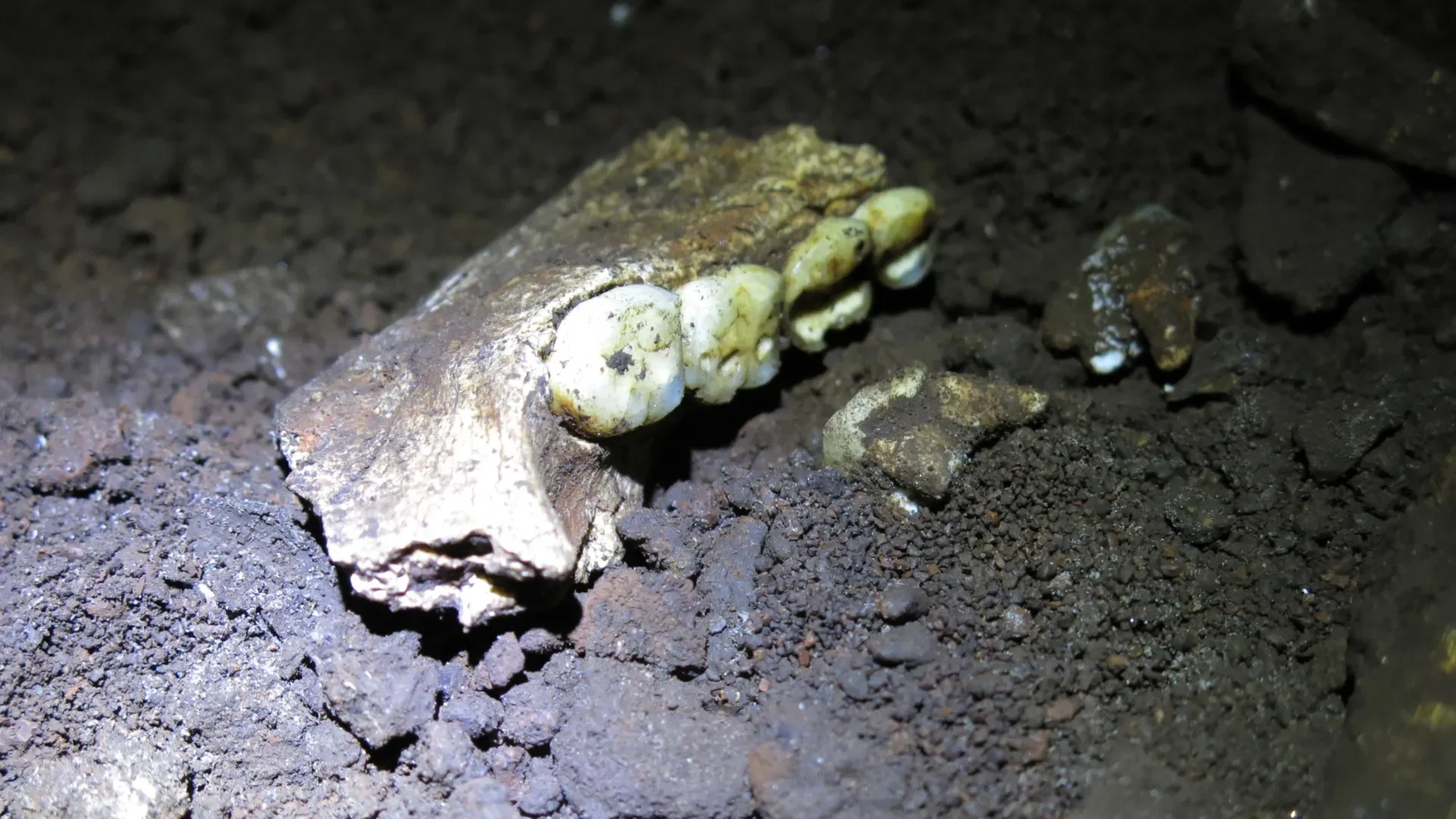
Deep within the Rising Star cave system of South Africa, an archaeological discovery has emerged that defies the understanding of ancient human social structures. Researchers from the University of York, working alongside an international cohort from institutions like the University of Copenhagen, have unveiled an astonishing finding related to the extinct hominin species Homo naledi, dating back approximately 335,000 to 241,000 years. Their findings, shared in a recent edition of the journal Cell, uncover compelling evidence suggesting that an all-female burial site may have existed, an unprecedented phenomenon among non-Homo sapiens relatives.
The study stems from a prolonged investigation into a cluster of fossils discovered in the Dinaledi Chamber, where scientists have grappled with the notable absence of physical sexual dimorphism in the skeletal remains. Unlike modern humans, who exhibit distinct variations between males and females, the Homo naledi fossils displayed an intriguing homogeneity that raised questions about the sex composition of the group. To delve deeper into this mystery, the team employed advanced proteomic techniques to extract and analyze ancient proteins preserved in the tooth enamel of at least 20 individuals.
Utilizing a technique involving gentle acid etching, the researchers successfully extracted peptide fragments from the dental enamel—widely regarded as the most resilient tissue in the human body. Proteins stored within this enamel can withstand environmental contamination over millennia, signaling underlying genetic information from deep time. The pivotal focus of their analysis was on the search for Amelogenin-Y, a protein uniquely associated with males due to its genetic origin on the Y chromosome. Contrary to expectations, the results yielded no male-specific markers, leaving researchers grappling with the question of where the males had gone.
The implications of these findings are profound. If these fossils truly represent an exclusive female collective, it challenges traditional assumptions about social norms and burial practices among early hominins. Dr. Marc Dickinson from the University of York articulated the import of such a revelation: “The lack of male markers with the group is truly fascinating. It is incredibly exciting to gain a window not only into the biology of our ancestors but also into how they lived.” This could suggest a form of ritual or cultural practice significant enough to warrant a gender-specific burial tradition, hitherto thought to be a trait exclusive to modern humans.
However, to posit that these remains belong purely to females poses significant genetic conundrums. The absence of Amelogenin-Y could also indicate a potential mutation or loss of this genetic marker within an isolated population, thereby complicating interpretations of sexual dimorphism in Homo naledi. Such genetic drift could theoretically result in a scenario where males existed but lacked detectable male-specific proteins in their dental remains.
Palesa Madupe, a key researcher in the study, elucidated the importance of dental enamel as a crucial repository for ancient biological material. “This makes them ideal carriers of genetic information from deep time,” she stated, positioning the study as a landmark contribution to understanding the limited physical variation inherent in the Homo naledi assemblage.
This investigation represents the most extensive application of ancient protein analysis conducted on a single hominin species, offering promising pathways into the exploration of early human evolution and social complexity. The absence of males—or the peculiarities of male representation—opens up broader discussions on community organization, social hierarchies, and perhaps even the ideological constructs surrounding death and burial in ancient human relatives.
As researchers continue to unlock the enigmas hidden in these ancient remains, the findings from the Rising Star cave could catalyze a paradigm shift in our comprehension of the social lives and customs of our evolutionary sisters and brothers. Whether these fossils belong unequivocally to females or are part of a specimen group reflecting unusual genetic traits, the narrative of Homo naledi continues to evolve, illuminating our path along the tangled roots of human ancestry.