Field: Technology
Tiny snakes roll four times faster than they slither
Published | Technical Staff
Visualization
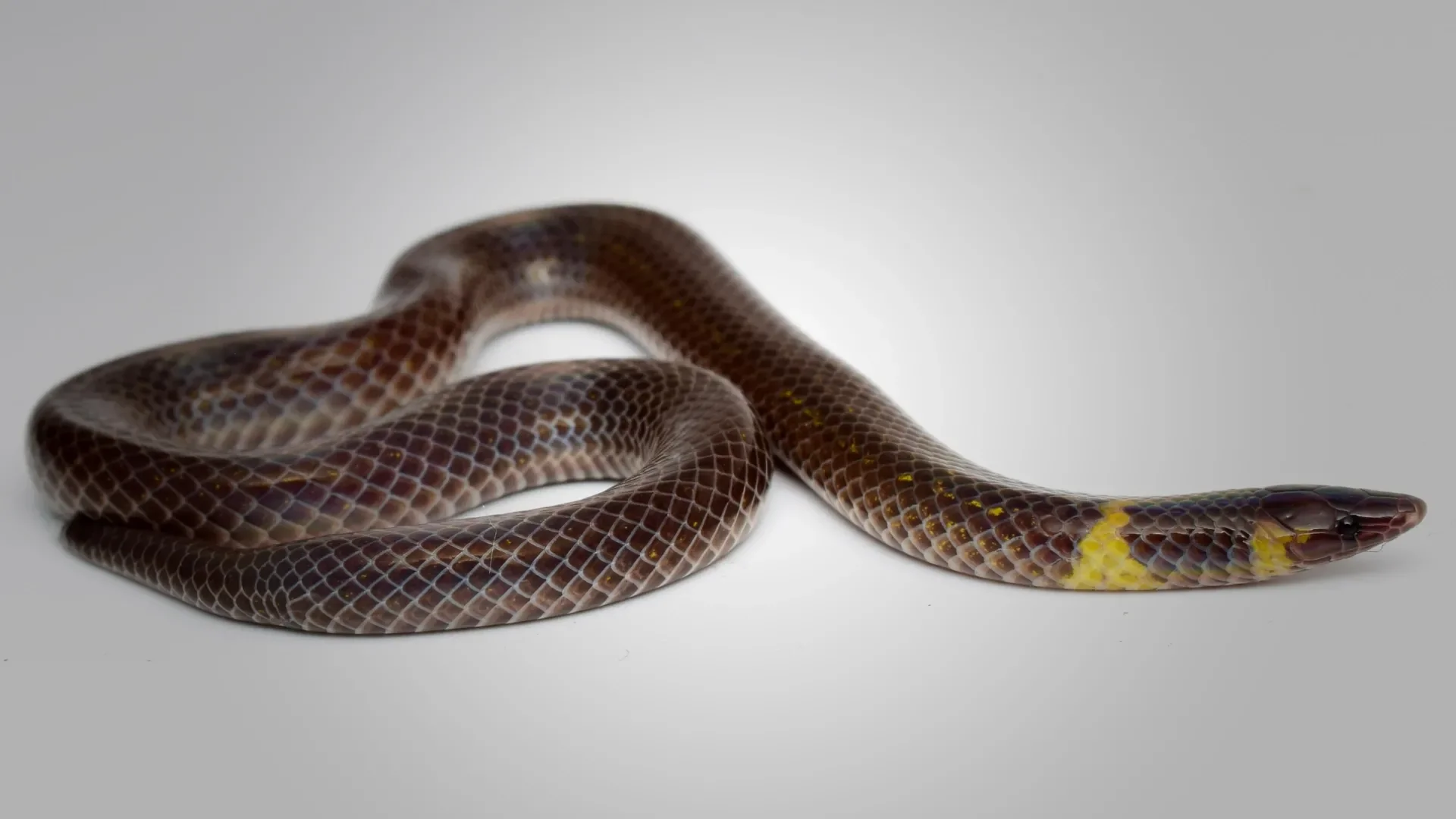
In the dense, humid jungles of Southeast Asia, a remarkable spectacle of evolution unfolds on the forest floor, where the dwarf reedsnake, known scientifically as Pseudorabdion saravacense, has perfected a unique escape mechanism that verges on the acrobatic. Recent studies conducted by a team of researchers from Toho University have illuminated the way these small reptiles achieve extraordinary rolling speeds, surpassing their conventional slithering velocities by nearly fourfold. Through an intricate dance of body coordination, the dwarf reedsnakes navigate their environment with remarkable agility, all while maintaining a surprising stability in their orientation.
The observation stemmed from an interest in understanding the mechanics behind this unusual locomotion, which appears to defy the physical challenges typically faced by crawling creatures. While the concept of rolling as a mode of transportation may seem efficient, it inherently poses significant challenges for most animals. Unlike a wheel that can spin around a fixed axle with minimal disturbance to its balance, the anatomy of snakes complicates such movements. Any rotation of their bodies radically alters the position and orientation of their heads, which contain vital sensory organs necessary for navigation.
Through a series of meticulously planned experiments involving high-speed video analysis, researchers evaluated the locomotor dynamics of the dwarf reedsnakes. The kinematics revealed that while the rear halves of their bodies achieved peak rolling velocities of 1.72 to 3.69 meters per second, or approximately four times their maximum lateral undulation speed, the heads of the snakes remained astonishingly stable—fixed in a forward-facing direction and maintaining a consistent height above ground throughout the movement. Such stability is pivotal in preserving sensory input and ensuring navigational control during the frantic escape from potential threats.
The examination of their rolling mechanics disclosed a complex sequence of movements—contrary to what one might expect from a simple rolling motion. The snakes do not merely rotate their entire bodies in sync; rather, they alternate between rolling on one side and enacting a downward sweeping action, referred to as a "stroke." This stroke involves a section of the body curving towards the ground while the rest rotates. By rhythmically switching the body side in contact with the ground, they orchestrate an elegant cycle of motion that facilitates forward propulsion.
This precise coordination is further evidenced by the notable adaptations in head stabilization. As the snakes gain momentum, their heads are elevated and exhibit minimal vertical movement, which likely serves to enhance their control and situational awareness. This extraordinary ability to stabilize the head while executing rapid rotations is highly unconventional for an organism lacking mechanical separations similar to those that facilitate rolling in inanimate constructs.
The discovery of this sophisticated locomotor strategy contributes valuable insights into the understanding of animal behavior and biomechanics. It highlights an essential principle in evolutionary biology: innovative behaviors and finely-tuned muscular coordination can enable species to overcome inherent anatomical limitations. The dwarf reedsnake exemplifies how adaptation, rather than mechanical advantage, can generate functional movements that allow survival in a perilous environment.
This remarkable lineage of snakes not only broadens our understanding of locomotion in the animal kingdom but also serves as a testament to the intricate interplay between morphology and behavior—a realization that underscores the fundamental concept that evolutionary adaptations often manifest through changing the way organisms utilize their physical forms rather than through the development of new anatomical features. As we delve deeper into the nuances of animal locomotion, the dwarf reedsnakes invite us to reexamine our definitions of speed, agility, and evolutionary success in the wild.