Field: Technology
Tiny magnetic vortices could help computers work more like your brain
Published | Technical Staff
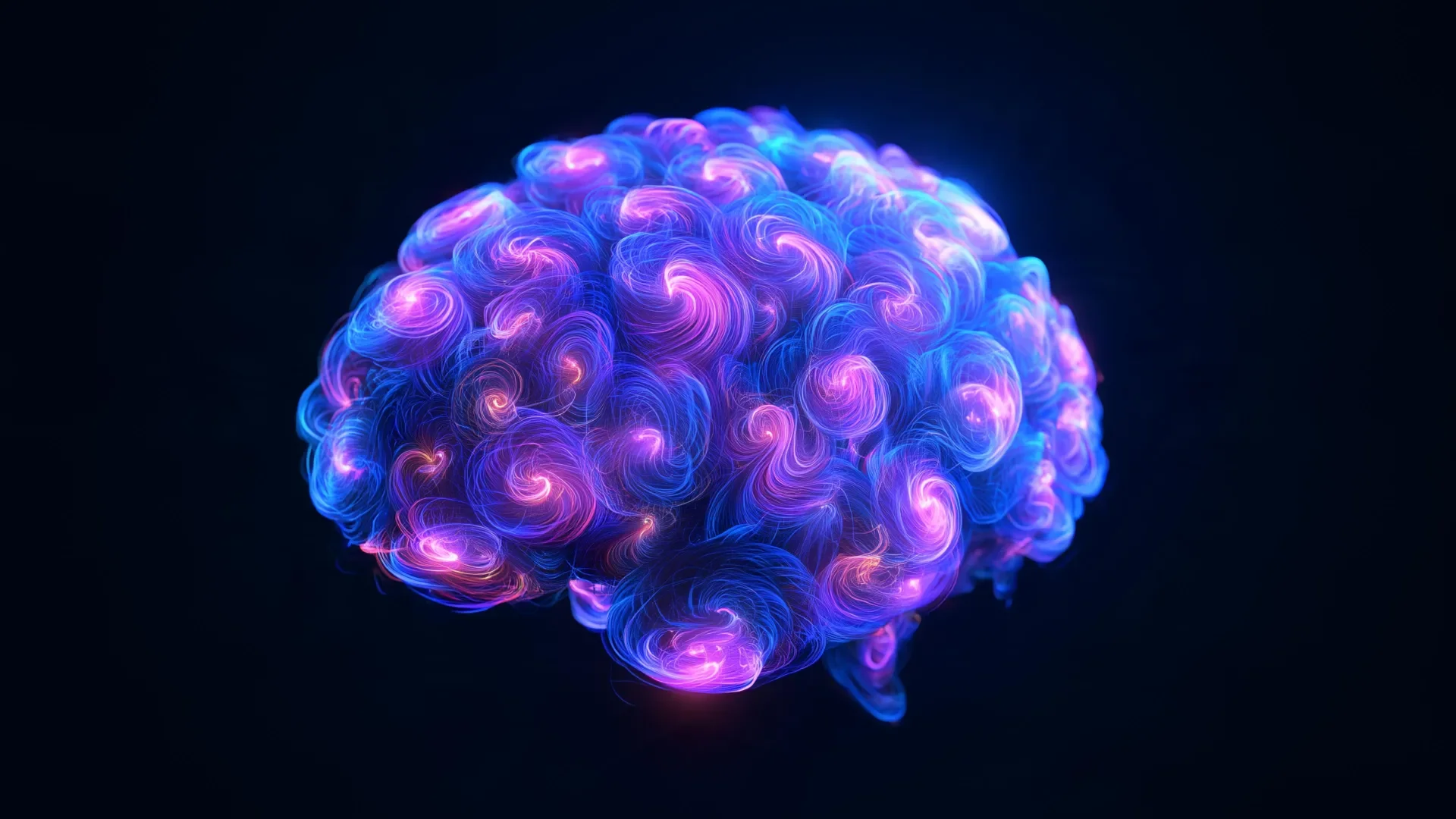
Visualization
In a remarkable breakthrough that may herald a new computational paradigm, scientists have uncovered novel manipulation methods for tiny magnetic entities known as skyrmions. Recorded in real-time, this melting and reconfiguration of a skyrmion lattice suggests potential pathways toward computing architectures that mimic the neural efficiency of the human brain while fundamentally reducing energy consumption.
The recent study published in Nature Nanotechnology represents a collaborative effort primarily stemming from the Institute of Physics at Johannes Gutenberg University in Mainz, Germany, backed by insights from the Norwegian University of Science and Technology (NTNU). Led by Asle Sudbø, a distinguished expert in spintronics, this research pushes the boundaries of how information could be processed in ways distinct from conventional transistor-based methods.
Skyrmions, characterized as localized magnetic vortices, possess the unique ability to encode information through their topological properties, offering a stark contrast to traditional computing methods which rely on discrete bits and increasingly massive energy requisites. Conventional computing increasingly demands larger architectures to accommodate growing data, resulting in escalating energy costs as well. Skyrmion-based systems, conversely, stand as a promising solution to this vicious cycle, as they allow for the storage and processing of information in a far more compact and efficient manner.
The inherent appeal of skyrmions lies in their potential applications in spintronics, a field that utilizes the electron's spin in addition to its charge to create novel electronic devices, ultimately leading to more efficient energy usage in computing. The possibilities extend to new designs for neuromorphic computing that could revolutionize technology by offering systems that emulate biological intelligence—processing information more akin to how the human brain operates, thus dramatically reducing the necessary energy footprint.
What sets this study apart is the innovative approach taken to document the dynamics of skyrmions as they transition from a structured lattice—a periodic arrangement comparable to atomic structures in crystals—to a disordered state. The researchers utilized sophisticated real-time imaging techniques, which allowed them to manipulate individual skyrmions' shapes and sizes while capturing the melting process. This unique capability offers unprecedented visibility into the behavior of skyrmions during lattice breakdown, granting researchers crucial insights into how alterations affect their fundamental properties.
The implications of such an understanding are profound. If skyrmions can be controlled with precision, their integration into next-generation computing devices becomes not just a possibility but a feasible goal. As noted by Sudbø, the advancements from this research can lead to transformative methodologies that enhance energy efficiency in future computing technologies.
The ability to observe skyrmions in their melting states—and indeed, manipulate them in real-time—provides a critical understanding that could surmount the numerous challenges that lie ahead in practical applications of skyrmion technology. Such knowledge may lead to the development of more directed and effective strategies for deploying these magnetic structures within data storage systems and complex quantum environments.
Although the journey to integrating skyrmions into everyday computing devices still involves substantial technical hurdles, the research unequivocally highlights an exciting avenue for enhancing data storage efficiency and contributing to the evolution of computing architectures. As researchers continue to probe the nuanced behaviors of these magnetic vortices, the horizon glimmers with the promise of a radical shift in our technological landscape, aligning closely with the computational elegance found within biological systems.
Thus, while skyrmions may remain obscure to the broader public, their potential is vast, hinting at a future where computing dramatically resembles the intelligent, adaptive, and energy-efficient workings of the human brain. With the momentum created by this research, one might envision a technological revolution at the intersection of physics, materials science, and information technology, guided by the enigmatic allure of these tiny magnetic vortices.