Field: Technology
Tiny flaws in diamonds could unlock a quantum computing revolution
Published | Technical Staff
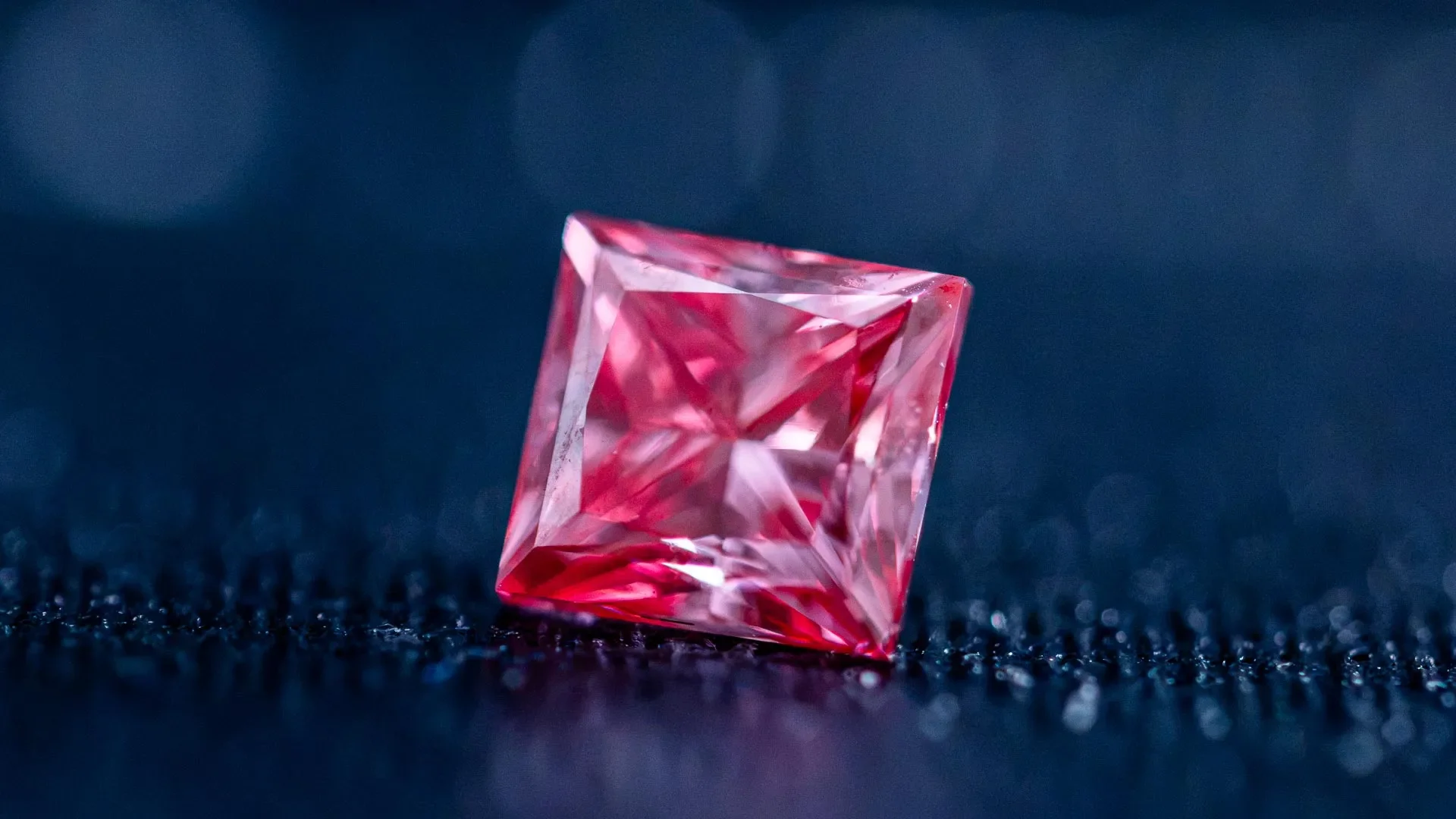
Visualization
The world of quantum computing stands at the precipice of transformative change, and a surprising ally may lie within the depths of imperfect diamonds. Researchers at the U.S. Department of Energy's Princeton Plasma Physics Laboratory (PPPL) have unveiled a groundbreaking computational technique aimed at identifying the peculiar yet promising diamond materials that could fuel the next generation of quantum computers and sensors. This advancement not only accelerates the discovery of viable candidates but also positions diamonds as versatile contenders capable of operating under practical conditions, such as room temperature—an exceptional trait that could redefine the future of technology.
Diamonds, typically revered for their flawless crystalline structure, now reveal a different narrative. It's the minute imperfections—defects within the carbon lattice—that could pave the way for revolutionary quantum capabilities. These defect formations arise from the absence of carbon atoms in specific positions or instances where non-carbon atoms, such as nitrogen, boron, or oxygen, substitute for carbon. Within these irregularities lie qubits, the essential units that enable the storage and processing of quantum information in computing environments.
Historically, the quest to discover and model these defects was a Herculean task requiring substantial computational power, as traditional methods struggled to simulate complex diamond structures accurately. This bottleneck impeded the evaluation of a plethora of potential qubit candidates. In response, Mark Martirez's innovative approach carves out regions of just 16 to 30 atoms surrounding a defect. By treating this condensed atomic cluster as a stand-alone molecule, Martirez leverages sophisticated computational techniques, honed over decades in chemical modeling, to assess the quantum characteristics of diamond defects with unprecedented speed and precision.
"Because we're treating the qubits as molecules, the computational cost parallels that of modeling a simple molecule," Martirez articulated, illuminating the efficiency his methodology introduces to the field. This breakthrough has unlocked the ability to investigate how distinct qubits react to laser light and microwave pulses, which is paramount in manipulating their quantum states—a fundamental operation in quantum information processing.
Among the array of defects scrutinized, the nitrogen-vacancy center has dominated previous studies due to its ability to emit red light when excited. However, Martirez's explorations extend to newly characterized defects that exhibit intriguing optical properties. Incorporating oxygen and boron into the diamond matrix could yield qubits emitting blue and ultraviolet light, respectively. Such diversity could facilitate novel applications wherein multiple qubit types coexist within a single quantum system, each responding uniquely to external stimuli—an operational flexibility that could enhance the precision and functionality of quantum devices.
This shift towards integrating chemical principles into the study of diamond qubits heralds a broader perspective in quantum technology research. The traditional physicist-centric approach is now complemented by the intricate understanding that chemists possess regarding atomic interactions and molecular design. This newfound interdisciplinary collaboration hints at customizing qubits akin to specialized molecular synthesization processes used in drug development.
Moreover, the implications of this research extend beyond the confines of quantum computing itself. By refining quantum chemistry techniques, the hope is to augment molecular calculations, delivering enhanced accuracy when examining extensive biochemical structures, including proteins and other large biomolecules. Such advancement could empower industries reliant on chemical science, significantly impacting pharmaceuticals and materials technologies. Enhanced molecular understanding has the potential to recalibrate our foundational knowledge of chemical systems, deepening insight into previously intractable questions.
Martirez envisions a future where the symbiosis of quantum chemistry and quantum technology drives exploration not only within physics but also catalyzes the engagement of chemists in solid-state physics—a perspective that could enrich the quest for revolutionary computing methods. As the race intensifies to build state-of-the-art qubit architectures, the integration of interdisciplinary insights could very well be the key not just to fulfilling ambitious technological goals, but also to fostering an enriching framework for collaborative research.
With diamonds—nature’s own intricately flawed gems—we might soon find ourselves not just on the cusp of a quantum computing revolution, but embarking on an era where the fusion of physics and chemistry reshapes our very understanding and capabilities in the quantum realm.