Field: Technology
The Sun unleashed a monster storm. Earth may have made it worse.
Published | Technical Staff
Visualization
In May 2024, a spectacular solar storm captured the attention of scientists and the public alike, lighting up the night skies with auroras in regions where such celestial displays are a rarity. The event, colloquially dubbed the “Gannon storm” or “Mother’s Day storm,” marked a significant chapter in our understanding of the interplay between solar activity and terrestrial phenomena. What was particularly striking about this storm was the new understanding it offered regarding the contribution of Earth’s atmosphere, revealing that a staggering 85% of the charged particles that precipitated the geomagnetic disturbances originated not from the solar wind, but from the very atmosphere of Earth itself.
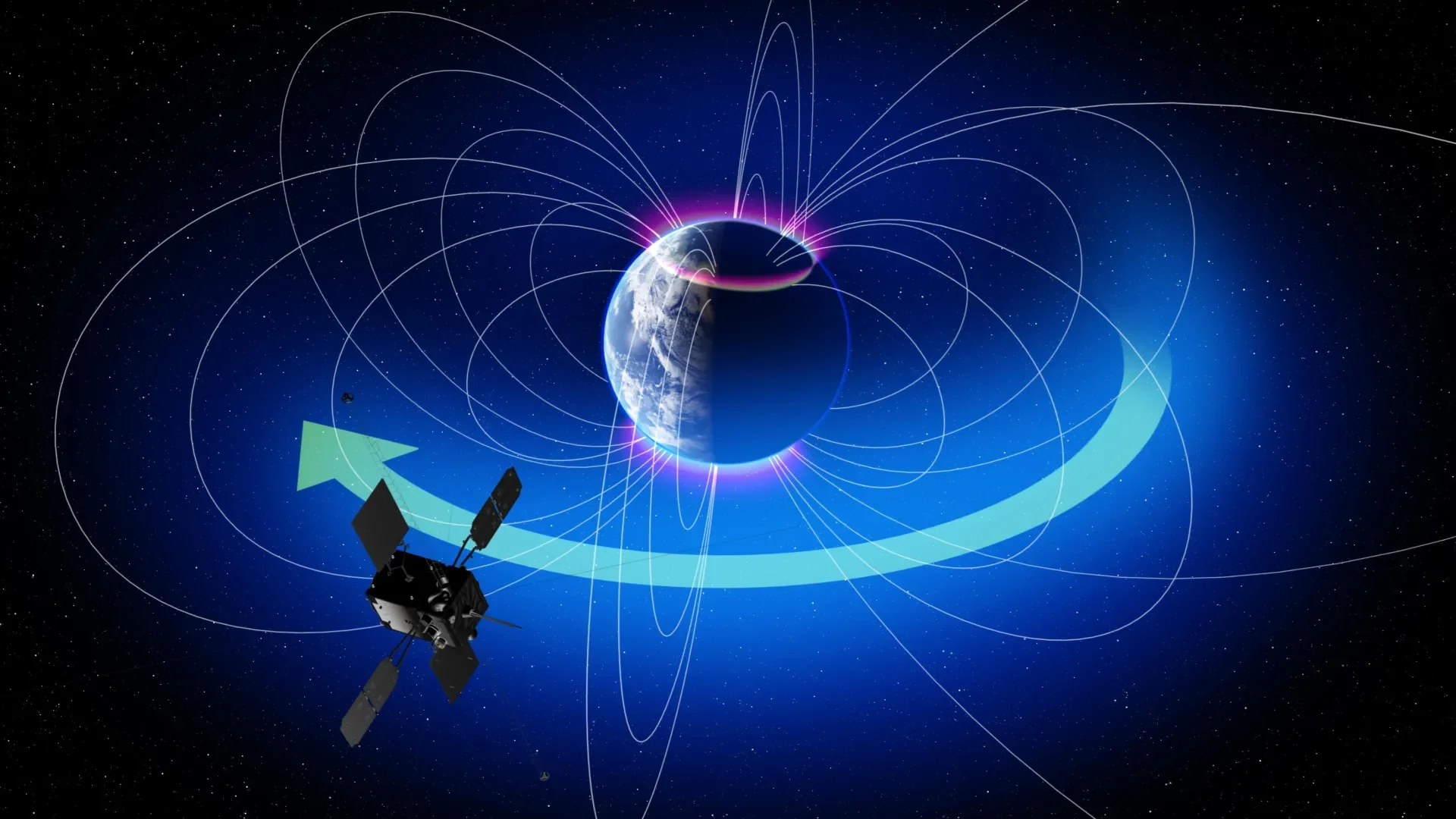
The sequence of events leading to this astronomical spectacle began with the eruption of a massive sunspot, which sent tremendous plumes of magnetized plasma hurtling through the solar system at velocities approaching 1,500 kilometers per second. When these particles collided with Earth’s magnetosphere—a vast region dominated by the planet's magnetic field—a profoundly dynamic interaction ensued. This magnetosphere is not merely an inert bubble; it harbors a complex structure characterized by its ring current, a belt of energetic charged particles encircling the planet at altitudes of several thousand kilometers.
After meticulously analyzing data from the Japanese Arase satellite—launched as part of a collaborative mission between the Japan Aerospace Exploration Agency (JAXA) and Nagoya University—researchers made groundbreaking observations that shattered long-held assumptions about the sources of ring current particles during geomagnetic storms. Traditionally, the solar wind was presumed to be the primary contributor to such phenomena, especially in the face of intense solar events where dense streams of charged particles are expected to inundate the magnetosphere. Yet, in a remarkable turn of events elucidated in a recent publication in *Science Advances*, scientists discovered that particles emitted from Earth’s ionosphere, predominantly oxygen ions, played a far more pivotal role than anticipated.
These findings were underscored by the detection of a dramatic weakening of Earth’s magnetic field, with measurements revealing a 40% decrease in magnetic intensity at approximately 16,000 kilometers above the Earth's surface. This harshly affected region was much closer to the planet than had previously been documented for storms of such magnitude. The significance of this finding was immense: a weakened magnetic field indicates an increased vulnerability for both orbital technologies and terrestrial electrical systems. The implications are especially critical, as severe geomagnetic storms have been known to disrupt GPS signals, compromise satellite operations, and even induce massive power fluctuations.
The intensity of the magnetic disturbance caused by the gales of charged particles allows for the calculation of the SYM-H index—a benchmark for measuring geomagnetic disturbance. During the storm, the index plunged to an unprecedented minimum of −518 nanotesla, positioning it as the second-largest recorded disturbance since 1981, the last comparable event occurring in November 2004. Such measurements offer insights not just into solar dynamics, but into the broader interplay of magnetospheric physics.
Researchers led by Naritoshi Kitamura, from the Institute for Space-Earth Environmental Research at Nagoya University, articulated that understanding these phenomena is as much about addressing theoretical queries as it is about real-world implications. The remarkable contribution of Earth's atmospheric ions leads to the hypothesis that the unusual density and mass of these ions not only augmented the intensity of the storm but also played a crucial role in the anomalously close behavior of the ring current.
One of the most profound revelations stemmed from the electronic structures playing out in the upper atmosphere and their subsequent interactions with incoming solar wind. These interactions potentially enabled a remarkable alteration in the trajectories of energetic electrons typically found circulating in the magnetosphere, contributing to satellite and communication disturbances. However, the definitive link between the magnetic field's deformation and the observed electron deviations remains a compelling question for future research.
The implications extend into the realm of predictive models used for forecasting space weather, dovetailing models that largely depend on solar wind conditions. The emerging understanding that Earth’s atmospheric state can significantly modify storm dynamics presents new pathways through which these storms can be predicted and, perhaps, mitigated. This revelation encourages the scientific community to reevaluate existing methodologies and integrate parameters from atmospheric observations into predictive frameworks, as the atmospheric layer can no longer be rendered as a passive player but rather as an active mediator shaping the outcome of solar interactions.
In essence, the dazzling auroras are but one facet of a far more intricate dialogue between the Sun and its planetary partner—one that underscores Earth’s atmospheric contributions to geomagnetic phenomena. As research evolves, the integration of terrestrial and space weather science will pave the way for enhanced comprehension and safeguarding of our technological infrastructures against the whims of solar activities. The Gannon storm has opened a window into vast uncharted territory, necessitating a deeper investigation into the coupling processes that govern our planet's magnetospheric responses.