Field: Technology
The secret to building Moon bases may be hiding in emergency blankets
Published | Technical Staff
Visualization
Establishing a sustainable human presence on the Moon hinges not only on the development of reliable spacecraft and life-support systems but also on the selection of advanced insulating materials capable of withstanding the lunar environment's extreme temperature fluctuations, which can range from hundreds of degrees below zero to scorching heat. In a pivotal investigation, researchers at the University of Pennsylvania have transformed the unassuming material of emergency blankets—Mylar—into a groundbreaking form of insulation that promises enhanced thermal performance and physical resilience.
Mylar, officially known as biaxially oriented polyethylene terephthalate (BoPET), is renowned for its lightweight characteristics and is commonly used in applications from food wrap to the reflective blankets that retain body heat after endurance events. In a bid to unlock its potential for lunar applications, scientists have meticulously stacked hundreds of ultra-thin Mylar sheets, leveraging a hybrid technology termed hybrid layered insulating film stacks (HyLIFS). This innovative arrangement permits the retention of thermal insulation properties, even when subjected to mechanical stresses typical of lunar habitats.
The challenge of designing insulation for a permanent lunar base lies in the necessity to balance thermal resistance with mechanical durability. Traditional options present a dichotomy; materials like aerogels provide exceptional thermal insulation but are notoriously fragile, whilst multilayer insulation techniques, effective in minimizing radiative heat transfer, are ill-equipped for enduring structural stresses. Consequently, the demand for a material that can endure the rigors of lunar operations without compromising on insulating performance is paramount.
To address these challenges, the Penn engineering team headed by Igor Bargatin meticulously engineered the HyLIFS material. The stacks were designed for performance under conditions mimicking the physical strain encountered in the vacuum of space and the operational environment of a lunar base. Thermally, these stacks achieve levels of thermal conductivity comparable to leading vacuum insulation materials while maintaining remarkable flexibility. Initial tests revealed that upon exposure to a vacuum, the insulation retained its operational parameters without altering its physical form.
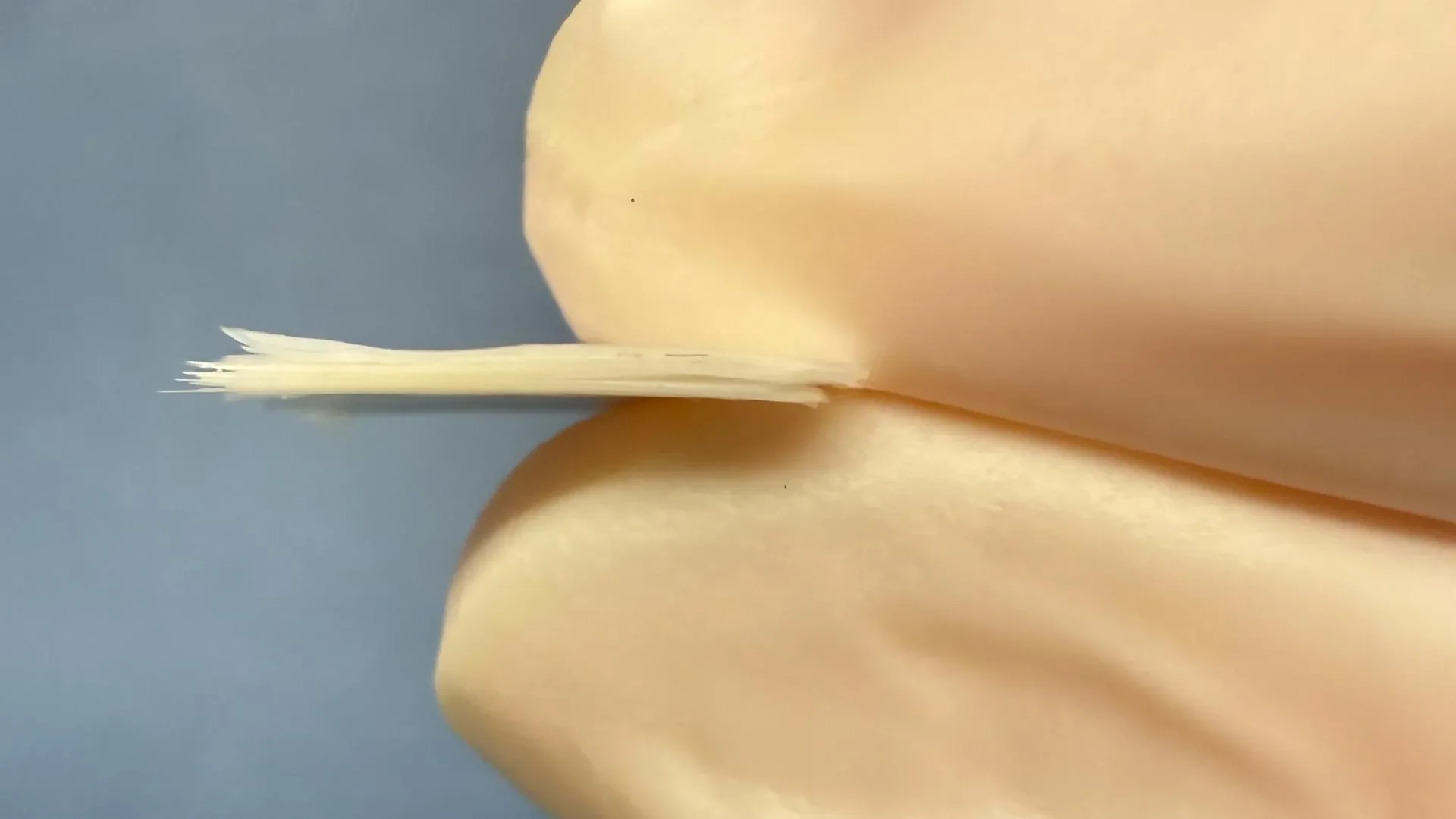
The stacking process itself posed significant challenges, necessitating precision and patience. Researchers employed delicate handling techniques using tweezers and small weights to construct the layers, recognizing that any disruption—such as exhalation—could compromise the entire assembly. Despite these difficulties, the stacks exhibited impressive mechanical properties. The layers' resistance to compressive stress was rigorously evaluated, achieving a distressing 20 megapascals—equivalent to concentrating 200 pounds of force into a fingertip-sized area—without compromising their insulating capabilities.
Crucially, these stacks demonstrated their remarkable durability under serial pressure tests. Subjected to ten consecutive compressive cycles, the material not only survived but maintained its insulating performance without failing. This unexpected resilience holds transformative implications for lunar exploration; every component destined for the Moon must withstand the rigors of packing, launching, and eventual deployment. Insulation that can flex, withstand wear and tear, and remain effective after repeated impact is invaluable to the success of such missions.
The implications of these findings extend far beyond merely creating a comfortable lunar environment. The combined thermal insulation and mechanical robustness of HyLIFS present a formidable solution for constructing habitats, protective gear, and supporting equipment in the harsh conditions beyond our atmosphere. Danielle R. Levin, a key investigator and recent doctoral graduate, emphasizes the environmental impacts of utilizing such robust and lightweight materials: "This could establish a pathway to inexpensive, durable, and reusable insulation solutions."
As we contemplate sustained moon missions and beyond, the fusion of innovative materials like Mylar into practical applications for space exploration underlines an enduring truth in scientific advancement: with creative engineering and a willingness to repurpose familiar substances, we open new avenues to inhabit worlds previously deemed inhospitable. Such developments may very well signal the dawn of a new era of space habitation, where the ingenuity of humans meets the strength of the materials they harness, leading us to traverse the cosmos with confidence and resilience.