Field: Technology
The Great Barrier Reef's notorious coral killer may actually be helping it thrive
Published | Technical Staff
Visualization
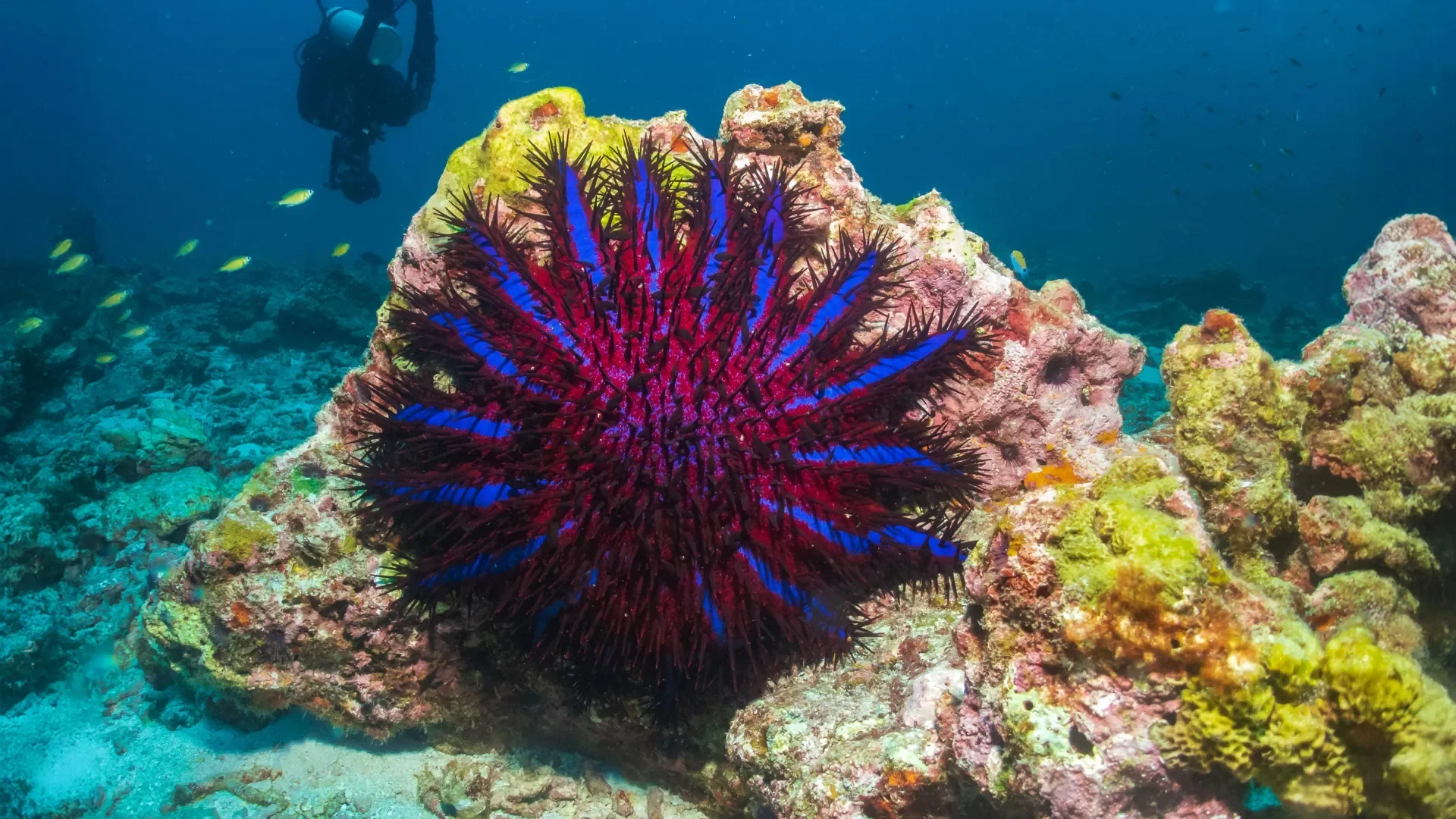
Crown-of-thorns starfish (COTS), the bane of coral reefs, have long held a reputation as unrepentant destroyers, leaving in their wake vast swathes of barren marine landscape. These echinoderms, armed with sharp spines and known for their voracious appetite for coral, now find themselves in a complex ecological narrative shaped by recent findings from the University of Sydney. New research indicates that, under specific conditions, these voracious predators might contribute positively to the health and biodiversity of the Great Barrier Reef, challenging long-held perceptions about the dynamics of coral ecosystems.
Pacific ecosystems have been shaped by interactions that reach beyond mere predation. The study, published in the journal Ecology and Evolution, scrutinizes the aftermath of COTS feeding events—specifically, the survival rates of coral tissue post-feeding. Conducted at One Tree Island Research Station, a protected site within the Great Barrier Reef, the research team led by Dr. Shawna Foo observed that nearly 75% of coral encounters with COTS resulted in the retention of living coral tissue. Through meticulous analysis of feeding scars, it becomes apparent that rather than wholly consuming coral colonies, the starfish often leave behind viable remnants.
Dr. Foo noted a pivotal behavior: "At One Tree Reef, COTS appear to consume a relatively consistent amount of coral during each meal and move on, rather than demolishing the entire coral colony," suggesting a more nuanced interaction that limits catastrophic damage. This observation reorients the understanding of COTS behavior from purely destructive to a potential regulatory role in reef dynamics.
While genetic diversity and recombination drive the resilience and adaptability of ecosystems, the research underscores a significant point: the existence of dominant fast-growing coral species, such as those in the Acroporidae family, can hinder the establishment of slower-growing species that are critical for ecological stability. By selectively preying on these competitive fast-growers, COTS may inadvertently foster a more diverse coral assemblage. The study demonstrated that after COTS feeding, the resilient survivors predominantly belonged to slower-growing genera like Montipora and Porites, while the rapid regrowth of Acroporidae was notably absent. This paradigm suggests a form of ecological facilitation rather than solely deleterious predation.
This newfound perspective on COTS as contributors to biodiversity introduces a paradox where the eradication of these starfish could carry unintended consequences. Population explosions have been linked to declining natural predators, including tritons and reef fish, which underscore the fragility of this balance. In light of ongoing trends towards overexploitation and habitat degradation, researchers urge caution against blanket removal strategies. As Professor Maria Byrne articulated, these findings resonate with the intermediate disturbance hypothesis, positing that ecosystems naturally benefit from moderate disturbances which prevent monopolization by single species.
The study illuminates the delicate balance between managing COTS populations and ensuring that they fulfill their role in the ecological tapestry of the reef. It is pivotal that conservation efforts incorporate an understanding of the ecological roles played by diverse species, enabling a management regime that allows for moderate COTS presence while mitigating the risks of catastrophic outbreaks. The results prompt a reevaluation of ecological intervention strategies, emphasizing that preventing future destructiveness should not hinge on the complete elimination of COTS, but rather on sustaining their populations at levels that encourage diversity.
This transformation in understanding reinforces the complexity inherent in coral reef ecosystems—signifying that even the most feared species can harbor unexpected benefits when managed wisely. The broader implications for reef conservation suggest that integrating natural processes could guide more effective strategies, reaffirming the need for comprehensive marine management to maintain ecological integrity amidst the myriad pressures faced by the Great Barrier Reef. In an age of increasing environmental uncertainty, recognizing the potential roles of controversial species like crown-of-thorns starfish could be pivotal in devising adaptive conservation strategies that align with the dynamic equilibrium of marine ecosystems.