Field: Technology
The Enigmatic Birth of Quasars: Unraveling Cosmic Mysteries with Infant Giants
Published | Technical Staff
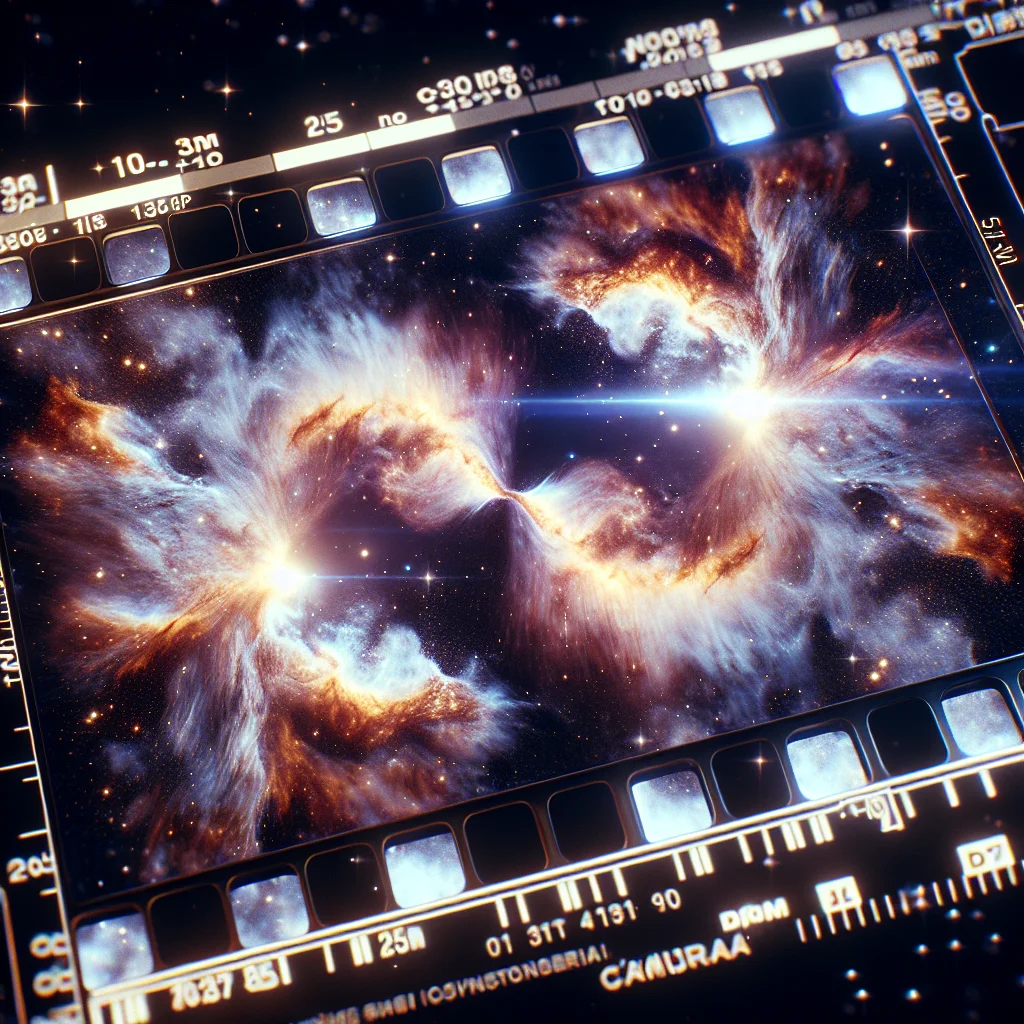
Visualization
In the boundless expanses of our universe, quasars represent one of the most luminous and energetic phenomena. Originating from supermassive black holes that have accreted massive amounts of surrounding matter, these celestial bodies are not just spectacular, but also enigmatic in their formation and growth. Historically considered the titans of space, quasars shine incredibly brightly, powered by the immense gravitational forces at work. Yet, despite their prominence in astronomical studies, the developmental stages of these cosmic beacons have remained shrouded in mystery.
A groundbreaking study utilizing the advanced capabilities of the James Webb Space Telescope (JWST) sheds light on a subset of quasars, colloquially known as 'baby quasars'. These nascent quasars, nestled within what were once thought to be conventional galaxies, are tiny red dots that fluoresce amidst the cosmic backdrop. The significance of these findings lies not simply in the identification of these youthful quasars but in what they tell us about the early universe and the evolution of supermassive black holes.
Supermassive black holes, the engines behind quasars, pose a substantial puzzle—how can such colossal entities exist at such early cosmic times? The JWST's NIRCam instrument, equipped with a sophisticated spectroscopy mode utilizing a grism, has been instrumental in isolating these baby quasars. By examining the red part of the spectrum, researchers have been able to discern the dusty, red-shifted light indicative of these early-stage quasars, contrasting sharply with the clearer, blue light emitted by older, more mature quasars. This spectral analysis is crucial, as dust plays a significant role in the formation of both galaxies and stars, and its presence is a key indicator of developmental stages in celestial objects.
The embryonic quasars provide critical insights into the "missing link" in the quasar evolutionary chain. It suggests a scenario where supermassive black holes could have formed rapidly in the early universe, under conditions significantly different from those observed today. The high-density gas and dust environments postulated to exist following the Big Bang may have facilitated accelerated growth, pushing these gravitational wells to become active quasars much sooner than previously imagined.
This hypothesis challenges the traditional understanding derived from visible quasars, like the oldest known, which is over 13 billion years old and suggests a maturity that seems out of place at such an early epoch. The accelerated formation model mirrors theoretical predictions of galaxy mergers, such as the anticipated 6-billion-year chronology for the Milky Way and Andromeda merger, pointing to cosmic epochs marked by colossal and rapid changes.
The discovery and subsequent analysis of baby quasars using JWST's instrumentation underscore an innovative approach to astronomical investigation. Leveraging advanced spectroscopy, astronomers can now peek into the obscured cradles of quasars, offering a potential resolution to the mystery of their precocious origins. While much remains to be learned about the specific mechanisms and conditions facilitating their rapid formation, the study of these infantile quasars is a promising path forward.
These findings not only enrich our understanding of quasar development but also enhance our knowledge of the universe's early days, posing new questions about the nature of matter, energy, and the dynamic processes shaping the cosmos. As research continues, the story of these galactic infants will undoubtedly contribute to the broader narrative of our universe's grand and intricate ballet.