Field: Technology
The enigma of hair follicle development decoded: simple chemistry reveals complex biology.
Published | Technical Staff
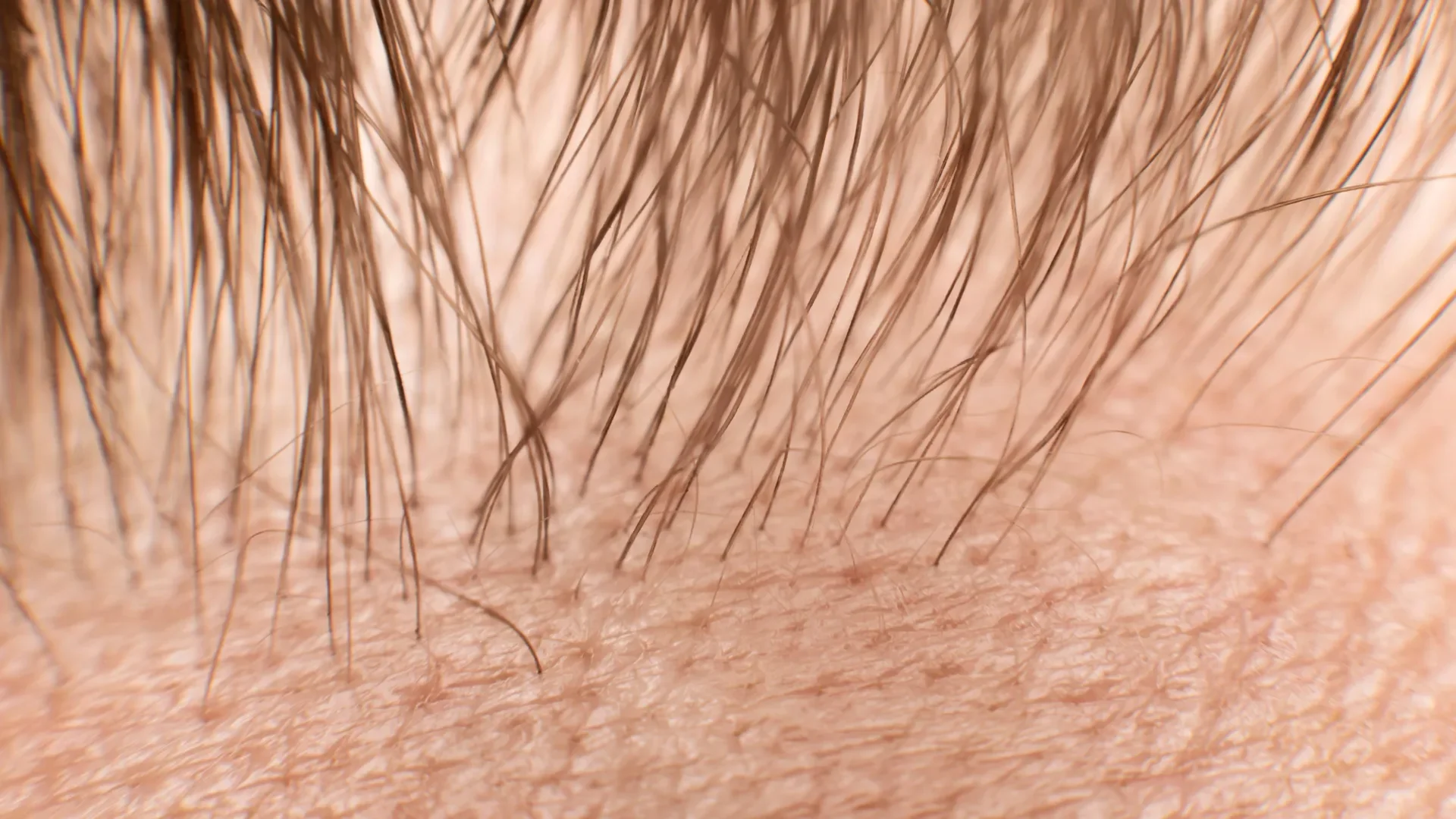
Visualization
Beneath the surface of mammalian skin, a remarkable yet previously perplexing phenomenon unfolds – the intricate patterns of hair follicles arise through mechanisms rooted not in complexity, but in the elegant simplicity of chemical signaling and cellular interaction. Researchers at the University of Geneva have unraveled this mystery, suggesting that complex biological structures can emerge through nature's innate self-organizing capabilities, without the need for intricate blueprints.
As embryonic development progresses, the skin of a mammal begins to delineate the strategic locations of hair follicles, forming distinctive patterns that vary widely across species. The traditional explanation for this spatial arrangement, which has been widely accepted, is the expansion-induction model. This theory posits that emerging hair placodes release inhibitory chemical signals, thereby preventing the development of neighboring placodes too close to one another. As the skin stretches and grows, some cells escape this inhibitory zone, permitting new placodes to arise in a calculated dance of proximity and separation.
However, the prevailing model lacked empirical validation across diverse mammalian species. Turning to a more foundational mechanism, Athanasia Tzika and Michel Milinkovitch along with their colleagues initiated a rigorous examination of chemotaxis – the movement of cells in response to chemical gradients. By developing a mathematical framework that simulated the dermal cells’ navigation toward epidermal signaling cues, they created a dynamic model for fetal skin development.
This pioneering model successfully mirrored the hair follicle patterns observed in laboratory mice (Mus musculus), revealing a progression of placode formation. The findings indicated that the emergence of these structures does not necessitate the guidance of a central, complex regulatory system; rather, it posits that follicular positioning is a spontaneous result of localized cell-to-cell interactions coupled with ongoing chemical signals.
The researchers further extended their inquiry to include the spiny mouse (Acomys dimidiatus), a species distinguished by its regular follicle arrangement and unique directional orientation. The conventional expansion-induction model proved inadequate in explaining this particular morphology. By utilizing three-dimensional imaging techniques and specific biochemical data from the spiny mouse's developing skin, the researchers adapted their simulations to demonstrate that similar chemotactic principles could account for its follicular configuration.
In both models, disparities in the resulting patterns arose chiefly from variations in cellular interactions and biochemical properties, rather than from fundamentally different mechanisms. This underscores a profound implication: the glorious diversity of mammalian integumentary structures may be governed by a handful of straightforward biological rules, illustrating that the evolutionary tapestry of life may be woven from just a few threads of cellular mechanics.
As the findings encapsulate, simple cellular interactions can yield a stunning variety of developmental designs as observed throughout the animal kingdom. Tzika remarked, "The differences observed between species therefore result from the same self-organization process, but with variations in interactions between cells and their chemical environments."
Thus, this reframing of hair follicle development not only challenges established theories but also reshapes our understanding of biological complexity itself. As we delve deeper into the intersection of genetics and developmental biology, the promise of this research extends beyond the mere aesthetic of mammalian fur, holding implications for regenerative medicine and tissue engineering, where insights gleaned from these principles of self-organization may inform future innovations in biological design.
In essence, the development of hair patterns may reflect a deceptively simple narrative of cellular choreography directed by chemical cues – a dynamic interplay that composes one of nature’s most intricate and beautiful patterns.