Field: Technology
Spinosaurus: A New Perspective on Its Aquatic Lifestyle
Published | Technical Staff
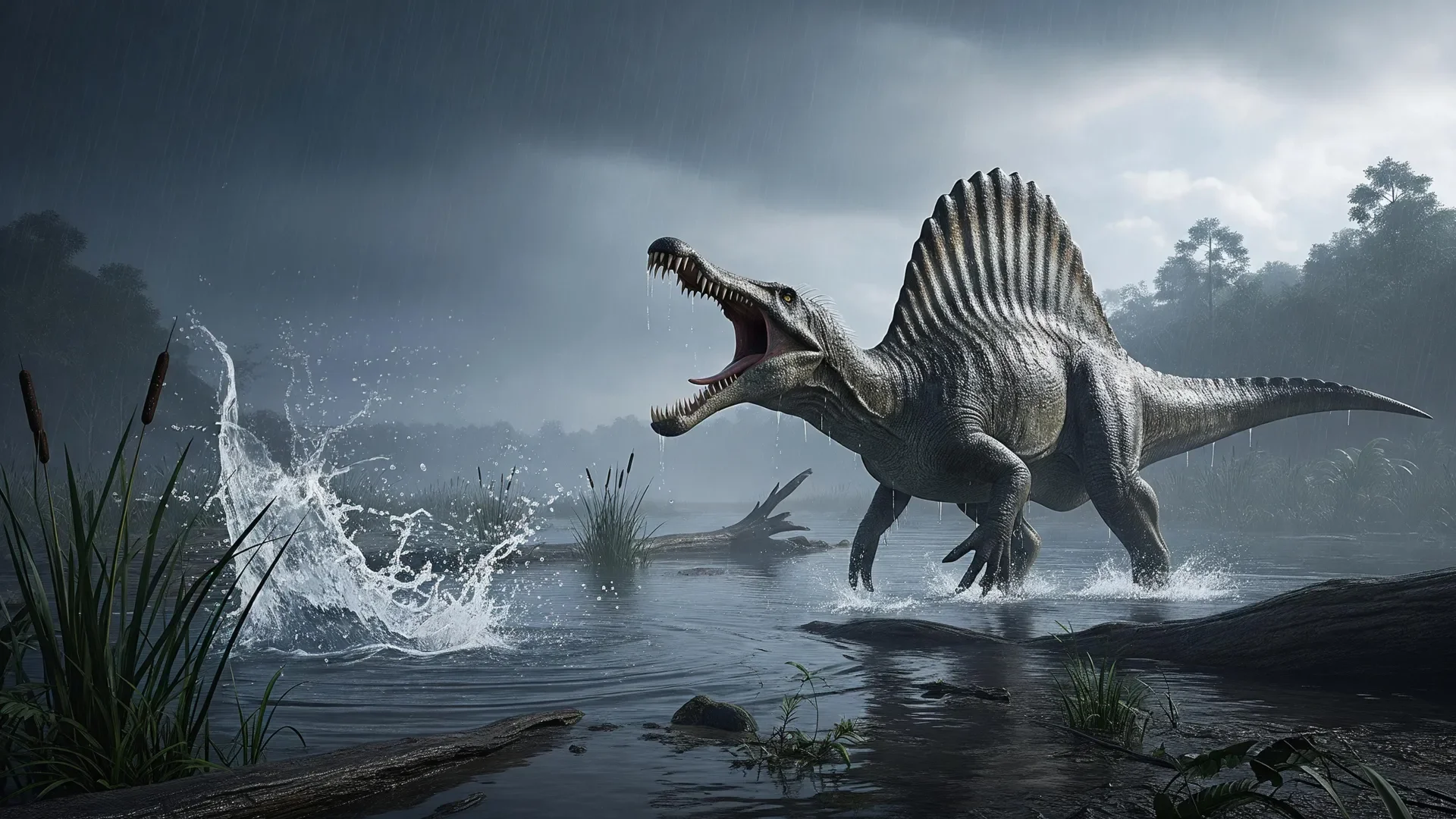
Visualization
In a striking revelation that reshapes the understanding of prehistoric life, recent research has posited that Spinosaurus, a formidable dinosaur from the Cretaceous period, may have spent the majority of its life submerged in water. This finding, borne out of a sophisticated interplay of machine learning algorithms and exhaustive fossil analysis, unveils the intricate pathways of evolution, particularly the transitions between terrestrial and aquatic environments.
The study, conducted by a team of Yale University researchers and published in Current Biology, engages in a meticulous exploration of the journey back to the water that various species undertook over millions of years. The evolutionary narrative is often portrayed as a linear progression from aquatic to terrestrial, yet evidence suggests that numerous taxa embarked on a remarkable, albeit less understood, U-turn back into the depths, developing adaptations that would enable their aquatic prowess.
Researchers delved into an extensive collection of fossil specimens, amassing over 11,000 measurements from a diverse array of ancient and modern taxa housed within the Yale Peabody Museum and other institutions globally. Utilizing a blend of traditional paleontological techniques and advanced machine learning models, they quantified skeletal proportions and generated a robust dataset that informed their evolutionary hypotheses. A unique statistical method originally crafted during World War II furthered their analysis, allowing them to gauge the likelihood of species adapting aquatic adaptations.
Caleb Gordon, the lead author whose doctoral studies culminated at Yale, emphasized how these models merged data from contemporary organisms with ancestral genealogical frameworks. The complexity of reconstructing the lifestyles of extinct species demands a precision that intertwines paleontological rigor with empirical evidence from living relatives. This amalgamation not only enhances our understanding of specific species but points to broader evolutionary patterns among vertebrates.
One key focus of this investigation was Spinosaurus, which roamed northern Africa approximately 113 to 94 million years ago. The question of its lifestyle has proliferated debates among paleontologists; did it spend most of its time in water, similar to modern aquatic predators, or did it primarily operate along shorelines, akin to a heron? Previous evidence has pointed towards a lifestyle that blended both aquatic and terrestrial methods, complicating conclusive interpretations.
Gordon's analyses lend credence to the former hypothesis, suggesting that Spinosaurus exhibited traits consistent with an underwater hunter. Its skeletal structure indicates adaptations for a lifestyle primarily spent submerged, aligning the creature more closely with semi-aquatic mammals than terrestrial dinosaurs. The findings equip researchers with significant insights into its ecological niche and feeding behaviors, offering a compelling argument for a predator that likely capitalized on aquatic resources to a much greater extent than previously thought.
Contrasting this narrative are the insights concerning mesosaurs, small marine reptiles that dated back 290 to 274 million years. Historically viewed through the lens of wholly aquatic beings due to their reproductive adaptations, new analyses suggest otherwise. The study's revelations indicate that mesosaurs were not exclusively tied to water—rather, their anatomical features hinted at a biphasic existence, frequently transitioning between land and aquatic habitats much like modern crocodilians.
This dichotomy among ancient marine reptiles propels a reevaluation of our understanding of paleo-ecological dynamics. The researchers assert that the evolutionary burden of establishing a fully aquatic lifestyle may have constrained these species, mandating a continual return to land for various ecological functions. By employing statistical models that determine forelimb proportions, the team accurately predicted the aquatic capabilities of these organisms, successfully discerning whether they bore the anatomical hallmarks of fully aquatic lifestyles, achieving over 90% accuracy in their classifications.
The collaboration of machine learning, statistical methodologies, and vast fossil records has thus illuminated previously murky aspects of vertebrate evolution. As scientists grapple with the details of these shifts toward aquatic living—the pressures exerted by environmental demands and the consequential adaptations—Yale's latest study provides an essential piece of the puzzle, elucidating the multifaceted narrative of life’s relentless adaptation and transformation across epochs.
In this endeavor to unveil the depths of prehistoric life, we move closer to understanding not merely the anatomical changes but the very essence of survival strategies that defined an era marked by dramatic ecological shifts.