Field: Technology
South African Fossil Reveals New Species of Early Sauropodomorph Dinosaur
Published | Technical Staff
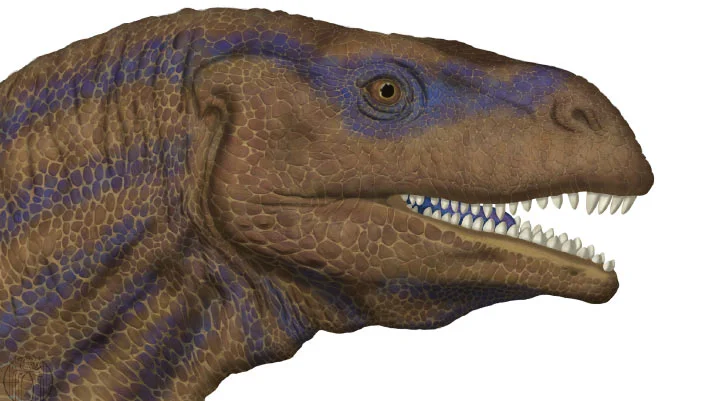
Visualization
In an extraordinary scientific revelation, researchers have unveiled a previously unknown species of early sauropodomorph dinosaur, dubbed *Nyana rooiwalensis*. This discovery emerges from a remarkably preserved fossil unearthed in the Eastern Cape province of South Africa, specifically from the Late Triassic epoch, approximately 220 million years ago. This newly described species significantly enhances our understanding of sauropodomorph diversity during a period where cranial material is exceedingly rare.
The fossil, which consists of a well-preserved near-complete skull along with several postcranial bones belonging to a juvenile specimen, was collected from the lower Elliot Formation during a field expedition in 2018 near Qhemegha village. What renders this find particularly noteworthy is the fact that the Elliot Formation encapsulates a geological timeframe of 30 million years—spanning the Late Triassic through to the Early Jurassic. Throughout history, late Triassic sauropodomorph cranial remains have largely been documented in regions such as Argentina, Brazil, and parts of Europe, revealing a sparse phylogenetic distribution. In southern Africa, only two species retaining cranial elements—*Mbiresaurus* and *Kholumolumo*—have previously been identified, both with scant material.
The cranial structure of *Nyana rooiwalensis* exhibits dimensions of 21.3 centimeters (or 8.4 inches) and encompasses critical elements such as a largely intact braincase, a specialized palate, and a hyoid bone, which play vital roles in respiratory and feeding mechanisms. The species' skull architecture, featuring the supporting rings of bone for ocular function alongside portions of limb bones and jaw structure, reflects a remarkable evolutionary complexity. Notably, the morphology suggests that the complete skull of *Nyana rooiwalensis* would surpass the size of the largest known adult *Massospondylus*, a well-documented South African relative from the same era.
The research team, which includes paleontologist Atashni Moopen of the University of the Witwatersrand, emphasizes the significance of this specimen. They characterized it as the first almost complete and articulated skull from the South African Late Triassic, underscoring its rarity amidst the southern continents. Employing advanced imaging techniques, the fossil was subjected to high-powered X-ray scans at the European Synchrotron Radiation Facility, which delineated intricate details of its bone structure. This methodology facilitated the extraction of bone slice samples, allowing for an examination of growth patterns within the leg bones.
Intriguingly, the analysis of growth rings in the bones revealed a maximum of two lines of arrested growth, indicative of periodic biological stress or environmental factors affecting the specimen. The overall bone structure also suggested active growth at the time of death. Seam assessment of the skull indicated that the sutures—essentially the junctions between cranial bones—remained open, leading researchers to estimate that the dinosaur was at least in its third year of life. Despite its juvenile status, *Nyana rooiwalensis* was substantially larger, exceeding four times the size of other comparable juvenile dinosaurs like *Massospondylus* and *Mussaurus*, positioning it among the largest juvenile dinosaurs documented from the Late Triassic.
Growth curve extrapolations provide insight into the potential size of adult *Nyana rooiwalensis*, predicting multi-ton body masses. Anatomical observations regarding the proportions of its limb bones further suggest a bipedal locomotion mode, emphasizing its adaptive capabilities. This discovery supports the hypothesis that rapid growth patterns emerged early in the evolutionary lineage of sauropodomorphs, predating the appearance of the true giants that would dominate the later Jurassic and Cretaceous periods.
Phylogenetic assessments position *Nyana rooiwalensis* as bearing close evolutionary relationships with species such as *Sarahsaurus*, from North America, and *Ngwevu*, from South Africa. Depending on varying analytical perspectives, it is categorized either as an early-branching massopodan or as part of the Massospondylidae family. If classified as a massospondylid, *Nyana rooiwalensis* would represent the first Triassic member of this clade found in South Africa, suggesting a broader geographical distribution of the clade throughout southern Gondwana during the Late Triassic prior to its subsequent radiation across Pangea in the Early Jurassic.
Remarkably, the data gleaned from *Nyana rooiwalensis* also creates a biogeographic bridge, linking the early-diverging sauropodomorphs of southern Africa with their North American counterparts, particularly through its relationship with *Sarahsaurus aurifontanalis*. This discovery casts a new perspective on our understanding of sauropodomorph distribution patterns and evolutionary trajectories during a pivotal time in Earth's history. The detailed findings from this study have been documented in a recent publication in *Royal Society Open Science*, further contributing to the corpus of paleontological knowledge and evidencing the dynamic story of dinosaur evolution.