Field: Technology
Something strange is happening beneath a volcano near 2 million people
Published | Technical Staff
Visualization
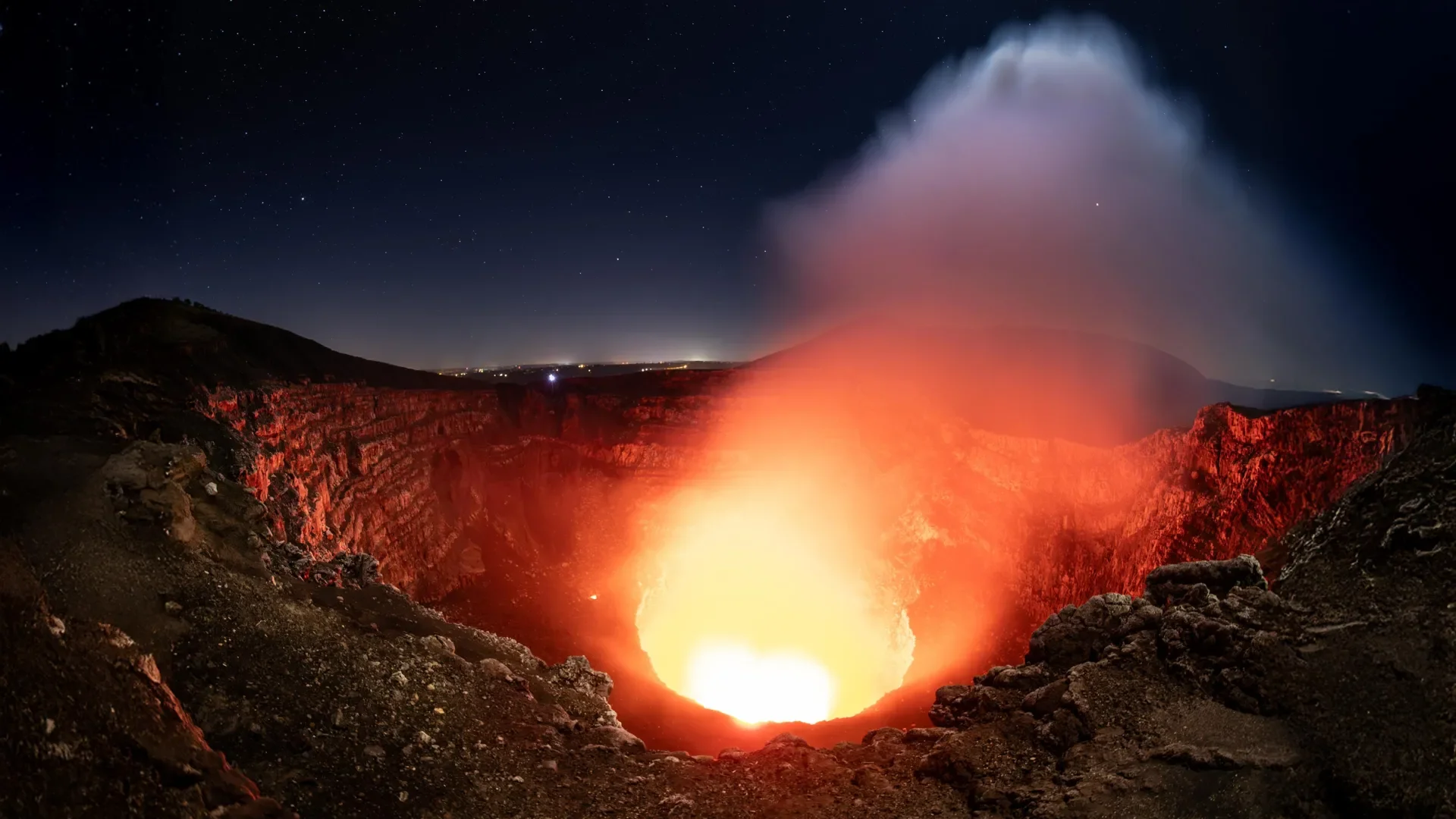
As the sun sets behind Nicaragua’s Masaya volcano, its luminescent lava lake casts an otherworldly glow, mesmerizing both tourists and locals. Beneath this picturesque façade, however, lies an intricate and dynamic system of magma that has recently captivated the attention of volcanologists. Researchers from Penn State University have unveiled evidence of two previously unrecognized magma sources lurking beneath Masaya, and their findings could significantly enhance eruption forecasting and risk management for the two million residents in its vicinity.
Utilizing an extensive dataset accrued over six years, the scientists harnessed satellite technology to monitor subtle deformations in the volcano’s surface. The observations indicated a curious pattern: one section exhibited initial subsidence followed by a phase of resurgence—a phenomenon suggestive of fresh magma influx into a deep reservoir. Simultaneously, the area surrounding the volcano's active Santiago crater exhibited continued subsidence, hinting at a more complex and layered magma plumbing system than previously understood.
The publication, featured in Geophysical Research Letters, underscores the critical nature of these findings. The structural integrity of the Masaya volcano is paramount, not only due to its geological significance but also because it is a national park and tourist attraction, with hazardous potential due to frequent sulfur dioxide emissions and sporadic eruption history. Previous eruptions, such as the last major lava flow in 1772, remind us of the latent dangers that can result from evolving volcanic activity, especially as sulfur dioxide—a toxic gas—escapes as magma nears the surface during its ascent.
The researchers employed the Sentinel-1 satellite, renowned for its ability to penetrate cloud cover—an invaluable feature given Central America’s tropical climate. By applying interferometric synthetic aperture radar (InSAR) technology, the team could detect minute changes in the elevation of the earth's surface, a capability crucial for identifying where magma might be accumulating or depleting. InSAR works by transmitting microwave signals towards the ground and analyzing the returned signals for variations in distance, allowing scientists to discern uplift or subsidence patterns over time.
From 2018 to 2024, a notable transformation occurred within Masaya's caldera: it underwent a gradual descent before a resurgence phase began. This complex cycle of uplift and subsidence is indicative of magmatic processes at work beneath the surface—the granular dance of magma shifts in response to changes in reservoir pressure. When magma is withdrawn from a chamber, the resultant decrease in subterranean pressure causes the ground to sink. Conversely, an influx of magma leads to an increase in overlying surface elevation as pressure builds.
The contrasting behavior observed around Santiago crater presents a deeper layer of complexity; while the broader caldera displayed an uplift trend, the region surrounding the crater continued its downward trajectory throughout the study period. This distinct behavior suggests that the Santiago region may be experiencing a reduction in magma volume and points toward two separate magma reservoirs exhibiting divergent dynamics. Such disparities could reshape our understanding of the interconnectedness—and potential hazards—within Masaya’s subterranean structure.
Continued satellite monitoring and the generation of sophisticated computational models are pivotal in elucidating not only the present state of the Masaya lava reservoir but also the potential for future eruptions. Understanding the connection between subterranean magma movements and their manifestations at the surface is a step toward mitigating volcanic risks for communities nestled within the volcano's shadow.
As the researchers interpret these findings, they highlight the importance of documenting the volcano’s typical behavior and its baseline activity. By identifying shifts that indicate abnormal activity, timely warnings could be dispatched to residents and tourists alike, enhancing safety protocols and emergency preparedness plans. The ongoing saga of Masaya volcano serves as a potent reminder of the power of nature—and the intricate dance that lies hidden beneath its seemingly calm exterior.