Field: Technology
Simulations Reveal Rocky Planets Could Have Emerged Mere 100 Million Years After the Big Bang
Published | Technical Staff
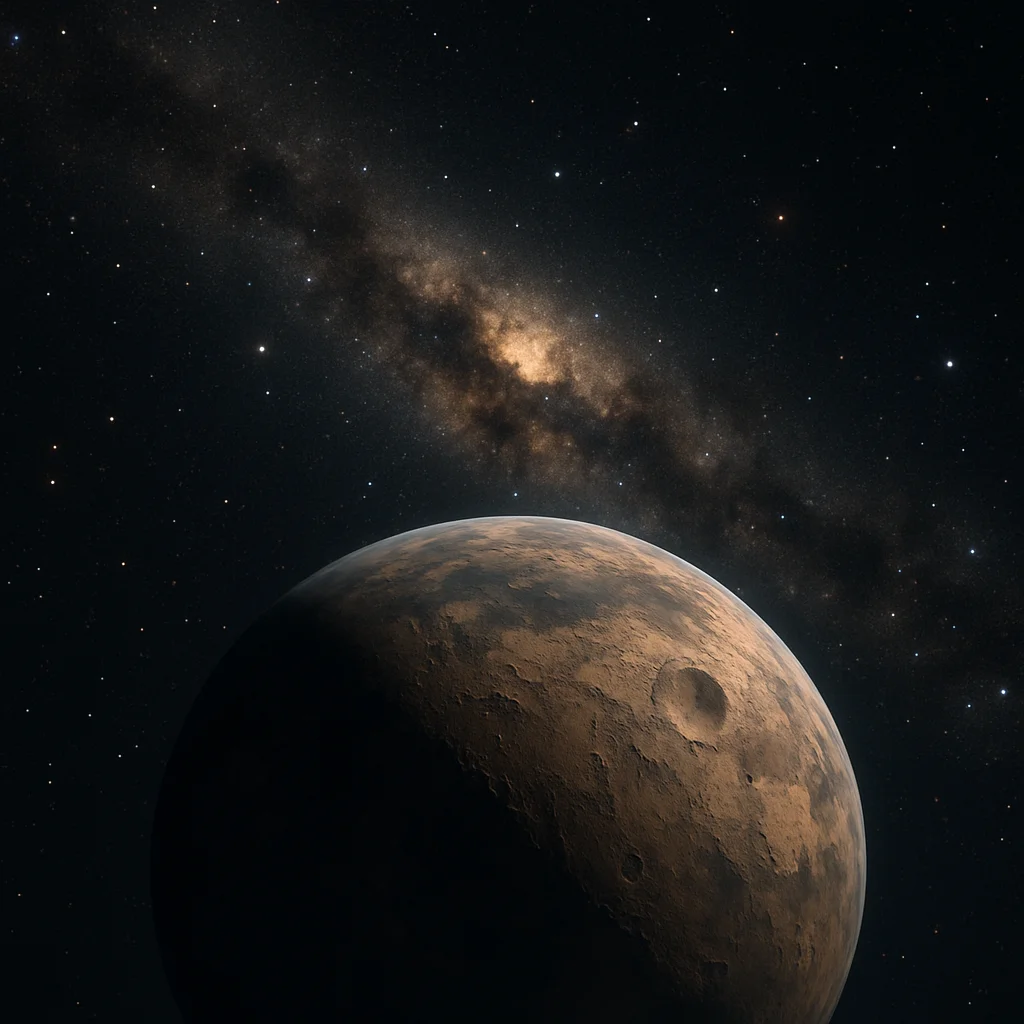
Visualization
In a remarkable computational foray into the Universe’s earliest epochs, astrophysicists have uncovered compelling evidence that the cosmic ingredients for rocky, potentially habitable worlds emerged astonishingly early—just 100 million years after the Big Bang, less than 1% into the Universe’s 13.8-billion-year lifespan. Employing high-resolution simulations, researchers traced the transformative effects of the Universe's inaugural stellar explosions and illuminated a pathway toward planet formation at an epoch hitherto considered inhospitable for terrestrial worlds.
The dawn of stars, known as Population III or Pop III stars, marked the first luminous objects to seed the cosmos. These massive, short-lived entities, composed almost exclusively of hydrogen and helium, quickly cycled through their evolutionary tracks and terminated in cataclysmic supernovae. Among these, the so-called pair-instability supernovae represented an especially potent mechanism of chemical dispersal. In events involving stars with masses between approximately 140 and 260 solar masses, electron-positron pair production within the oxygen core triggered runaway nuclear reactions, culminating in the ejection of metal-rich debris. Each such explosion expelled over 100 M☉ (solar masses) of heavy elements—including carbon, oxygen, and iron—critical for the condensation of solid planetary materials.
Through sophisticated numerical modeling, the research collective, led by Dr. Daniel Whalen of the University of Portsmouth, probed the aftermath of these primordial outbursts. Simulations revealed that metal-enriched gas clouds, suffused with supernova ejecta, could rapidly collapse under gravitational instability to form low-mass, long-lived stars. Of particular note was the emergence of circumstellar disks around these stars—akin to the protoplanetary nebulae from which our own Solar System originated. In one scenario, the team simulated a disk encircling a protostar approximately 0.7 M☉. Within this disk, local metallicity enhancements and temperature profiles facilitated the accumulation of solid grains.
The simulations tracked the solid-to-gas mass ratio in these disks, discovering the rapid aggregation of planetesimal material with a surface density Σ_solid sufficient to yield several Earth-masses (~5 M⊕, where M⊕ ≈ 5.97 x 10^24 kg) at semimajor axes analogous to 1 AU. This is key, as terrestrial planet formation through oligarchic growth requires a threshold solid mass, generally considered for Earth-like exoplanets to be at least ~1 M⊕ within the habitable zone.
Yet it is the presence of water, with all its implications for prebiotic chemistry, that adds a profound dimension to the findings. Contrary to the archetype of a parched early Universe, these protoplanetary disks exhibited H₂O abundances within an order of magnitude of those inferred for the primordial Solar System nebula. Such water content likely originated from the supernova-driven synthesis of oxygen and the subsequent formation of water ice in cooling, dusty gas pockets shielded from harsh UV dissociation. The simulations indicated a mass fraction of water ice, X_H₂O, exceeding 10^{-4}—sufficient, by contemporary models, to permit the formation of ocean-bearing planets should accretion proceed unimpeded.
This paradigm challenges classical narratives that the metallicity floor for planet formation—often cited as Z/Z☉ ≈ 10^{-2}, where Z is the mass fraction of heavy elements—would only be reached after several cycles of stellar evolution. Instead, pair-instability supernovae from the first stars could locally elevate metallicity and water content to levels compatible with rocky planet formation on timescales of order 10^8 years post-Big Bang. If these conditions were widespread, it follows that the Universe may have hosted planets, and possibly habitable environments, billions of years prior to the formation of the Solar System.
The implications are tantalizing: the raw materials for life-bearing worlds, and perhaps life itself, may have emerged almost contemporaneously with the first generations of stars. As Dr. Whalen notes, "if rocky planets and their water inventories were possible so soon after the cosmic dawn, the possibility of ancient life-sustaining worlds inhabiting the early Universe cannot be dismissed."
The full methodology and computational framework underpinning these results—drawing on state-of-the-art radiative-hydrodynamical codes, supernova nucleosynthesis yields, and dust formation models—will be detailed in the upcoming Astrophysical Letters Journal publication by Eduard I. Vorobyov et al. As next-generation telescopes open windows onto this distant past, the race is on to directly observe these ancient planetary signatures and test the bold proposition that habitable worlds may have flourished at the cosmic dawn.
The dawn of stars, known as Population III or Pop III stars, marked the first luminous objects to seed the cosmos. These massive, short-lived entities, composed almost exclusively of hydrogen and helium, quickly cycled through their evolutionary tracks and terminated in cataclysmic supernovae. Among these, the so-called pair-instability supernovae represented an especially potent mechanism of chemical dispersal. In events involving stars with masses between approximately 140 and 260 solar masses, electron-positron pair production within the oxygen core triggered runaway nuclear reactions, culminating in the ejection of metal-rich debris. Each such explosion expelled over 100 M☉ (solar masses) of heavy elements—including carbon, oxygen, and iron—critical for the condensation of solid planetary materials.
Through sophisticated numerical modeling, the research collective, led by Dr. Daniel Whalen of the University of Portsmouth, probed the aftermath of these primordial outbursts. Simulations revealed that metal-enriched gas clouds, suffused with supernova ejecta, could rapidly collapse under gravitational instability to form low-mass, long-lived stars. Of particular note was the emergence of circumstellar disks around these stars—akin to the protoplanetary nebulae from which our own Solar System originated. In one scenario, the team simulated a disk encircling a protostar approximately 0.7 M☉. Within this disk, local metallicity enhancements and temperature profiles facilitated the accumulation of solid grains.
The simulations tracked the solid-to-gas mass ratio in these disks, discovering the rapid aggregation of planetesimal material with a surface density Σ_solid sufficient to yield several Earth-masses (~5 M⊕, where M⊕ ≈ 5.97 x 10^24 kg) at semimajor axes analogous to 1 AU. This is key, as terrestrial planet formation through oligarchic growth requires a threshold solid mass, generally considered for Earth-like exoplanets to be at least ~1 M⊕ within the habitable zone.
Yet it is the presence of water, with all its implications for prebiotic chemistry, that adds a profound dimension to the findings. Contrary to the archetype of a parched early Universe, these protoplanetary disks exhibited H₂O abundances within an order of magnitude of those inferred for the primordial Solar System nebula. Such water content likely originated from the supernova-driven synthesis of oxygen and the subsequent formation of water ice in cooling, dusty gas pockets shielded from harsh UV dissociation. The simulations indicated a mass fraction of water ice, X_H₂O, exceeding 10^{-4}—sufficient, by contemporary models, to permit the formation of ocean-bearing planets should accretion proceed unimpeded.
This paradigm challenges classical narratives that the metallicity floor for planet formation—often cited as Z/Z☉ ≈ 10^{-2}, where Z is the mass fraction of heavy elements—would only be reached after several cycles of stellar evolution. Instead, pair-instability supernovae from the first stars could locally elevate metallicity and water content to levels compatible with rocky planet formation on timescales of order 10^8 years post-Big Bang. If these conditions were widespread, it follows that the Universe may have hosted planets, and possibly habitable environments, billions of years prior to the formation of the Solar System.
The implications are tantalizing: the raw materials for life-bearing worlds, and perhaps life itself, may have emerged almost contemporaneously with the first generations of stars. As Dr. Whalen notes, "if rocky planets and their water inventories were possible so soon after the cosmic dawn, the possibility of ancient life-sustaining worlds inhabiting the early Universe cannot be dismissed."
The full methodology and computational framework underpinning these results—drawing on state-of-the-art radiative-hydrodynamical codes, supernova nucleosynthesis yields, and dust formation models—will be detailed in the upcoming Astrophysical Letters Journal publication by Eduard I. Vorobyov et al. As next-generation telescopes open windows onto this distant past, the race is on to directly observe these ancient planetary signatures and test the bold proposition that habitable worlds may have flourished at the cosmic dawn.