Field: Technology
Scientists Unveil a Groundbreaking Bacterial Defense Mechanism Redefining Immunity
Published | Technical Staff
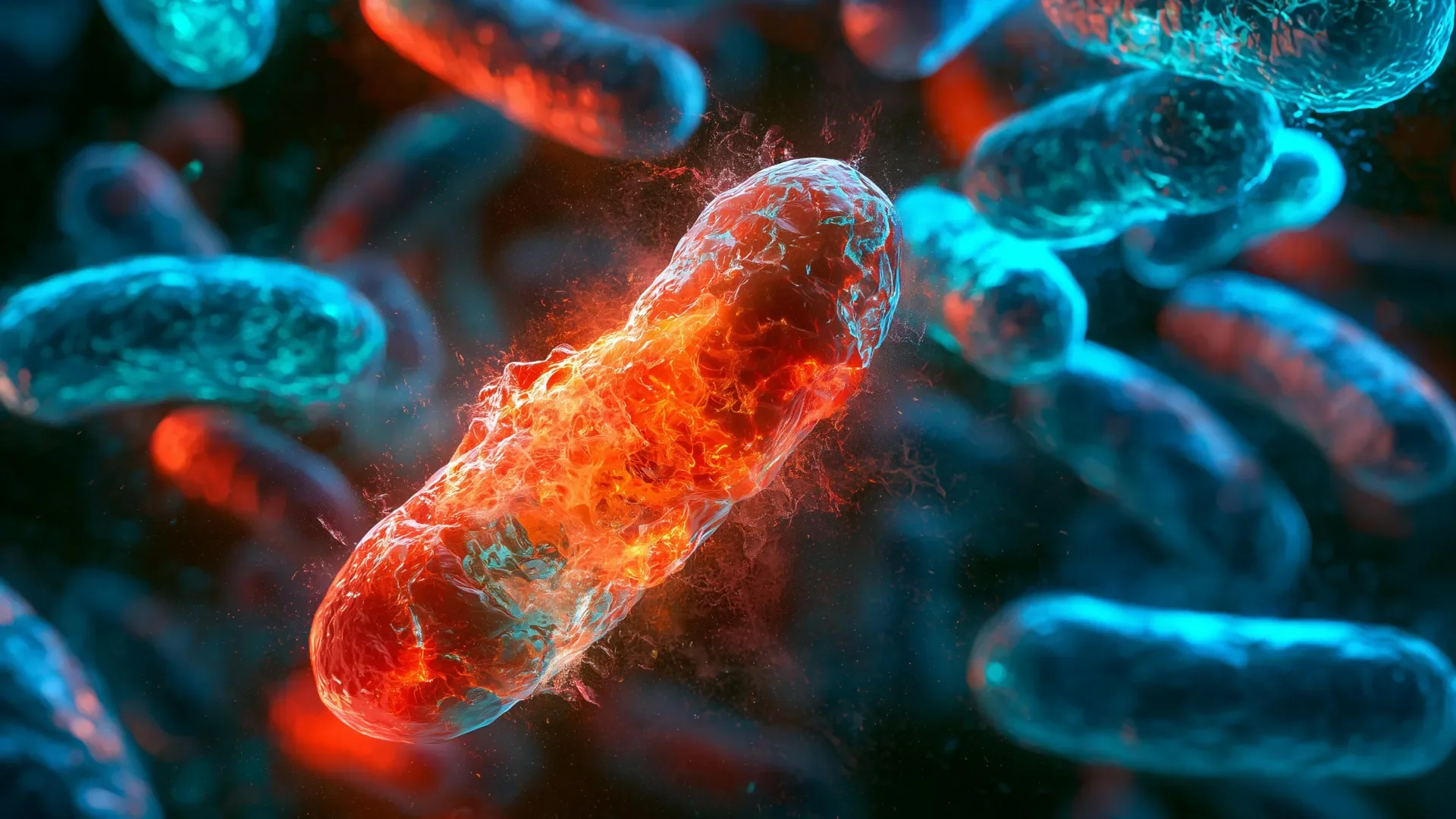
Visualization
In a striking revelation that challenges existing paradigms of bacterial immunity, research conducted at the Gladstone Institutes has uncovered the intricacies of a novel bacterial defense system that operates almost inversely compared to previously characterized mechanisms. Dubbed type VI retrons, this unusual system stimuli the infected bacterium to produce a lethal toxin only after a viral infection is already underway, leading to a dramatic self-destruction of the bacterium. This unexpected immune response not only halts the propagation of the viral infection but may also catalyze advancements in genetic engineering and antimicrobial therapies.
Traditionally, bacterial immune strategies focus on maintaining an arsenal of pre-synthesized toxic proteins that lie dormant but can be swiftly activated upon exposure to viral threats. For instance, established retron systems engage single-stranded DNA (ssDNA) to repress toxin production until a phage breach occurs. However, researchers led by Gladstone investigator Seth Shipman, PhD, found that type VI retrons eschew this mechanism and instead rely on an entirely different approach. Rather than sustaining a reservoir of ssDNA and associated toxins prior to infection, these retrons initiate a pathway of in situ synthesized reactive DNA and subsequently enable the production of a fatal toxin post-infection, akin to a grim alarm system.
Shipman notes, “This is, by far, the strangest of the retron systems we or anyone else has come across. They operate with Rube Goldberg-level complexity, utilizing molecular mechanisms that we would never have thought to invent, but that we'll undoubtedly leverage in future technologies.” This complexity lies in the ability of the retrons to dynamically activate lethal processes that would usually seem counterintuitive to survival.
The journey toward unveiling the workings of type VI retrons began with perplexing observations. As graduate student Karen Zhang and her team initiated their investigations, it soon became evident that these retrons lacked the genomic signatures observable in other retron types. The absence of detectable ssDNA in uninfected cells led to initial misinterpretations of their functionality as potentially defective. Typically, retrons have a definable and quantifiable presence of single-stranded DNA, yet the type VI retrons complicated this narrative by proving they were fully operative, even while conducting themselves differently.
Faced with setbacks in conventional experimental frameworks, the research team embarked on an intellectual odyssey. They employed Spacer-seq, an innovative method birthed from previous research in Shipman’s lab leveraging components of CRISPR-Cas systems, which historically serve as bacterial weapons against invading phages. Spacer-seq not only serves to record molecular activity but also enables the observation of ssDNA synthesis by utilizing the bacterial immune system's very components, an alignment that brought fresh understanding to the mechanisms at play.
Through Spacer-seq, the researchers detected trace levels of ssDNA, invigorating their pursuit with newfound evidence of the defensive capabilities of type VI retrons. Subsequent experimentation confirmed that these retrons remain dormant during uninfected states, with a remarkable surge in ssDNA production initiated only following viral intrusion.
This ssDNA then interacts with an RNA molecule that keeps toxin production under tight control. The halt on toxin synthesis is lifted, enabling the bacterium to manufacture an exceptionally small yet potent protein toxin. This toxin disruptively influences the bacterium's cell membrane, instigating lysis and thereby thwarting viral replication. The repercussions are profound: through a sacrificial mechanism, the host bacterium curtails systemic viral spread, securing a protective barrier for uninfected neighboring cells.
A feature of intrigue remains regarding the evolutionary context of type VI retrons, leaving questions about their development relative to more traditional retrons. Are they a more primitive defense mechanism or an evolved response to the ever-arising challenge of viral infection? This exploration into the past of bacterial evolution not only elucidates mechanisms of defense but also highlights untapped potential for applications in precision gene editing and the assembly of novel antibiotics.
The intricacies of self-sacrifice and reverse immunity present further implications in the realm of biotechnology; researchers are now excited about the possibility of designing improved DNA-editing technologies that afford heightened precision in rectifying pathogenic mutations. With every molecular revelation, the study led by the Gladstone Institutes beckons both an appreciation of the ingenuity of bacterial survival tactics and the vast horizons of future technological advancements in science and medicine. The type VI retron systems exemplify not only a strange new chapter in bacterial immunology but also herald an era for novel therapeutic strategies that could redefine our approach to disease and genetic equity.