Field: Technology
Scientists Uncover a Powerful Immune Strategy Against Small Cell Lung Cancer
Published | Technical Staff
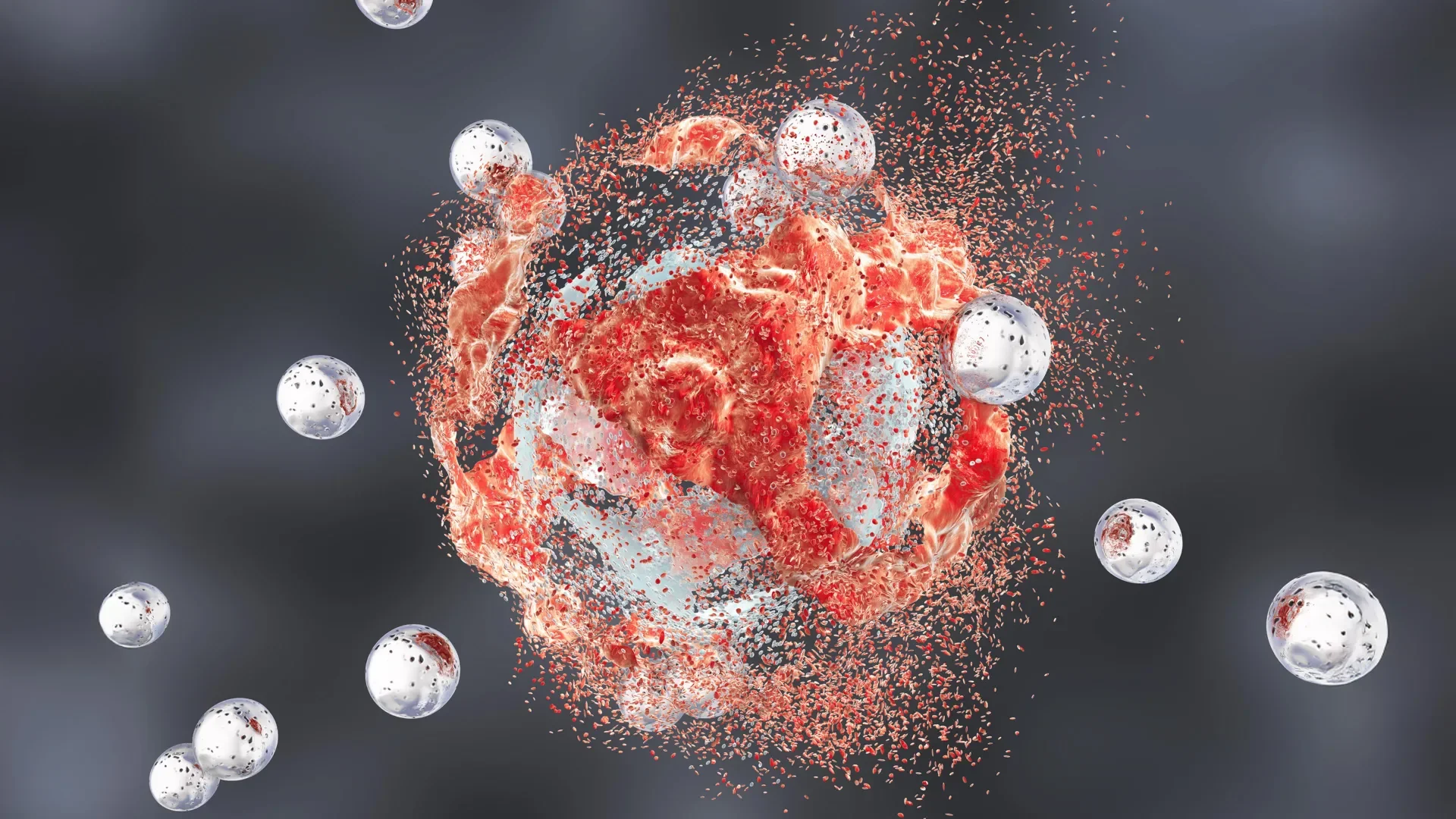
Visualization
In an illuminating breakthrough at the Walter and Eliza Hall Institute (WEHI), researchers have unveiled a previously unrecognized immune mechanism capable of targeting small cell lung cancer (SCLC), an aggressive malignancy notorious for its evasive tactics against therapeutic interventions. The findings, published in the journal *Cancer Cell*, reveal an overlooked class of immune cells—gamma delta T cells—that exhibit a remarkable ability to identify and eradicate SCLC cells, including those that have draped themselves in layers of immunological disguise.
The relentless nature of SCLC presents a formidable challenge in the oncological landscape, with less than 7% of patients surviving five years post-diagnosis. Conventional immunotherapy has shown limited efficacy for SCLC due in part to the cancer’s sophisticated strategies to elude immune surveillance. The tumor’s ability to camouflage its presence has historically rendered many immunotherapeutic approaches ineffective, allowing the disease to persist unabated despite the host's immune arsenal.
Professor Kate Sutherland, the senior author of the study, underscores a significant revelation: the survival outcomes of patients appear to correlate with the abundance of these specialized immune cells in the tumor microenvironment. “For decades, we've known that small cell lung cancer is exceptionally good at hiding from the immune system," she noted. "We've found an immune cell that appears to be able to see through that disguise.” This critical finding establishes gamma delta T cells as potent warriors against a cancer that has confounded researchers for years.
To substantiate their hypothesis regarding the efficacy of gamma delta T cells in combating SCLC, the research team developed three-dimensional miniature tumor models sourced from patient-derived tissue samples, provided by the Victorian Cancer Biobank. These mini tumors serve as sophisticated in vitro systems that authentically mimic the malignancy's behavior and response to therapeutic agents. Upon introducing gamma delta T cells isolated from the same patients' peripheral blood, a striking transformation occurred: these immune cells demonstrated an impressive capacity to recognize and obliterate SCLC cells within the tumor constructs.
The WEHI team further advanced their study by evaluating two existing pharmaceuticals—tarlatamab, an SCLC-targeted therapy, and zoledronate, traditionally used to treat osteoporosis and malignancy-associated bone disease. Both agents were tested in conjunction with gamma delta T cells to assess their potential enhancement of the immune response. Remarkably, zoledronate not only amplified the availability of gamma delta T cells but also augmented their proficiency in identifying lung cancer cells. Tarlatamab, on the other hand, served to facilitate the convergence of these immune cells with cancer cells, effectively steering the onslaught towards the tumor population.
The resultant synergy between gamma delta T cells and the combined pharmaceutical agents resulted in a dramatic increase in the cytotoxic activity against the SCLC cells in laboratory assays, positing a promising new strategy for bolstering immunotherapeutic outcomes. The implications of these findings extend beyond laboratory advancements; they suggest a framework through which existing medications can be repurposed to render existing therapies more effective.
Dr. Jin Ng, the study’s first author, articulates a vision for future clinical applications centered on adoptive cell transfer. This regenerative therapy involves harvesting and expanding immune cells ex vivo before reinjecting them to enhance the patient’s cancer-fighting capabilities. With established protocols for the amplification and reintroduction of gamma delta T cells already in place, the speed at which these insights can transition from bench to bedside seems more feasible than ever. "For patients with lower gamma delta T cell levels, therapies such as zoledronate may offer a way to boost their cancer-fighting immune cells,” Dr. Ng elucidates.
The genesis of this groundbreaking research stemmed from the data analysis of two pivotal clinical trials, IMpower133 and CASPIAN, which have solidified the role of immunotherapy in SCLC treatment. Utilizing advanced genomic and bioinformatic techniques, the research team discovered that patients exhibiting robust gamma delta T cell signatures correlated with enhanced responses to immunotherapy, strengthening the notion of their significance in mediating antitumor immunity.
As the WEHI researchers collaborate with scientists at the Doherty Institute, they aim to lay the groundwork for pioneering a new class of immunotherapeutic agents uniquely designed to target SCLC. This research, backed by the Cancer Council Victoria and the National Health and Medical Research Council, not only elucidates a pathway towards addressing one of oncology’s most persistent dilemmas, but also opens the door to personalized therapeutic strategies. The science of the immune system continues to unveil its complexities, but this latest development signifies a pivotal shift—a beacon of hope for patients grappling with one of the most tenacious adversaries in cancer.