Field: Technology
Scientists Uncover a Bizarre Paradox Among Endangered Penguins
Published | Technical Staff
Visualization
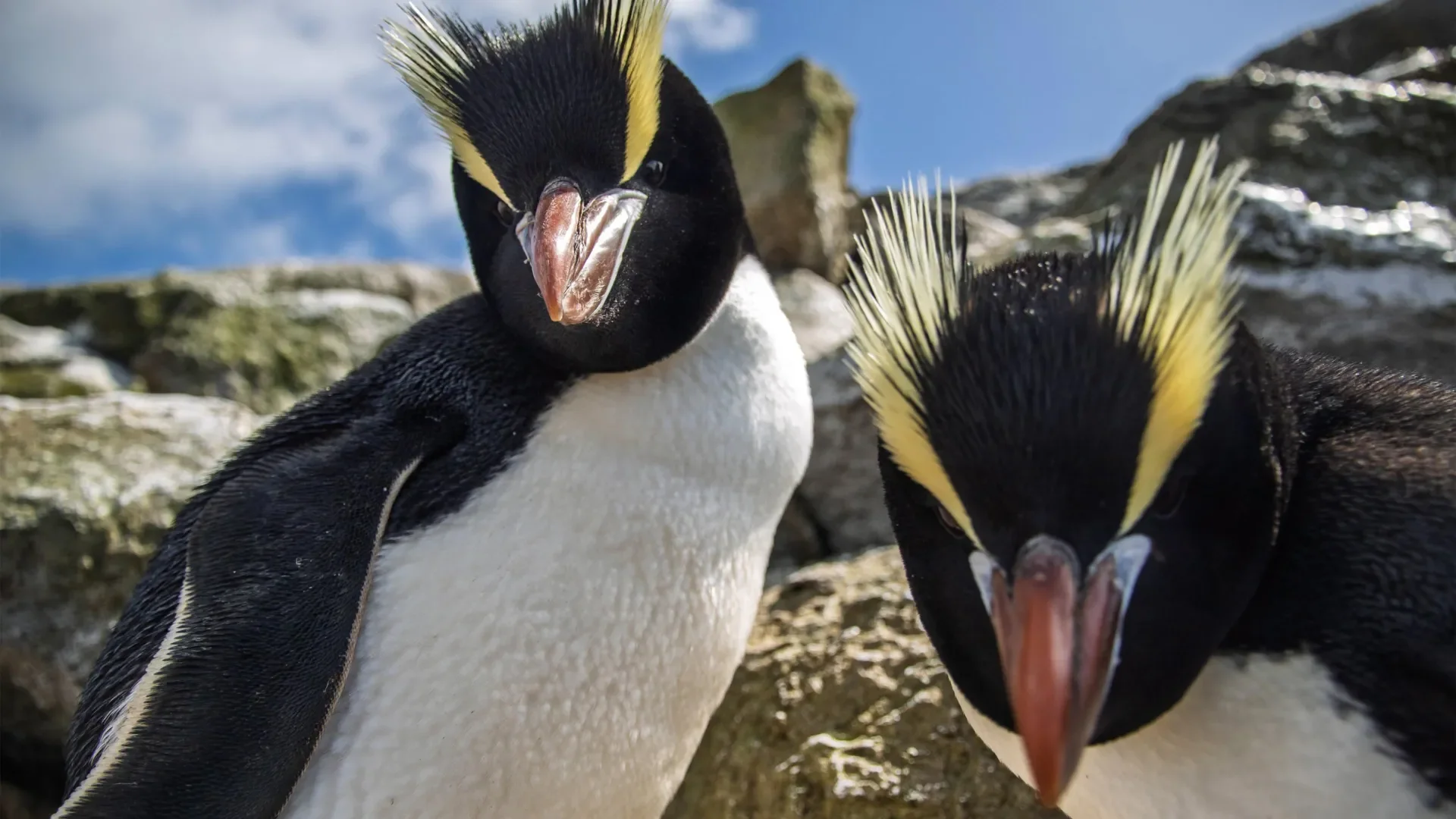
In a profound investigation into the dynamics of Erect-crested penguin populations, researchers from the University of Otago, in collaboration with the Antarctic Research Trust and the Global Penguin Society, have uncovered a remarkable dichotomy between two distinct breeding locales of this vulnerable species. Published in PLOS ONE, their findings reveal a disconcerting yet fascinating rift in the survival trajectories of penguins inhabiting New Zealand's Antipodes Islands and the Bounty Islands.
Utilizing advanced drone technology, the researchers conducted an unprecedented survey over the course of two years, meticulously capturing aerial imagery to enumerate penguin colonies on both island groups situated roughly 800 kilometers southeast of New Zealand's South Island. This extensive biological assessment revealed a startling statistic: on the diminutive Bounty Islands—just 50 hectares in size—approximately 27,800 breeding pairs exist, nearly equaling the 29,800 pairs counted on the much larger Antipodes Islands, measuring about 2,000 hectares. The Bounty Islands, historically perceived as a mere sideline in the penguin's narrative, have maintained a remarkably stable population over the last quarter-century, while the Antipodes Islands face a 40% decline since records began in the mid-1990s.
Dr. Thomas Mattern, the lead researcher and principal investigator of the Tawaki Project, articulated the implications of these findings, emphasizing the need to reevaluate prior assumptions regarding the resilience of penguin populations based on geographic size alone. This study subverts the prevailing ecological wisdom that the largest landmass would inherently support the greatest density of breeding pairs. Instead, it raises urgent questions regarding the multifaceted pressures influencing these two populations.
The survival of the Antipodes penguins is threatened by a confluence of environmental and biological factors. Dr. Mattern posits that the decline is attributable in part to the increased predation from skuas, native subantarctic birds that have fortified their predatory behavior amidst dwindling numbers of other prey. As Erect-crested penguin colonies shrink, the defensive benefits of large group nesting decline, exposing vulnerable eggs and chicks to heightened predation. Coupled with changing environmental conditions, including increased frequency and intensity of storms—a clear signal of climate change impacts—these penguins face a precarious existence.
Adding another layer of complexity, the researchers highlighted the historical context of competition for resources. The catastrophic drop in Eastern Rockhopper penguin populations, due to factors likely linked to warming ocean temperatures, has precipitated a predation shift in skuas towards Erect-crested penguin offspring. The correlation between the decline of Rockhoppers and increased predation on Erect-crested penguins underscores the intricate web of interspecies dynamics that inform survival strategies over time.
Geographical variances in sustenance acquisition further complicate the ecological landscape. Data show that Erect-crested penguins from the Antipodes engage in extensive migrations into the Antarctic Polar Frontal Zone post-breeding, often traversing substantial distances in search of food. In contrast, their counterparts from the Bounty Islands exploit a more sheltered marine habitat closer to their nesting sites, leading to a sustainable foraging strategy that buffers them from storm-induced hazards and resource scarcity.
Drawing a parallel to quantum mechanics, the researchers conceptualize this predicament of contradictory population dynamics as "Schrödinger’s Penguin." In this reframing of the famous thought experiment, it is not merely the observation but the contextual understanding that alters perceptions. Prior to the aerial surveys, the prevailing belief was that Erect-crested penguins existed in one singular, collective state; yet subsequent findings reveal a stark divergence: a thriving population on Bounty Islands and a beleaguered cohort on Antipodes Islands.
Despite their designation as "Endangered" on the International Union for Conservation of Nature’s Red List, public awareness and conservation efforts for Erect-crested penguins lag behind those for other species like the hoiho or yellow-eyed penguin. The new population estimates, based on comprehensive counting rather than historical approximations, serve as a clarion call for nuanced conservation strategies. Addressing the perplexing issue at hand, if the two disparate populations are averaged into a single assessment, the species could misleadingly transition to a rating of "Vulnerable," thus obscuring the critical situation on the Antipodes Islands.
This unintended consequence of conservation assessment scores highlights a pressing challenge. Though Bounty Islands' penguins appear stable, they also face looming threats from industrial fishing practices encroaching on their marine sanctuary, which could undermine their ecological advantages in the face of broader environmental shifts. As scientists probe deeper into the complexities of species survival, the revelations about the Erect-crested penguins exemplify the intricate dance between preservation and predation in a changing world. Such insights merit immediate consideration by conservationists and stakeholders alike, as they navigate the precarious pathways to safeguarding one of New Zealand’s most enigmatic avian inhabitants.