Field: Technology
Scientists Tracing the Evolutionary Roots of Human Brain and Body Cross-Wiring
Published | Technical Staff
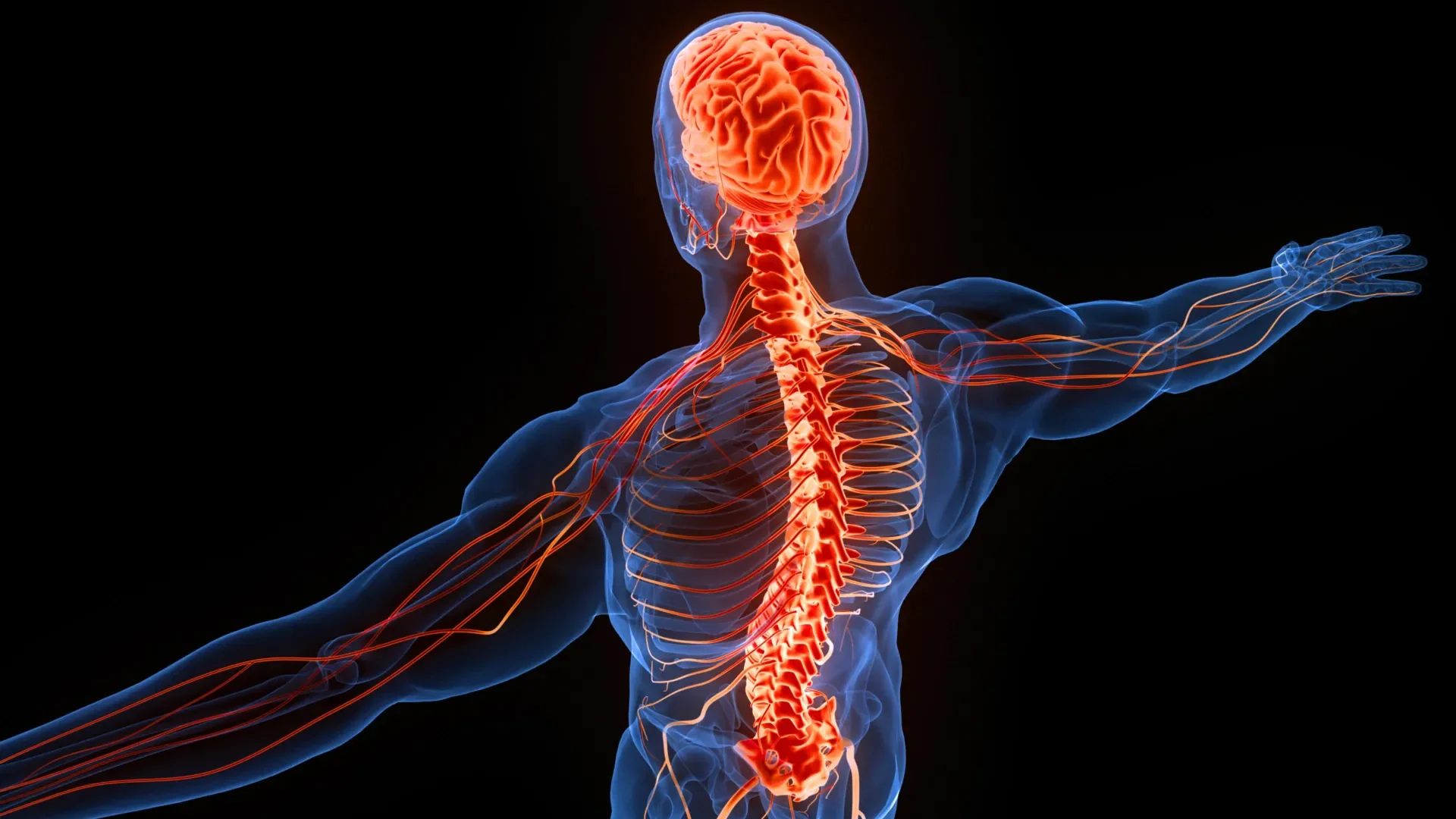
Visualization
The intricate cross-wiring of our neural architecture, where the left hemisphere governs the right-side body functions and vice versa, has stirred questions among neuroscientists for decades. Delving into this enigma, Dr. Martin Wessendorf and Daniel Wang offer a groundbreaking theory suggesting that these contralateral connections may be remnants of a time over 500 million years ago, originating within the visual systems of ancient fish. This perspective repositions our understanding of how neural circuits evolved, indicating that they did not emerge solely to enhance specific functionalities but rather as a byproduct of evolutionary processes that repurposed existing structures.
Within our central nervous system, numerous neural pathways traverse from one hemisphere to the opposing side, a phenomenon well-represented in tetrapods—four-limbed vertebrates—which includes a broad array of species from mammals to reptiles. In examining the evolutionary lineage of these circuits, the researchers' recent publication in *Frontiers in Neuroanatomy* highlights the elaborate configurations that govern not just sensory perception but also myriad layers of motor control.
To appreciate the historical significance of these crossed connections, one must consider the fundamental workings of the visual system. When light passes through the lens of the eye, it projects an inverted image onto the retina; thus, stimuli from the right visual field stimulate receptors on the left-side retina and vice versa. Via the optic nerve, this sensory data travels to the optic chiasm, where visual inputs from each field undergo an intricate reorganization before steering information to the appropriate hemisphere. Such an arrangement is instrumental for coordinating swift responses to visual stimuli, an evolutionary necessity in the precarious environments faced by our ancestors.
The optic tectum, an ancient structure noticeable in nearly all vertebrates, plays a pivotal role in defining the response dynamics of visual information. This midbrain region not only detects visual stimuli but integrates sensory inputs such as sound and somatosensory data into coherent maps. As a consequence, each side of the optic tectum relays information to the opposite brain hemisphere, reinforcing the idea that such cross-wiring may well originate from primitive circuits tasked with survival instincts.
Beyond vision, Wessendorf and Wang meticulously explore two major sensory pathways that are foundational for relaying information from peripheral body regions to the brain, each reflecting the evolutionary commonality among tetrapods. The dorsal column pathway, responsible for transmitting sensations of fine touch, vibration, and proprioception, ascends through the spinal cord and intersects at the brainstem—then crossing to the contralateral hemisphere provides an insight into the robustness of this primitive design. Conversely, the spinothalamic tract conveys sensations of pain and temperature by crossing within the spinal cord itself, emphasizing the central nervous system's versatile adaptation strategies across evolutionary timelines.
Motor control architecture exhibits analogous crossed pathways, allowing the brain's left side to modulate right-side muscle functions. Among the significant circuits is the tectospinal pathway, which facilitates rapid bodily responses to environmental cues. For instance, the split-second reaction to an approaching car from one's peripheral vision is coordinated via the tectospinal tract, exemplifying the ancestors' necessity for immediate reflexes to evade predators and navigate dangers.
Equally crucial is the rubrospinal pathway, originating from the midbrain's red nucleus, which influences limb coordination. This pathway’s evolutionary stability among various tetrapods implies its deep-rooted significance, though modern adaptations reveal its heightened importance in mammals.
The corticospinal tract, a more sophisticated feature within the human neurological framework, further illustrates the complexity introduced through evolutionary refinement. Found exclusively in mammals, this pathway extends from the intricately layered cerebral cortex, uniquely tailored for precise motor functions. It not only regulates sensory input but also governs the nuanced control necessary for skilled tasks, such as manipulating objects with our fingers. The development of this fine motor control is accentuated in primates, particularly humans, where intricate neurological connections accommodate advanced adaptive behaviors.
In essence, the cross-wiring of our neural connectome encapsulates a legacy of evolutionary history shaped by ancient needs and contemporary experiences. This compelling tapestry weaves together components of sensory perception and motor control, giving us insight into the evolutionary pressures that continue to influence our biological wiring. Understanding this confluence of factors not only enlightens our perspectives on human neuroanatomy but also reinforces the notion that our behaviors and physical responses are intricately linked to our evolutionary journey—a journey paved by our ancient fish ancestors millions of years ago.