Field: Technology
Scientists Reveal Europe's Ancient Forests Were Nothing Like We Imagined
Published | Technical Staff
Visualization
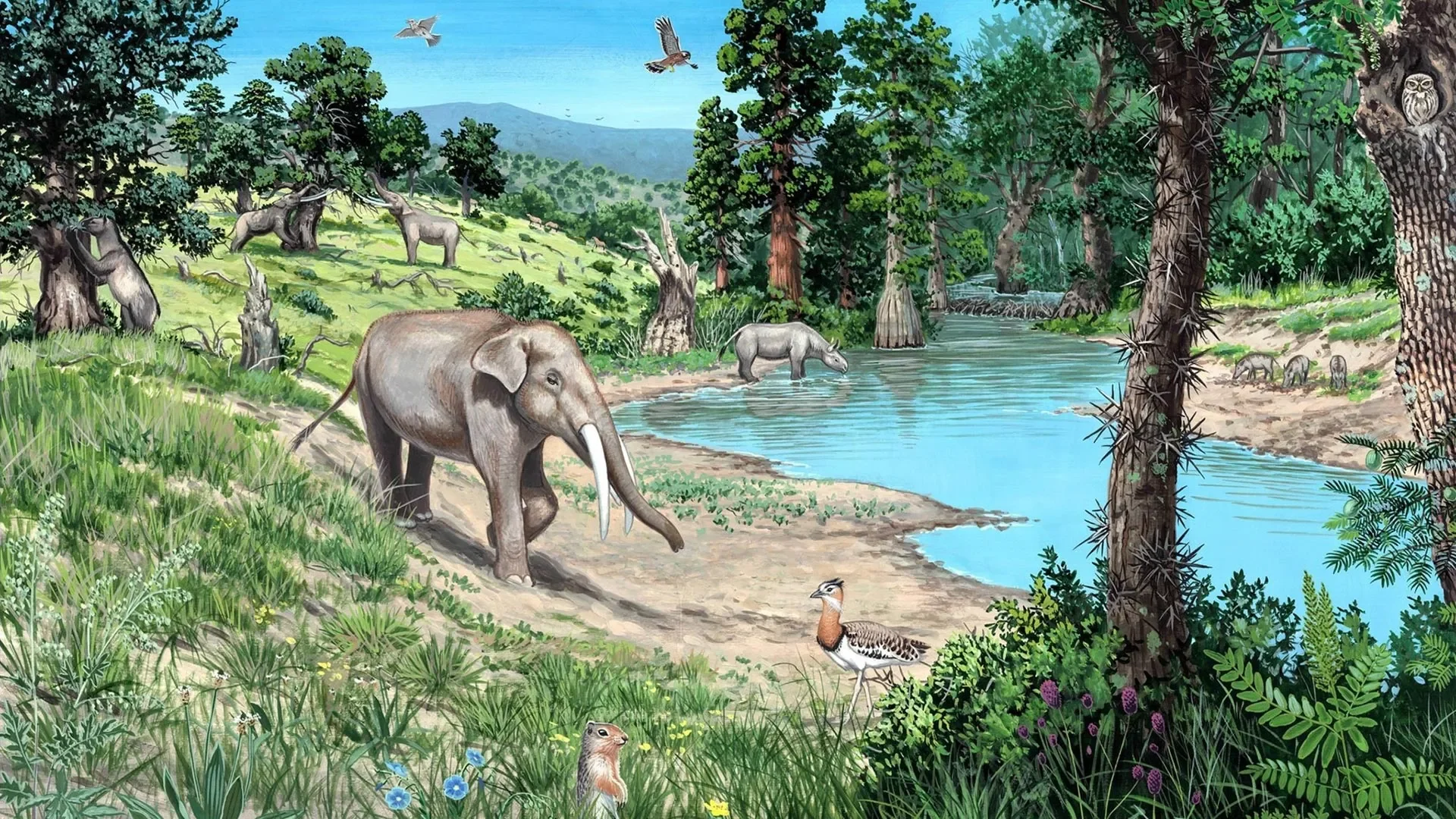
A sweeping 20-million-year study has radically transformed the conventional understanding of Europe's ancient landscapes, revealing that they were not dominated by dense forests but rather characterized by open woodlands, vibrant meadows filled with wildflowers, and large grazing species. The implications of these findings are profound: modern reforestation efforts that prioritize the establishment of thick forests may inadvertently disrupt the very biodiversity they aim to protect.
This groundbreaking research, led by a team from Aarhus University, draws from an extensive assembly of paleoecological records that span the Miocene epoch, which began approximately 23 million years ago. By meticulously analyzing a diverse array of data including fossilized pollen, plant remnants, charcoal from ancient wildfires, and even environmental DNA preserved in sediments, the researchers have established a portrait of a landscape that diverges starkly from the dense forest paradigm traditionally associated with pre-industrial Europe.
The assumption that a continuous stretch of closed-canopy forests was the dominant ecological state has long shaped conservation and reforestation strategies across the continent. The researchers’ revelations challenge this closed-forest paradigm, bringing to light a more complex tableau of ecological interactions. Their findings suggest that rather than being uniformly forested, much of Europe was a dynamic mosaic of habitats—interspersed grasslands, shrubs, and varying tree cover coexisted over millions of years. This heterogeneity supported a rich variety of species, many of which were adapted to exploit both wooded and open environments.
Through an innovative methodological approach, the research team employed multiple independent proxies to create a comprehensive picture of the ancient ecosystems. Paleoecology, which uses fossilized evidence to reconstruct ancient environments, has typically relied on singular types of data. In this study, however, the combination of fossil evidence, chemical signatures from herbivore remains, and ancient environmental DNA has allowed an unprecedented high-resolution exploration of the transformations that occurred in European landscapes.
Szymon Czyzewski, a lead author and PhD candidate at Aarhus University, elaborates, “By integrating these different datasets across time, we traced long-term changes and revealed the pivotal role large herbivores played in shaping ecosystems.” The evidence consistently indicates that through periods marked by varying climatic conditions—whether temperate, warmer, or cooler—Europe’s landscapes charted a lasting equilibrium of trees and open spaces rather than the unbroken forests typically imagined.
Among the most compelling indicators of this ancient eclecticism is the significant role of large herbivores such as elephants, rhinoceroses, aurochs, and bison. These behemoths, now absent from modern ecosystems, were crucial in maintaining the diversity of habitats by voraciously grazing and foraging. Their presence prevented encroachment from tree species, allowing flowering plants and grasses to flourish in what might have otherwise become a dense, tree-dominated landscape. The researchers’ findings indicate that these animals’ interactions with their environment were instrumental in cultivating diverse ecosystems—a fact starkly absent in today’s Europe, which has seen the eradication of most large wild herbivores and a decline in traditional grazing practices.
The ecosystem shifts observed within the last century alone have dramatically altered vegetation dynamics and structure across the landscape, further distancing modern ecosystems from their ancient precedents. “The ecosystems we see today lack the large wild herbivores that not only shaped landscapes but also sustained its biodiversity for millions of years,” Czyzewski notes.
Another significant revelation from the study is the existence of open woodlands thriving with wildflowers, challenging the notion that ancient forests were solely shaded and dense environments. The past landscapes—cradling a rich tapestry of plant life—underscore their ecological value in promoting pollinators such as butterflies and birds, thus highlighting the importance of maintaining varied habitats for modern biodiversity conservation efforts.
Critically, these findings prompt caution in current reforestation strategies, which may aim to counteract climate change by planting densely packed forests. The researchers highlight a fundamental misalignment between these initiatives and the ecological realities shaped over millions of years. Professor Jens-Christian Svenning, the senior author and director of the Center for Ecological Dynamics in a Novel Biosphere (ECONOVO) at Aarhus University, asserts, "This research shows that our current approach to reforestation is misguided. Planting dense forests for carbon sequestration may be at odds with the biodiversity goals we strive to achieve.”
In light of this revealing evidence, conservationists are urged to rethink the ecological design of reforestation projects, opting for strategies that reflect the diversified historical landscapes of Europe. As modern human activity continues to exert influence over the planet's ecosystems, retaining the integrity of our natural heritage necessitates an informed and nuanced understanding of our ecological past. Ultimately, this study serves as a clarion call for an ecological renaissance that aligns with the intricacies of the landscapes that have governed biodiversity throughout the ages.