Field: Technology
Scientists Overcome a Hidden Obstacle to More Powerful Quantum Computers
Published | Technical Staff
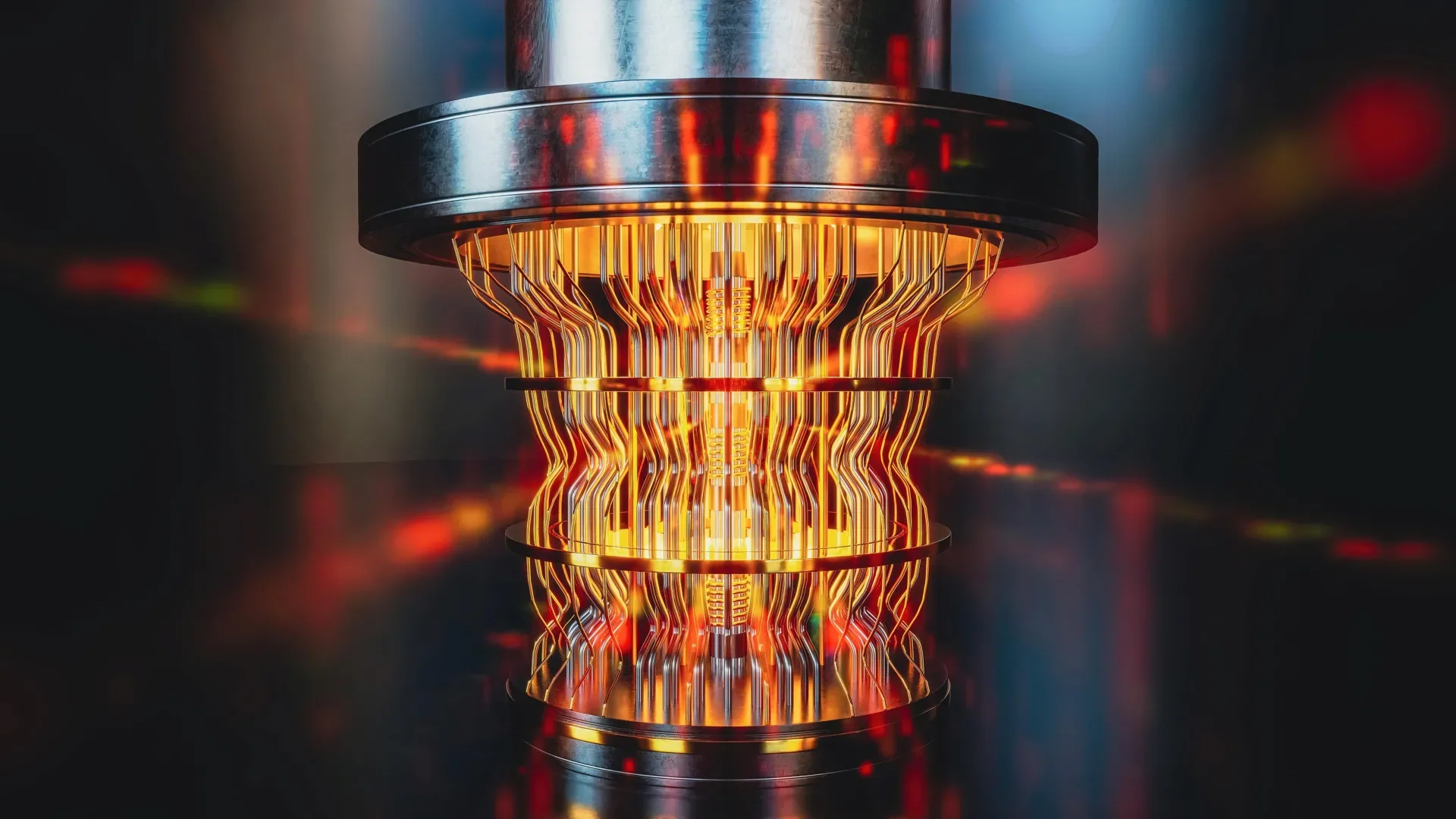
Visualization
In a remarkable advancement toward the plausible realization of large scale quantum computing, researchers at the RIKEN Center for Emergent Matter Science have demonstrated unprecedented control over multiple silicon qubits, retaining accuracy levels that set a promising precedent for future quantum processors. Silicon spin qubits—which utilize the intrinsic spin of electrons confined in silicon to represent quantum information—possess significant advantages over other qubit types due to their compatibility with existing semiconductor manufacturing techniques. Yet, the pursuit of practical, high-accuracy quantum calculations has been impeded by a notorious challenge: the erratic behavior that arises when attempting to maneuver multiple qubits simultaneously.
Traditionally, when qubits are operated concurrently, their fidelity—defined as the degree to which the resulting quantum operation aligns with its intended outcome—deteriorates, often due to quantum mechanical phenomena that introduce errors into their operations. The RIKEN team's investigation, recently published in Nature Physics, unlocks a pathway toward mitigating these issues. Employing an innovative experimental setup comprising an array of five silicon qubits, the research sought to identify and rectify a primary source of operational inaccuracies known as the AC Stark shift.
The AC Stark shift arises when the microwave signals intended for qubit manipulation inadvertently modify the effective energy levels of these qubits, causing phase shifts within their quantum states. Such distortions are particularly disruptive when multiple qubits are controlled in tandem, pushing their precision beyond acceptable limits. A hallmark of the RIKEN findings is their calibration strategy, which circumvents the complexity of providing individual calibrations for each qubit combination. Instead, the researchers focused on calibrations executed between pairs of qubits. This pairwise method not only streamlined the calibration process but also served as a robust compensatory mechanism against the unwanted phase shifts, providing heightened accuracy in simultaneous qubit operations.
The meticulous execution of the experiments revealed extraordinary results. When tested individually, each of the five qubits attained fidelity metrics that surpassed 99.99%, with the pinnacle nearing 99.999%. Even more intriguingly, this precision was largely retained when engaging as many as three qubits in parallel, with fidelity remaining above 99.99%. In tests where all five qubits operated simultaneously, the accuracy faltered slightly yet impressively sustained at approximately 99.9%, edging significantly closer to the fault-tolerant thresholds necessary for scalable quantum computation.
Despite these advances, the research delineates the remaining challenges, primarily linked to drive-induced decoherence, a consequence of escalating microwave power requirements for collective qubit operation. Decoherence represents the gradual loss of quantum coherence critical for maintaining the integrity of operations under quantum mechanics. Although the new calibration technique ameliorated many errors, the interplay between decoherence and fidelity indicates that ongoing enhancements to device architecture could offer further error reduction.
This research effectively positions shared control lines as a strategic method for expanding quantum systems and integrating larger quantities of qubits without sacrificing quality. In a landscape where each qubit’s independent control system might prove unwieldy, leveraging shared microwave channels presents a plausible avenue for scaling silicon-based quantum processors. Camenzind, one of the lead researchers, remarked on the significance of this study: "By addressing a key source of control errors, we underscore the feasibility of shared control architectures, reinforcing silicon's compatibility with established manufacturing frameworks."
The overarching aspiration remains a fault-tolerant quantum computer—an extraordinary machine capable of performing complex computations with reliability amidst the myriad of disturbances that affect quantum systems. As Seigo Tarucha affirms, the work of the RIKEN team represents an indispensable step toward achieving this vision. By harnessing advances in calibration methodologies and hardware design, they have illuminated a promising path forward for the quantum computing landscape, moving ever closer to unlocking the full potential of silicon spin qubits in practical applications.