Field: Technology
Scientists discover the immune system’s hidden sense of touch
Published | Technical Staff
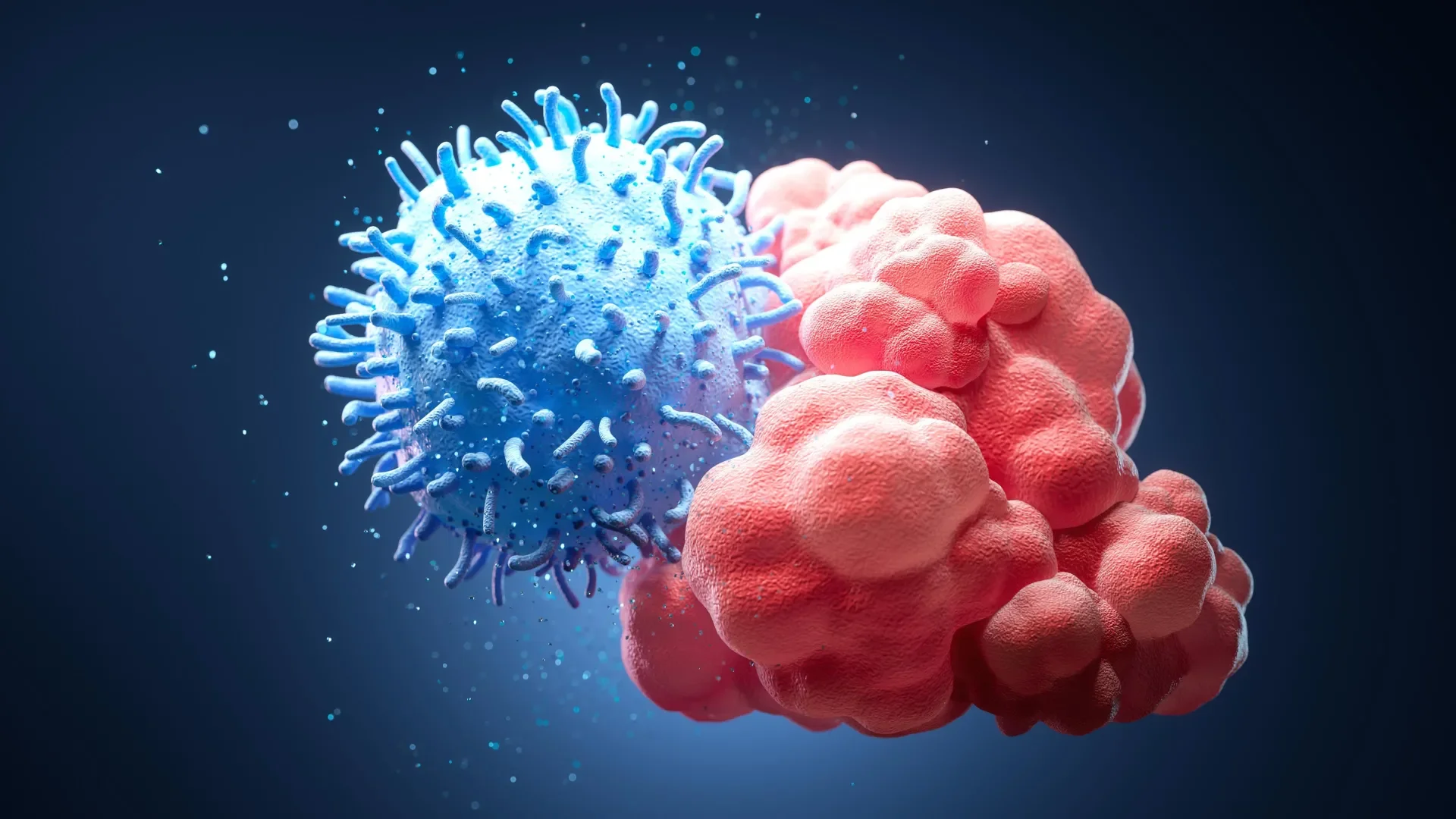
Visualization
In a groundbreaking revelation, a team of researchers from McGill University has unveiled a previously unknown capability within the immune system, which could significantly reshape our understanding of how long-term immunity is established and maintained. This novel insight lies in the ability of T cells—integral warriors of the adaptive immune response—to perceive the mechanical properties of their surrounding tissues, particularly the stiffness, thus influencing their development into long-lasting memory cells.
Historically, scientific consensus held that the differentiation and function of tissue-resident memory T cells were predominantly dictated by biochemical cues. These specialized immune cells, once activated by an infection, remain ensconced within the body’s tissues, poised to counteract any recurrence of the same pathogen with a swift and robust response. However, recent investigations challenge this foundational belief. The study, published in *Nature Immunology*, thrusts physicality into the spotlight, suggesting that these cells possess a sensory mechanism akin to a tactile ability, allowing them to respond to their immediate physical environment.
Judith Mandl, lead author and professor in the Department of Physiology at McGill, articulated the significance of this discovery, stating, "This is an exciting fundamental finding that challenges the way we think about immune cells." The revelation posits that T cells can "feel" their surroundings, which shapes their fate—a dynamic interaction where mechanical forces are not mere background noise but rather an active participant in immune behavior.
The elaborate investigation synthesized efforts from multiple departments within McGill, including Physiology, Bioengineering, and the Alan Edwards Centre for Research on Pain, alongside collaborators from institutions in the Netherlands and the United States. At the heart of their inquiry lay a series of meticulously designed experiments using collagen gels that simulated various tissue stiffness. The researchers sought to delineate how T cells harvested from both human and murine sources responded to these engineered environments.
As expected, their findings were illuminating. The stiffness parameter—quantified accordingly—was directly correlated with T cell activation. Strikingly, within stiffer matrices, T cells exhibited an enhanced propensity to evolve into memory phenotypes, bolstering their readiness for future immune challenges. This correlation suggests that the physical properties of the extracellular matrix (ECM) significantly modulate T cell fate, elucidating a previously obscured avenue for cellular adaptation.
Encapsulated within this new paradigm is the pressing question of how T cells transduce these mechanical signals at the molecular level. The research team now aims to isolate the specific mechanosensors involved in this process, delving into the molecular pathways that convert mechanical stimuli into biochemical cascades. Identifying these pathways could not only provide insight into T cell biology but also afford new strategies for manipulating immune responses, pivotal in navigating conditions where the immune system is dysfunctionally engaged, such as in autoimmune disorders and cancer.
The implications of this study extend deeply into the realms of immunotherapy and oncology. As T cells must frequently navigate compact and fibrous tumors—often experiencing high mechanical resistance—an enhanced understanding of their mechanosensory abilities could lead to innovatively constructed immunotherapies that enhance T cell infiltration and efficacy against malignancies. Mandl noted, "Understanding how T cells adapt to these environments could help researchers design cancer immunotherapies that are better able to reach and attack tumors."
The funding for this research was generously provided by a coalition including the Human Frontier Science Program, the Canadian Institutes of Health Research, the Canadian Foundation for Innovation, the Natural Sciences and Engineering Research Council of Canada, and the U.S. National Institutes of Health. As these researchers continue to investigate the intricate dance between T cells and their physical surroundings, the potential for advancing therapeutic strategies becomes all the more promising, heralding a new era in disease treatment grounded in the profound interplay between biology and biophysics.