Field: Technology
Scientists discover metals that defy the deep freeze at -424°F
Published | Technical Staff
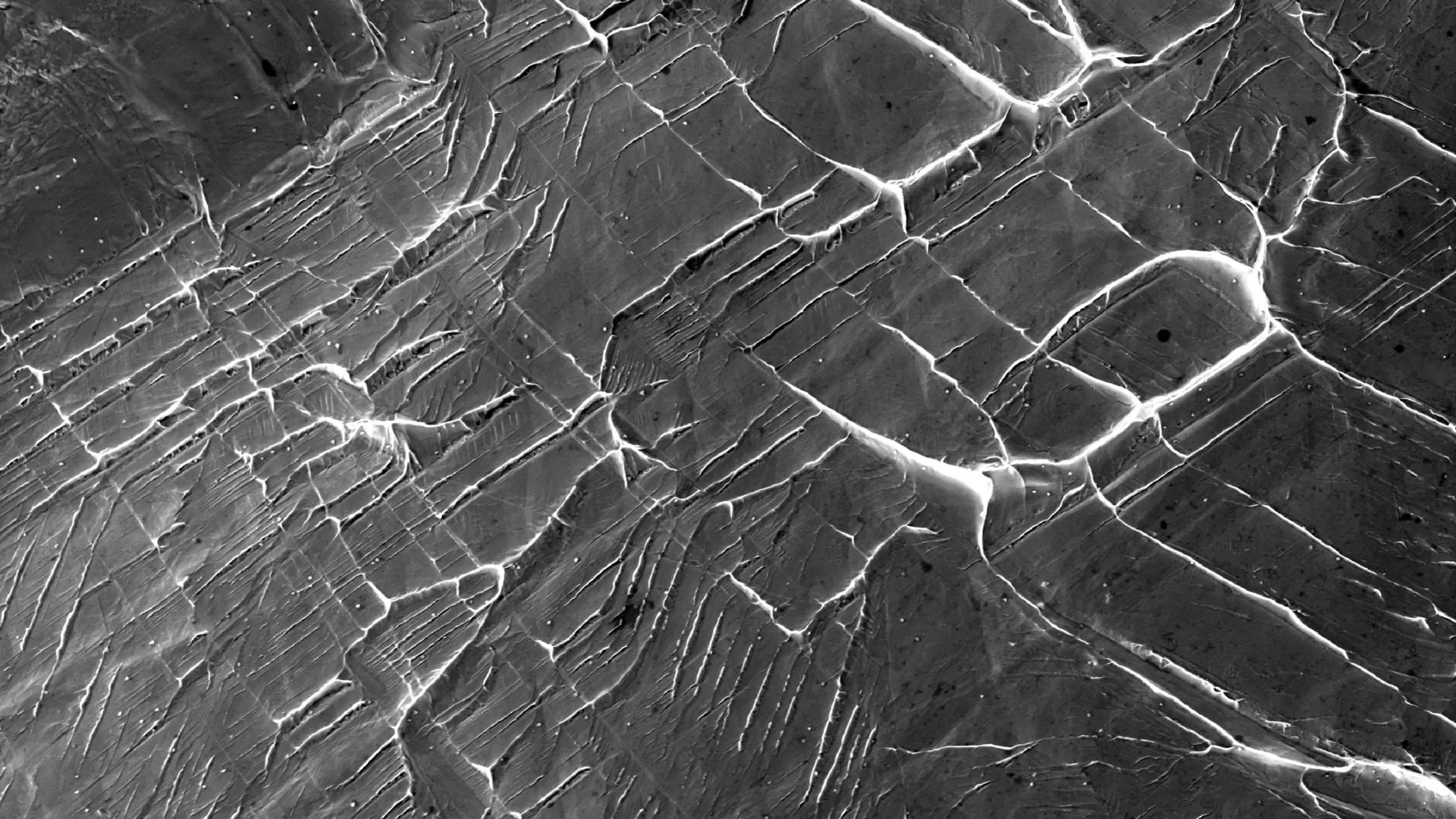
Visualization
In an extraordinary entry into the realm of material science, researchers have elucidated a profound discovery regarding two experimental alloys that resist the proclivity for brittleness typically exhibited by metals at extreme cryogenic temperatures. A collaborative effort spearheaded by an international team from the University of California, Berkeley, Lawrence Berkeley National Laboratory, and the University of Oxford uncovered mechanisms that enable these niobium-titanium-based alloys to maintain structural integrity at temperatures plunging to a staggering -253°C (-424°F). Findings, published in *Nature* on October 14, 2026, challenge established paradigms surrounding metallic behavior and hold significant implications for engineering applications in severe environing extremes.
Historically, the cooling of metals engenders increases in strength—yet this enhancement comes tethered to a severe downside. At lower temperatures, various metals transition into a brittle state, vulnerable to fracturing under minor stress, particularly those categorized under body-centered cubic (BCC) structures such as iron, tungsten, and chromium. This structural arrangement poses unique challenges at cryogenic levels, as the typical deformation mechanisms, especially those involving dislocation movement, become ineffective with decreasing temperature. The entrenched phenomenon known as the ductile-to-brittle transition spawns a paradox for engineers, complicating the use of BCC metals in environments where both flexibility and support are paramount.
The emergent understanding of the subject alloys heralds a paradigm shift, as these materials eschew the anticipated brittleness at sub-zero temperatures. Instead of succumbing to fracture, they employ an alternative phenomenon, dubbed nanoscale twinning. This process allows discrete sections of the metallic crystal lattice to reorganize into mirror-image arrangements, which then facilitate the formation of new crystal structures capable of accommodating stress—a behavior akin to a transportation system devising detours when traditional routes are obstructed by icy conditions.
At temperatures nearing absolute zero, the mechanical advantage of existing dislocation movement diminishes. These experimental alloys present a solution by generating new internal defects, which serve as substitutes for the inaccessible dislocations in traditional BCC metals. This newly revealed twinning mechanism acts synergistically with the material's capacity for phase transformation, imparting the alloys with an unexpected resilience. By generating additional defects at crystal interfaces, the materials can redirect impending stresses, allowing for deformation rather than failure.
Professor Dong Liu from the University of Oxford emphasizes the groundbreaking nature of these findings. The results illustrate a critical reevaluation of brittleness in body-centered cubic metals, noting that previous considerations predominantly emphasized the movement of pre-existing defects. The ability to create new structural pathways during deformation emerges as a vital attribute for designing materials intended for deployment in systems subject to extreme thermal conditions, such as in energy production, aerospace, and advanced transportation.
Attention to detail is salient in the rigorous methodology employed to assay the metals at frontier temperatures. Utilizing the Engin-X instrument at the ISIS Neutron and Muon Source located in Oxfordshire, researchers subjected the niobium-titanium samples to harsh tests. By cooling these samples with gaseous helium to approximately -253°C, the team directed neutron beams through the materials while simultaneously stretching the samples using a specialized device. This dual-faceted approach not only quantified the metals' fracture resistance under stress but also provided critical insights into their internal behaviors during deformation.
Examination under high-resolution electron microscopes unveiled fine structural changes that elucidated pathways enabling the materials to endure forces that could otherwise precipitate failure. Moreover, atom-probe analysis was applied to gain a granular understanding of elemental distribution within the alloys, further reinforcing the synergistic role of microstructural features and mechanical performance.
The implications of this research transcend mere theoretical intrigue, suggesting novel strategies for the engineering of advanced structural alloys exhibiting ductility and resilience under extreme conditions. As the scientific community contemplates these findings, the potential for applying such innovations in harsh environments—where conventional metals falter—may soon reshape the future of material design for cutting-edge technology applications. The discovery not only holds promise for enhancing the reliability of components subjected to radical temperature variations but also invites an invigorated discussion on the fundamental principles governing metallic behaviors at the microstructural level.