Field: Technology
Scientists Discover Dinosaur Blood Preserved for 115 Million Years, Challenging Assumptions of Biological Longevity
Published | Technical Staff
Visualization
In a groundbreaking revelation from the annals of paleontology, researchers have unearthed traces of dinosaur blood that have astonishingly endured for an astonishing 115 million years. This meticulous discovery, spearheaded by an international team from Curtin University, advances our understanding of molecular preservation in ancient biological materials and may reshape not only our perceptions of dinosaur physiology but also our strategies for detecting life forms beyond our planet.
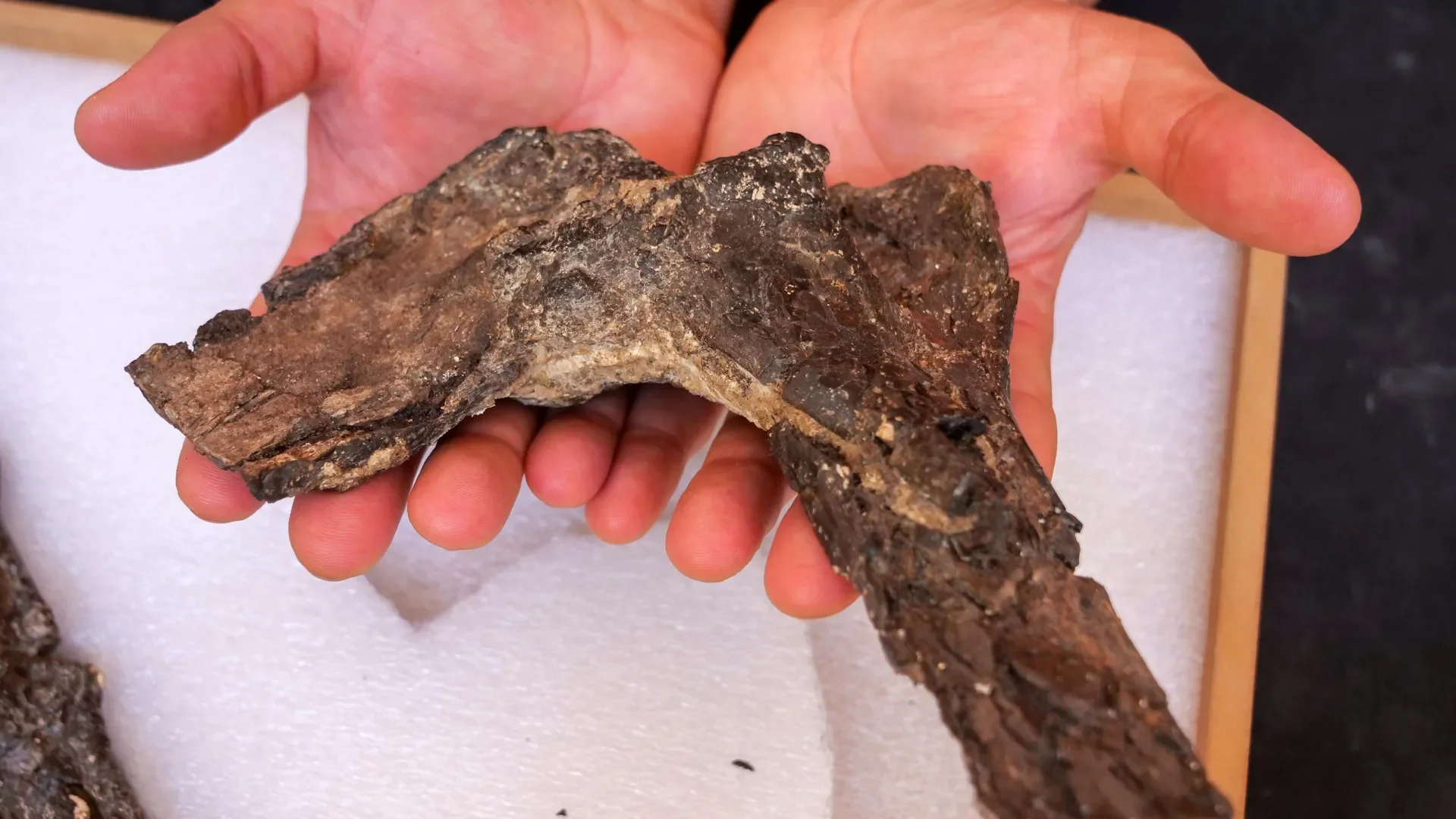
The focus of this research centers on the theropod dinosaur Aratasaurus museunacionali, a carnivorous specimen retrieved from northeastern Brazil. The team identified both fossilized red blood cells and an array of associated chemical signatures, including remnants of amino acids linked directly to collagen—an indispensable protein playing a vital role in structural integrity across various tissues. Significantly, this achievement marks the first conclusive chemical confirmation of heme-derived molecules located within the fossilized red blood cells, previously only hypothesized and inferred from morphological structures.
Utilizing advanced spectrometric techniques, the researchers conducted a rigorous chemical analysis of the dinosaur's skeletal remains, specifically targeting vascular canals—the slender conduits that were once suffused with blood. Remarkably, within these canals, they discovered mineralized red blood cells, leading to the identification of preserved heme molecules, constituents of hemoglobin essential for the oxygen transport within the body. This minute yet pivotal evidence illuminates the possibility that some biological materials, long deemed too delicate to endure the relentless march of geological time, can indeed survive under exceptional conditions.
Professor Kliti Grice, a lead researcher and director at the WA-Organic and Isotope Geochemistry Centre, heralded the discovery as a monumental leap forward, emphasizing its potential reveals about the physiology and behavior of ancient organisms: "To detect intact heme-derived molecules in 115-million-year-old red blood cells is astonishing; this really is a landmark discovery." His assertion encapsulates the profound implications for understanding the evolution of biological systems and the physiological adaptations of life forms that roamed the Earth eons ago.
An intriguing factor behind the extraordinary preservation of these molecules lies in the mineral known as hausmannite, which played a critical role in stabilizing the fossilized blood cells and their chemical constituents over millions of years. This mineral effectively created a natural time capsule, safeguarding microscopic evidence of the dinosaur's biological functions. The burial conditions that enveloped this organism are also deemed crucial; rapid sedimentation in an environment characterized by low oxygen levels and heightened microbial activity facilitated the preservation of biological material that would otherwise have succumbed to decay.
This seminal research bridges several esteemed institutions, seamlessly aligning expertise across disciplines from Curtin University to the Japan Agency for Marine-Earth Science and Technology, the Brazilian National Museum, and Johns Hopkins University.
By challenging the long-held paradigm that biological molecules associated with blood could not persist through deep time, this research opens a myriad of new possibilities for molecular-level paleontology. As Professor Grice articulated, the findings ignite exciting avenues for investigating the intricate histories of blood evolution, metabolic functions, and even the behavioral dynamics of long-extinct species. The molecular insights derived from these ancient remains stand to revolutionize how scientists reconstruct the intricate web of life that once thrived on our planet.
Furthermore, the implications of this discovery extend far beyond dinosaurs, intersecting with the burgeoning field of astrobiology. Understanding the viability of biological structures over geological timescales poses significant implications for the quest to find evidence of ancient life in extraterrestrial environments. Professor Martin Van Kranendonk underscores this connection, stating that the study's revelations reshape our conception of how molecular structures might survive harsh, alien conditions. If biological molecules can endure for more than a hundred million years, the search for signs of life beyond Earth necessitates a reevaluation of both the methods and contexts in which we seek such precious elusive evidence.
The global collaborative nature of this research exemplifies how interdisciplinary partnerships can yield extraordinary insights into our planet's biological history. The significance of these findings, documented in the Proceedings of the National Academy of Sciences, not only enriches our understanding of the past but also propels our inquiries into the vast unknown, illuminating the extraordinary potential of life to endure across time and space. The journey of this ancient blood, rescued from the depths of time, invites us to ponder the resilience of life, both ancient and potentially extraterrestrial.