Field: Technology
Scientists discover a hidden messaging system deep inside the brain
Published | Technical Staff
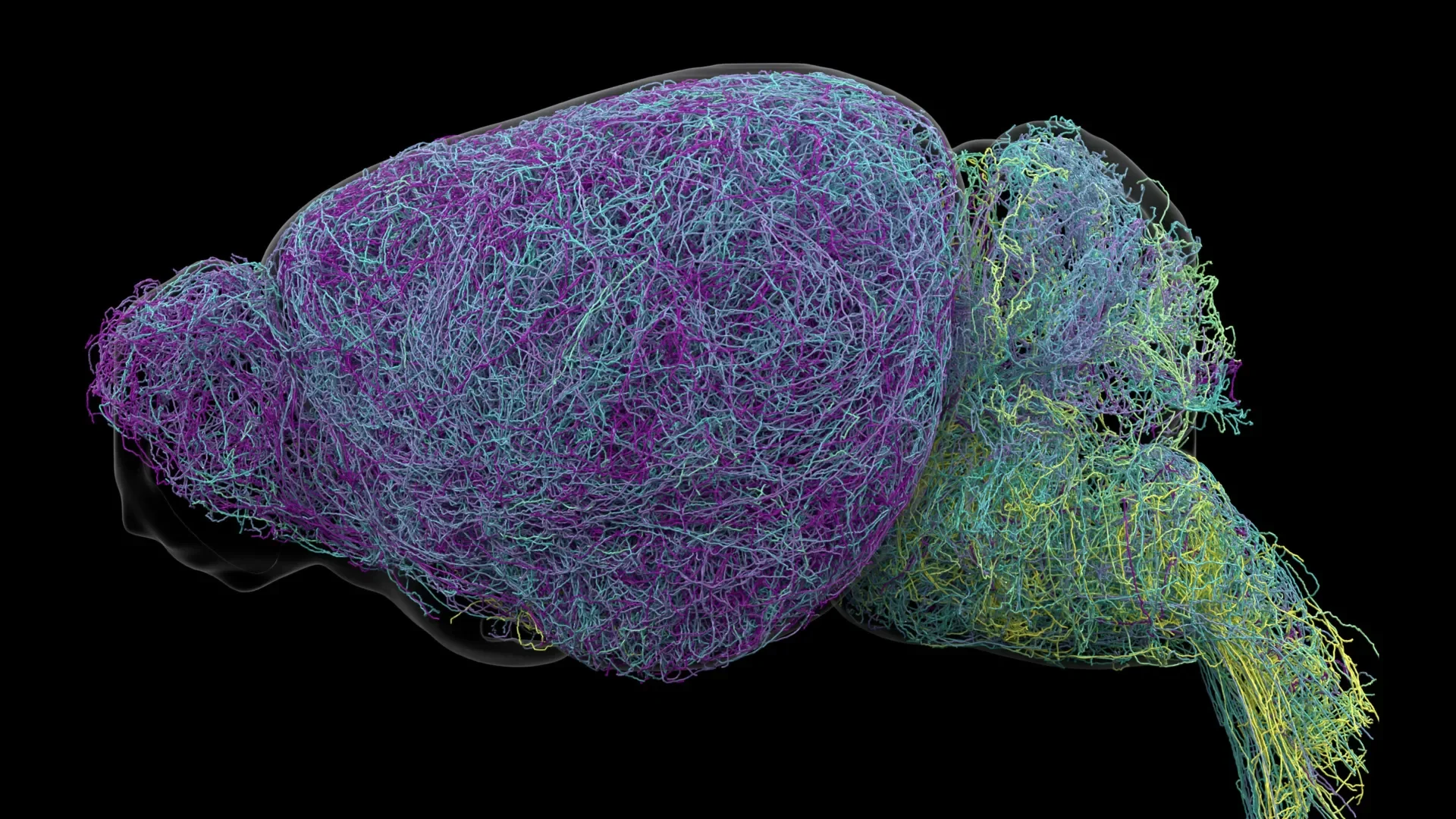
Visualization
Deep in the microanatomy of the brainstem lies the locus coeruleus (LC), a diminutive cluster of neurons that belies its significant influence on a diverse array of cognitive functions. Traditionally construed as a mono-dimensional broadcaster of norepinephrine (NE)—the neurochemical mediator involved in attention modulation, learning enhancement, and stress response—recent advances in neuroscience have dismantled this oversimplified paradigm. A groundbreaking study led by researchers at the Allen Institute unveils that the LC does not merely emit a homogenous signal across the cerebral matrix; rather, it operates as a sophisticated, target-specific communication hub. This transformative revelation is supported by a synergistic approach comprising brain imaging, neural recordings, genetic profiling, and behavioral assays performed on murine models.
Through meticulous tracing of neuron pathways, the Allen Institute team established the existence of discernible communication channels originating from the LC that emanate to various destinations within the central nervous system. They observed a clear dichotomy in function based on anatomical positioning within the LC: the upper or dorsal neurons project primarily to the cerebral cortex and forebrain, while the lower or ventral neurons are inclined to send their signals downward to the brainstem and spinal cord. This architectural stratification not only delineates how specific neuronal subpopulations exert influence over distinct brain functions but also reflects a highly organized signaling network that dispels the classical 'loudspeaker' analogy, favoring instead a more accurate representation akin to a nuanced postal service.
The implications of these findings extend beyond mere academic curiosity. They present a paradigm shift in how we conceptualize the locus coeruleus's role in both normal functionality and pathological states of the brain. Given norepinephrine's central function in regulating mood and attentiveness—dysregulation of which is linked to neuropsychiatric conditions like anxiety, ADHD, and depression—the newfound specificity of the LC’s signaling pathways offers promising avenues for therapeutic innovation. It implies that pharmacological interventions could be refined to selectively target these specialized circuits, mitigating the systemic side effects that often accompany existing treatments.
Further enriching the tapestry of discovery, the researchers isolated a fascinating behavioral nexus among the dorsal and ventral populations of LC neurons. The dorsal neurons exhibited heightened activity during learning paradigms, suggesting a crucial role in adaptive decision-making when subjects faced unfavorable outcomes. In contrast, the ventral neurons were notably active before mice exhibited disregard for potential reward cues, indicating their operation in modulating engagement with the environment. This functional dichotomy aligns with distinct transcriptional profiles, essentially highlighting that differing gene expression patterns reinforce the specialized roles of these neurons, further illustrating a high degree of operational sophistication.
Intriguingly, during their rigorous examination, the team documented the presence of remarkably elongated axons within the LC. Some projected neuronal fibers averaged an astounding 35 centimeters in length, with one singular neurite stretching to 70.32 centimeters, a record for mouse neurons recorded to date. These extensive projections suggest a capacity for vast neurotransmitter distribution across significant brain regions, although they paradoxically maintain selective signaling patterns, further supporting the LC's role in a finely-tuned communication network rather than an indiscriminate broadcast system.
Moreover, the study elucidates parallels between the norepinephrine and dopamine signaling systems, positing that these neuromodulators may function cohesively to facilitate learning through concurrent transmission of complex signals. The interactive dynamics between these two systems open fresh vistas for exploring the brain's operational design, especially concerning the processes underpinning habit formation and cognitive flexibility.
As researchers continue their foray into the intricate workings of the locus coeruleus, the conduit of communication revealed in this study extends an invitation for deeper exploration into similarly structured neural pathways present in the human brain. This could, in the long term, revolutionize our understanding of neural circuity involved in cognition and behavior, paving the way for interventions that are both localized and effective in treating the myriad neurological disorders that afflict humanity. As empirical evidence mounts, the LC stands poised at the nexus of neuromodulation, grounded firmly in the belief that understanding its specialized pathways may ultimately illuminate the path toward targeted, efficacious therapies.