Field: Technology
Scientists Achieve a Revolutionary Breakthrough in Quantum Surface Interactions
Published | Technical Staff
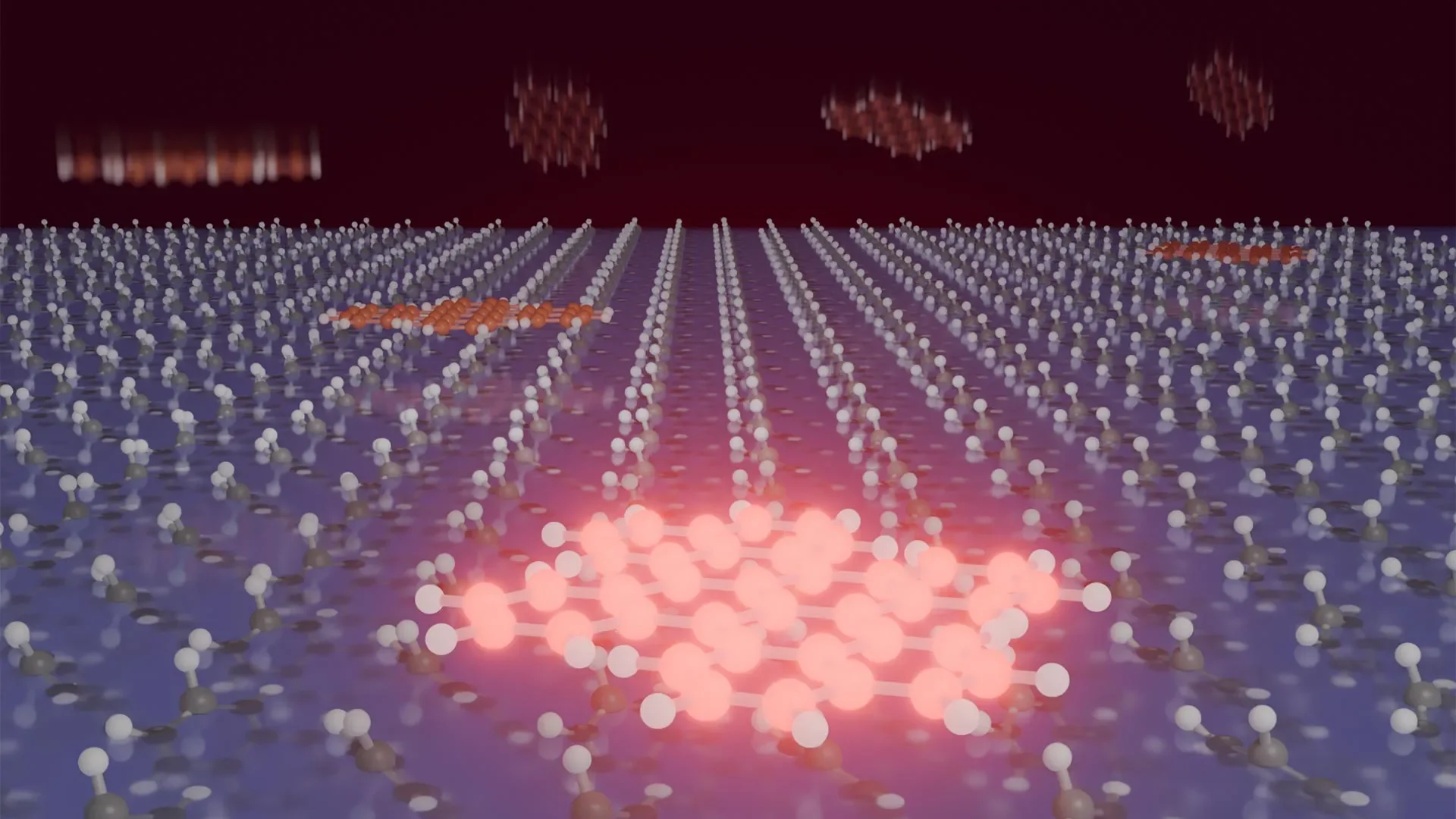
Visualization
In a remarkable advancement, researchers at the Max Planck Institute for the Science of Light (MPL) have established a new threshold in quantum physics by rendering an ultra-clean surface capable of sustaining the fundamental quantum properties of individual molecules. This achievement not only embodies a significant scientific milestone but also opens avenues for transformative developments in quantum technologies, offering unprecedented levels of control over molecular interactions.
Molecules and quantum emitters lie at the center of future quantum applications, which rely on the behavior of these minute entities under the influence of light. Specifically, quantum emitters are defined as systems capable of generating single photons, serving as conduits for storing quantum information, and facilitating coherent communications between disparate quantum systems. To investigate these quantum states, it has been crucial for scientists to preserve the stability of quantum emitters, traditionally accomplished through vacuum confinement or embedding within solid matrixes. This has, however, limited the accessibility and manipulability of individual molecules, particularly as researchers have struggled to harness the advantages that surface interactions might offer.
The MPL team, led by Prof. Vahid Sandoghdar, confronted this longstanding challenge by devising a novel approach that capitalizes on the unique sublimation properties of organic crystals. In their meticulously designed experiments, they introduced a crystal into a cryostat—a specialized apparatus designed for generating ultra-low temperatures—allowing the upper layers of the crystal to evaporate slowly. This sublimation efficiently removed surface contaminants, resulting in an extraordinarily pristine surface. Subsequent cooling to a few Kelvin above absolute zero not only halted further sublimation but also safeguarded the crystal's integrity, creating an immaculate environment for the deposition of molecules.
As the final step, the researchers utilized a precision-engineered oven to evaporate specific molecules onto this meticulously prepared crystal surface. Through this intricate sequence of cleaning and molecular deposition, the scientists were poised to probe whether these adhered molecules would retain their fragile quantum characteristics.
Dr. Alexey Shkarin, a pivotal figure within the Nano-Optics Division, elaborated on the metrics used to evaluate the quality of quantum emitters. “The coherence time of a quantum system serves as a crucial indicator of its longevity and effective quantum behavior,” he noted. The coherence time, defined mathematically as the duration a quantum emitter can sustain its quantum state, is fundamentally bound by the Fourier limit, which represents the inverse of the energy dissipation rate to the environment surrounding the quantum system.
In the presence of background noise, this coherence can dissipate unwarrantedly, often orders of magnitude quicker than the Fourier limit permits. Remarkably, the MPL team discovered that the molecules on their exceptionally clean surface not only attained coherence times aligned with the Fourier limit, but did so consistently, indicating a substantially stable environment conducive to preserving quantum coherence.
This landmark discovery is the first of its kind to demonstrate that molecules affixed to a surface can maintain coherence for durations defined by this intrinsic physical constraint. The implications of this finding extend beyond mere quantum coherence; through additional investigations, the MPL researchers have demonstrated that the crystal surface significantly influences molecular behavior, dictating alignment, energy levels, and potentially even molecular shapes and vibrational modes.
These insights signal transformative prospects for quantum systems and molecular manipulation. By integrating the ultra-clean surface method with advanced microscopy techniques, such as atomic force microscopy (AFM) and scanning tunneling microscopy (STM), the MPL team anticipates the capability to exert nanometer-level control over individual quantum emitters. Such precision can yield a wealth of information regarding the intricate interactions between molecules and surfaces, potentially catalyzing the engineering of novel quantum states of matter and propelling future developments in molecular quantum technologies.
As scientists forge ahead down this exciting pathway, the blending of these innovative techniques promises not only to refine our understanding of quantum systems but also to illuminate the very fabric of molecular interactions, paving the way for revolutionary advancements in how we harness quantum phenomena. The upcoming years may very well witness the fruition of these endeavors, laying a robust foundation for next-generation quantum applications that harness the full potential of the quantum realm.