Field: Technology
Salt-Loving Microbe Can Grow Under Mars-Like Conditions
Published | Technical Staff
Visualization
A recent investigation into the extremophile archaea, Haloferax volcanii, has revealed startling insights about life’s potential in Martian conditions. A study published in the journal Applied and Environmental Microbiology detailed how this halophilic microorganism thrived in a meticulously designed experiment simulating the hypothesized Martian subsurface brine environment over a span of 160 days. The research, spearheaded by Dr. Adam Robinson and his team from the University of Florida, aims to explore the viability of microbial life under circumstances resembling those of two meters below the Martian surface—locations where salinity could reach extreme levels and liquid water might linger, thus offering potential habitats for life.
Defining the boundaries of the Martian environment is a complex task. Surface conditions are marked by low atmospheric pressure, hovering at around 24 mbar (approximately 2% of terrestrial sea-level pressure), high radiation exposure, and an overall hostile oxidizing chemistry that has worsened since the Late Noachian period. However, Dr. Robinson’s team hypothesized that certain shallow subsurface regions may escape these conditions. Their experiment, therefore, utilized an ultra-low pressure inner chamber, filled with carbon dioxide and stripped of oxygen, to mirror the atmospheric conditions that could exist within sealed pockets of brine trapped in salt minerals approximately 20 cm deep beneath the Martian crust.
The experimental apparatus maintained a consistent temperature of 21 degrees Celsius while cultures were suspended in a liquid medium saturated with either nitrate or perchlorate—both compounds identified on Mars and utilized by Haloferax volcanii as electron acceptors in the absence of oxygen. This adaptation aligns neatly within the framework of anaerobic respiration, wherein the archaea utilize alternative biochemistries to sustain growth in environments lacking free oxygen.
Throughout the 160-day experiment, there was a notable fluctuation in optical density measurements, providing quantitative evidence of microbial proliferation; increases indicated active cell growth. The researchers documented declines in chemical levels—nitrate concentrations decreased by 15% to 29%, while perchlorate diminished by similar margins within the low-pressure cultures. Such findings contrasted with control groups devoid of microbial life, effectively demonstrating the archaeon’s metabolic engagement with its environment.
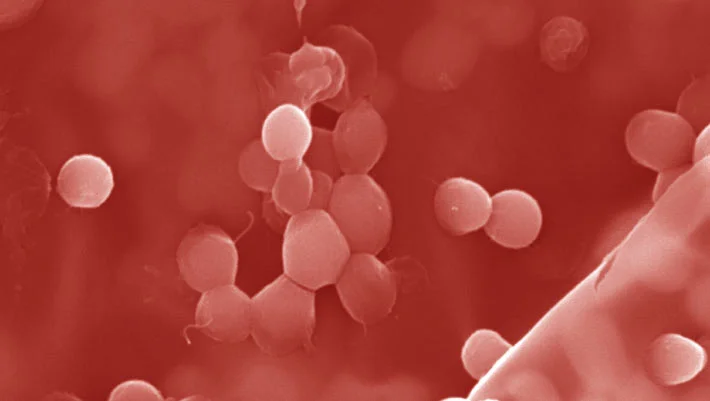
The retention of liquid moisture proved intriguing, as only a minimal loss (below 4%) occurred throughout the experiment, a notable detail given that rapid evaporation typically hampers long-term studies at such low pressures. The presence of dense biofilm structures, visible under high-resolution scanning electron microscopy, further validated the microbial activity in the Martian pressure simulations. These biofilms harbored thin appendage-like structures and dense cellular aggregations, reinforcing the notion that Haloferax volcanii can adapt and thrive in extreme hypersaline conditions analogous to those predicted for Mars.
In addition to morphological analysis, Raman spectroscopy provided insight into chemical signatures within the biofilm. The stability of carotenoid pigments, though detected at lower intensities compared to cultures exposed to oxygen, suggests the potential for biogeochemical markers, or biosignatures, in search of extraterrestrial life.
While these findings contribute to the body of evidence supporting the possibility of microbial life on Mars, it is crucial to contextualize their implications. The experiment did not replicate key Martian factors such as radiation exposure, freeze-thaw cycles, or the complete chemical milieu expected on the red planet. Moreover, the nutrient-rich medium utilized was not indicative of the organic substrates potentially available in Martian soils. Hence, while growth at such a low atmospheric pressure was achieved, the research clarifies that the existence of life on Mars remains an unproven proposition.
As the dialogue surrounding planetary habitability evolves, Dr. Robinson's work serves to broaden our investigative lens on the underlying conditions that may permit life to flourish in extreme environments, even beyond the boundaries of Earth. The ongoing search for life in the cosmos faces many unknowns, yet experiments like these pave the way for understanding the metabolic ingenuity of life forms, illustrating an inherent resilience that may just hold the key to unraveling the mysteries of extraterrestrial existence.