Field: Technology
Rice’s Whale Baleen Reveals Hormonal Tapestry of Survival and Stress at the Brink of Extinction
Published | Technical Staff
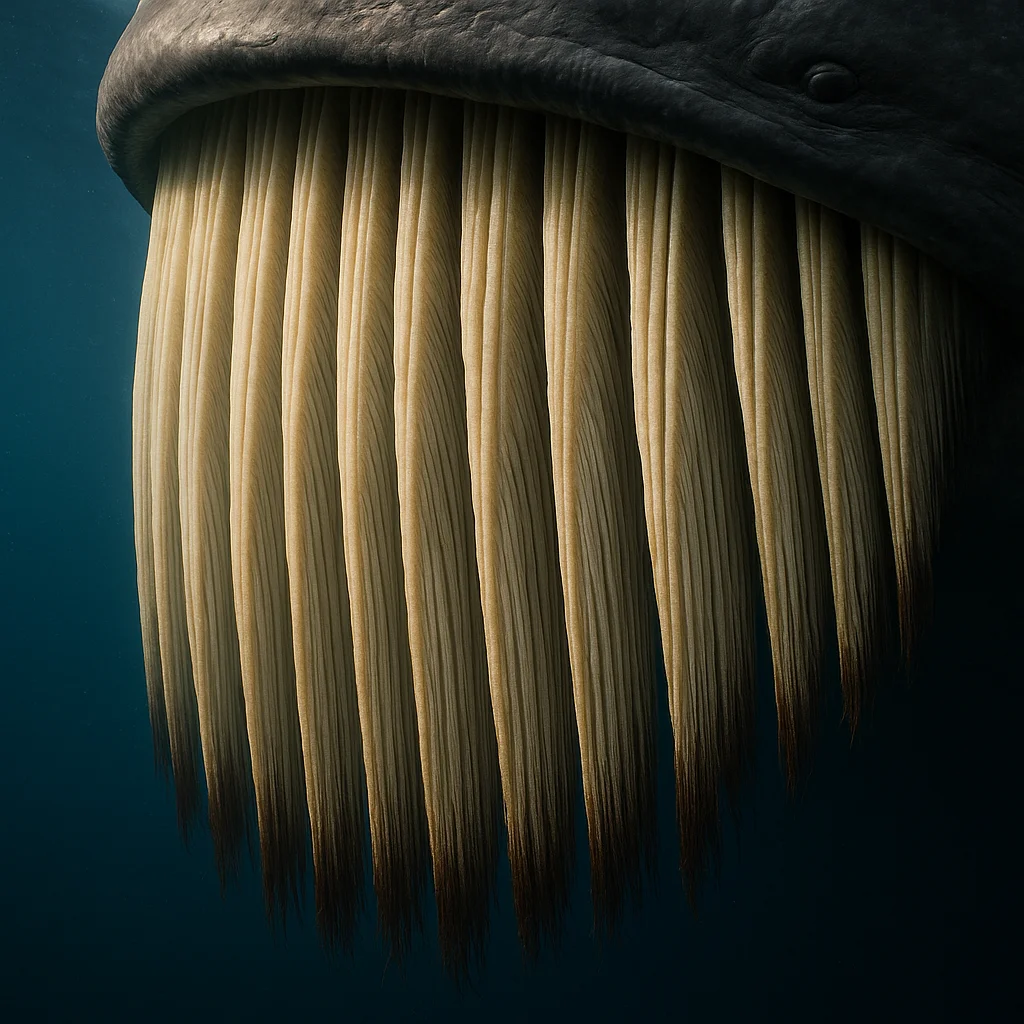
Visualization
The Gulf of Mexico harbors one of the planet’s most elusive and imperiled giants: Rice’s whale (Balaenoptera ricei). Identified as a distinct species only recently, this cousin to Bryde’s whale faces a catastrophic decline, with fewer than 50 adult individuals surviving in a habitat increasingly fragmented by human activity and environmental degradation. For marine biologists, the challenge is not merely locating these animals—but reconstructing their hidden physiological histories, and deciphering what it takes for a species to cling to existence in the Anthropocene.
A breakthrough has emerged from an unlikely source: the baleen plates lining the whales’ upper jaws. These keratinous structures, superficially resembling elongated fingernails, function primarily as sieves for filtering planktonic prey. Yet they also serve a secondary, archival purpose—preserving a continuously accruing biochemical record of their host’s internal endocrine milieu. This phenomenon, long recognized in other mysticete taxa, has now been harnessed to probe the minute, time-resolved histories of Rice’s whale physiology through hormonal analysis.
In an intensive study published in *PLOS One*, researchers obtained baleen samples from seven deceased Rice’s whales (four males, three females), collected opportunistically post-mortem. The plates were sectioned at 1-cm intervals—a segmentation corresponding to approximately 15 to 30 days of baleen growth, as established by prior isotopic growth rate calibration in related species. Each sliver, extracted via surgical drilling, thus formed a high-resolution window into the animal’s hormonal past, stretching months or even years prior to death.
The quantification of key hormones—progesterone (P₄), testosterone (T), cortisol (F), and corticosterone (B)—was achieved through immunoassays performed on finely ground baleen powder. Notably, both cortisol and corticosterone are glucocorticoids (GCs), whose concentrations are reliable proxies for organismal stress, especially under chronic physiological duress. The data revealed a distinctly moribund pattern in two particularly emaciated whales: a sharp, terminal elevation in all four hormones in the centimeters nearest the gum base, reflecting the last weeks of life. This acute GC surge (ΔF > 3.5× baseline, ΔB > 4.2× baseline) parallels observations in stranded mysticetes afflicted by chronic illness or starvation, as previously modeled by the equation:
GC_{final} = GC_{baseline} + α · t_{starvation}
where t_{starvation} is the estimated duration (in weeks) of metabolic distress, and α is a species-specific endocrine response constant.
Progesterone profiling yielded perhaps the most striking insight into reproductive history. In one adult female, researchers found a prolonged, contiguous elevation of P₄—averaging 2.8 ng/g, nearly an order of magnitude above resting values—persisting through an extended tract of baleen equivalent to several months. This signature aligns precisely with gestational timelines established by field studies on closely related rorquals. In contrast, male testosterone levels remained remarkably stable throughout the analyzed period, defying the classic seasonality observed in most temperate baleen whales, whose T typically cycles in synchrony with reproductive migration and mating season. This suggests that, in the warm, food-abundant Gulf, Rice’s whales may exhibit a non-seasonal, aseasonal reproductive cycle, with potential implications for conservation interventions targeting breeding success.
Such findings have profound significance for the conservation biology of critically endangered cetaceans. Each centimeter of baleen not only maps the hormonal flux of an individual whale, but—by extension—illuminates the species-wide stressors imposed by environmental degradants, chronic undernourishment, and disrupted social structure. With so few surviving Rice’s whales, every baleen plate now constitutes a vital biorepository—a logbook inscribed in keratin, encoding the intersecting tales of survival, stress, and the most intimate traces of life’s continuity amidst extinction’s shadow.
The study’s methodology, blending biochemical endocrinology with forensic marine biology, underscores the power of non-traditional archives for reconstructing the otherwise inaccessible dimensions of animal life. As technological advances improve both assay sensitivity and the interpretive calibration of baleen growth dynamics, this approach may soon become indispensable for tracking the hidden health and reproductive fates of the world’s rarest ocean leviathans. Until then, each orphaned strand of baleen offers not just a record of the whale’s past, but a codex for the future of conservation science.