Field: Technology
Reconsidering Space-Time: Untangling the Ontological Paradox at Reality's Core
Published | Technical Staff
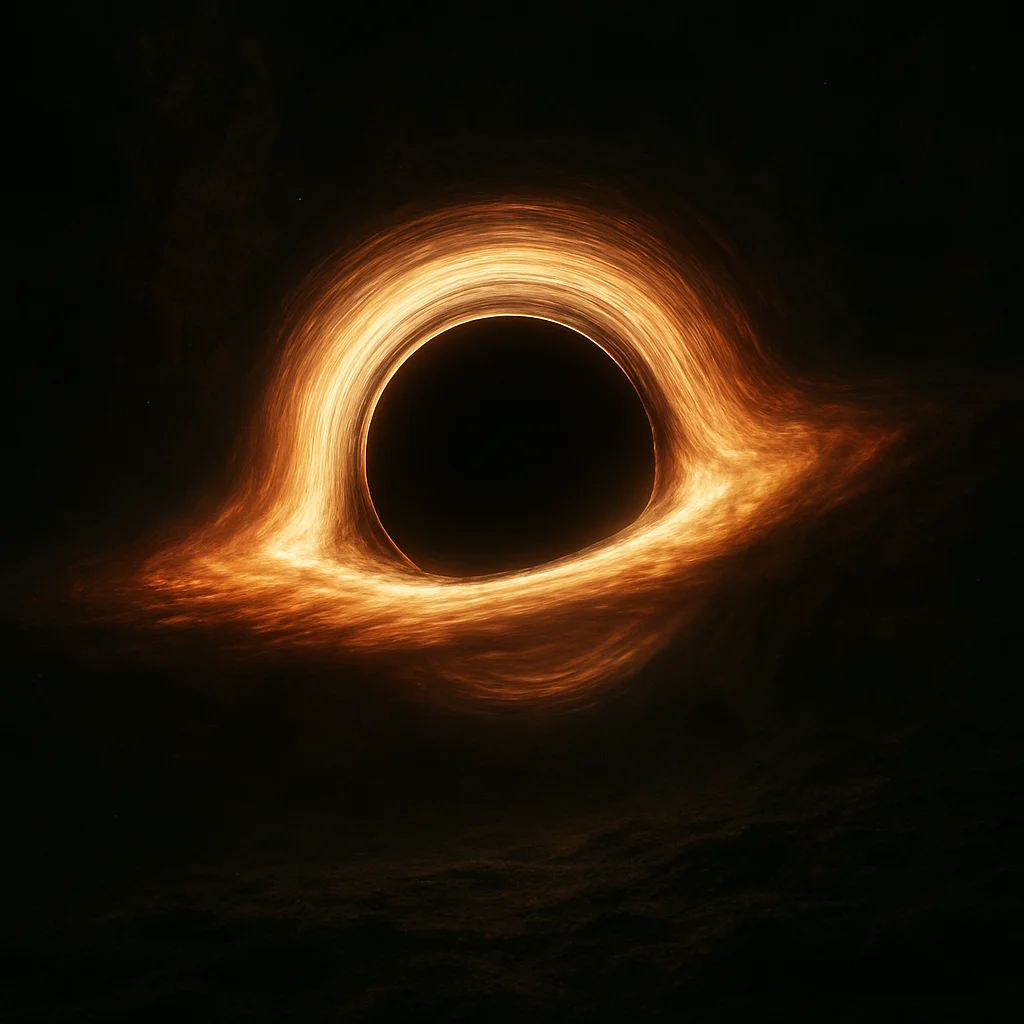
Visualization
The intellectual edifice of modern physics rests on a concept as enigmatic as it is indispensable: space-time, the four-dimensional scaffold fusing the three familiar spatial axes with time itself. This geometric entity, best formalized in Albert Einstein’s general relativity, has revolutionized our grasp of reality. Yet, beneath this synthesis lies a persistent and arguably under-appreciated ambiguity—what does it truly mean to say that space-time “exists”? Is it a literal fabric, a metaphysical structure, or simply the most successful set of relations we’ve yet devised to model change and causation?
Contemporary physics often invokes the metaphor of the “fabric of reality,” visualizing space-time as either a passive backdrop—fixed and ever-present—or a dynamical field actively deformed by energy and mass via Einstein’s field equations: \( G_{\mu\nu} + \Lambda g_{\mu\nu} = \frac{8\pi G}{c^4}T_{\mu\nu} \), where curvature and matter dance in mutual causation. However, prevailing interpretations frequently stray into philosophical territory, oscillating between the so-called “block universe” of eternalism and dynamic, relational approaches. These metaphysical underpinnings are anything but benign—they silently direct our intuitions about everything from the possibility of time travel and the meaning of causality, to the very origins and fate of the cosmos.
In the block universe formulation, the manifold of all events, past, present, and future, exists in an unchanging, four-dimensional totality. Here, “timeless” is used in the literal sense: temporal passage is proclaimed an illusion, and each event’s coordinates \((x, y, z, t)\) find their place in a grand, static tableau. The universe, in this view, is not something that “happens” but something that simply “is”. Time, like spatial extent, is just another axis, and the sensation of animation—of becoming—is dismissed as cognitive parallax.
But a critical ontological distinction is frequently overlooked: the difference between existence and occurrence. Consider the elephantine thought experiment: picture a three-dimensional elephant enduring through time—its world line a continuous four-dimensional tube through Minkowski space; it exists in every conventional sense. Contrast this with a fleeting, three-dimensional elephant that flickers into being for a mere instant—one spatial cross-section of the enduring elephant’s world line, a transient occurrence but not an independently existing entity. The distinction, subtle though it may be, is crucial. “Existence,” in the sense we attribute to objects, presupposes persistence across time—a mode of being that occurrence, a punctual happening, lacks.
When this distinction is mapped onto space-time itself, a fundamental inquiry emerges: can one meaningfully say that four-dimensional space-time exists in the same way as an enduring elephant? Eternalism claims so, positing that the entire block—everywhere and everywhen—is equally real. Yet, this introduces a paradox. If every event merely “occurs” as a slice of the static whole, and the whole is “timeless,” the block’s own ontological status becomes murky: what does it mean to say the block exists? If the block does not unfold—if there is no meta-time along which the structure persists—does it make sense to call it “existent” at all, or is it only a framework describing the set of all possible occurrences?
Attempts to resolve this logical quandary risk inadvertently smuggling temporal concepts back into the discourse. One could, for example, imagine a higher-dimensional manifold—three dimensions of space plus two time-like axes—where the existence of space-time itself is parameterized along an external “meta-time.” If space-time’s unfolding is to be resurrected, must we then posit a fifth dimension along which the four-dimensional block itself exists? This move, however, is not supported by current physics and illustrates the peril of trying to reintroduce temporal notions into a framework designed to be fundamentally atemporal.
Popular culture, in exploring time travel, provides fascinating—even if fantastical—examinations of these philosophical tensions. Films such as “The Terminator” treat the timeline as fixed, immutable; all events co-exist, and the future is as determinate as the past. In “Avengers: Endgame,” alteration of timelines is permissible, suggesting a universe in which change can impact the block itself—a move that is metaphysically ambiguous if the block is genuinely unchanging. Both narratives reflect intuitions inherited from the implicit metaphysics of space-time, but neither confronts head-on the nature of the block’s existence.
In practical terms, nothing in these philosophical musings threatens the efficacy of relativity’s mathematical framework. Einstein’s field equations, and their experimental confirmations (from the precession of Mercury’s perihelion to gravitational wave detections), remain unsullied by such ontological dilemmas. However, as the search intensifies for a quantum theory of gravity—a unified account reconciling general relativity with the non-commutative operators of quantum field theory—the metaphysical interpretation of space-time becomes more than an academic indulgence. If, as some quantum gravity programs hypothesize, space-time emerges from more fundamental pre-geometric data or quantum entanglement patterns, reconsidering what it means for space-time to “exist” may be indispensable to theoretical progress.
Thus, the language and logic we employ in discussing space-time are not idle exercises in semantics; they reach into the heart of our most basic scientific and philosophical commitments. For, if reality’s deepest structure is not a four-dimensional block nor a dynamic becoming, but something even more subtle, we may still lack the linguistic and conceptual clarity to describe it. Until then, space-time remains both the central organizing principle of modern physics, and perhaps, its most profound unresolved mystery.