Field: Technology
Quantum Computers Emerge from the Shadows of Verification
Published | Technical Staff
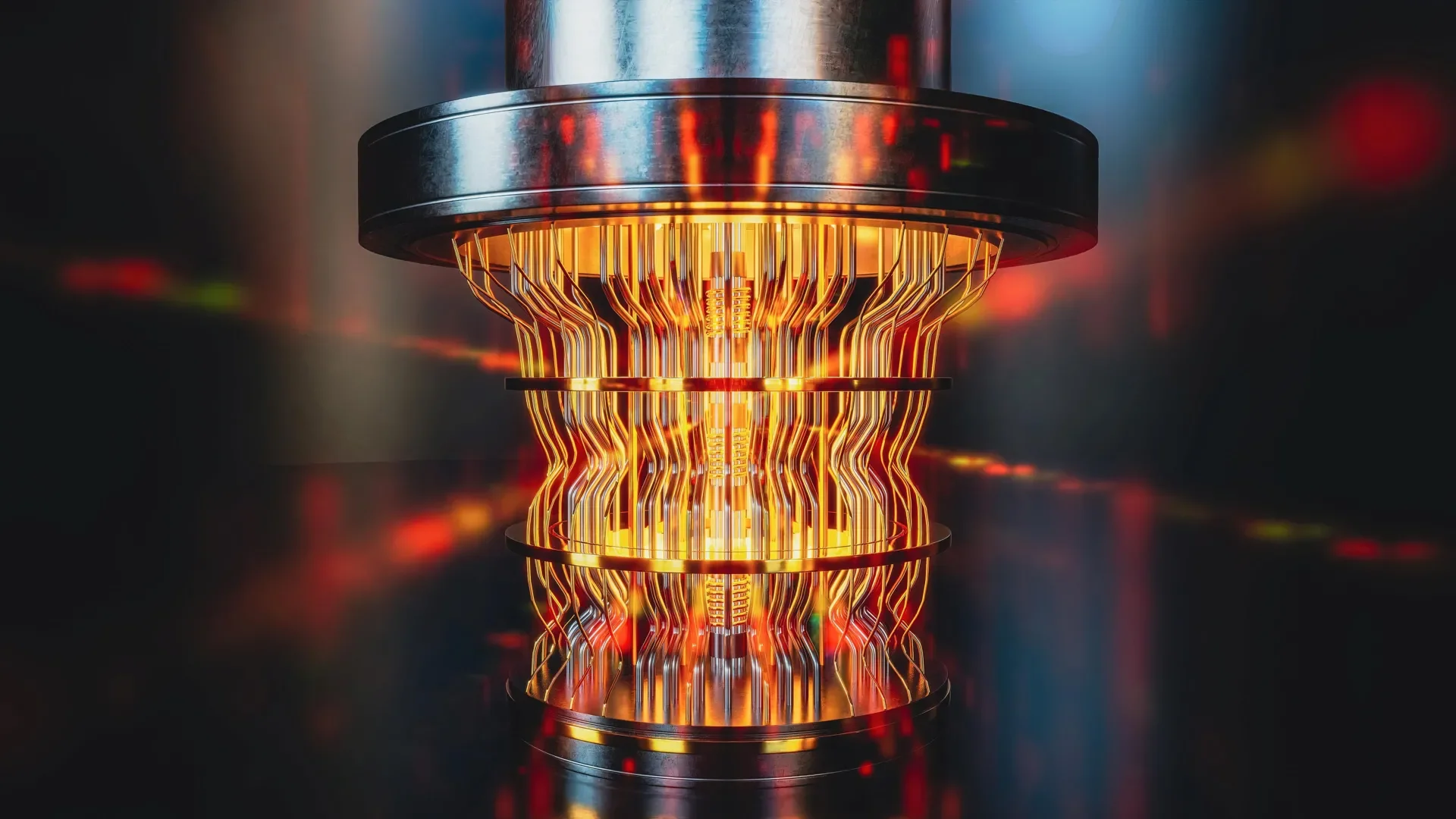
Visualization
In an age where quantum computers are transcending previous limitations, researchers grapple with the existential conundrum of verifying the accuracy of outcomes. Traditional computing paradigms, once reliable gatekeepers of correctness, are increasingly outmatched by the unparalleled capabilities of quantum systems. This reality prompted an international team of scientists, led by Tristan Kraft from the Technical University of Munich and Peter Zoller at the University of Innsbruck, to pioneer a groundbreaking methodology that promises to illuminate the murky waters of quantum simulation validation.
At the heart of this advancement lies a novel technique designed to quantify uncertainty within quantum simulations, a venture previously hindered by the rapid expansion of the quantum computational landscape. As these qubit-rich systems—pathways to solving complex problems such as molecular interactions and optimization challenges—grow denser, traditional verification becomes impractical. This critical juncture demanded an innovative approach capable of assessing reliability even as the systems in question outpace classical counterparts.
Working with a 51-qubit quantum simulator, the research team meticulously measured experimental data to reconstruct the behavioral dynamics of quantum systems. By employing Hamiltonian dynamics and Lindbladian learning approaches, they successfully derived bounding techniques for quantum simulations. This computational architecture evaluates the model's accuracy by elucidating the role of uncertainties engendered by real-world interactions—environmental noise, measurement errors, and intrinsic system fluctuations that invariably influence quantum behavior.
Kraft articulates the paradigm shift of their methodology: “Rather than presuming the quantum simulator operates flawlessly, we extract real-time data that reveals its actual interactions, interpreting the impacts of disturbances on the overall results.” This shifts the paradigm from viewing quantum simulations as mere results to an understanding of them as systems fraught with uncertainties, thereby presenting results with well-defined error margins—a critical advancement for trust in quantum technologies.
The validation of this technique initiated with relatively smaller systems, specifically beginning with ten trapped ions. This established a reliable baseline; classical computers retained sufficient capability to model comparable systems, enabling the research team to cross-verify results against conventional calculations. However, real progress manifested as the scope expanded to the more challenging domain of 51 qubits. Manoj Joshi and Christian Roos of the Innsbruck team adeptly maneuvered through the intricacies of this larger quantum simulator, affirming that the methodology adeptly maintained accuracy despite the scale change.
The implications of this development extend into the realm of more intricate quantum simulations, particularly in two-dimensional contexts where interactions among particles multiply in complexity. Zoller emphasizes the crucial nature of this advance: “As classical computations spiral into inefficiency alongside increasing particle count, establishing confidence in error bounds becomes vital for experimental validation.” In these two-dimensional arenas, where traditional calculations falter, the researchers envisage their technique forging new pathways for quantum inquiry.
Looking ahead, this pioneering framework may pivot the discourse on quantum advantage beyond mere processing speed or the quantity of cubits operated. As the scientific community grapples with the potential and pitfalls of quantum computing, a transparent methodology to evaluate accuracy may reshape our benchmarks for success. In a landscape where both classical and quantum systems are deployed to tackle identically formulated problems, the robustness of their outputs, nuanced through verifiable error margins, will emerge as a defining metric of progress.
The findings encapsulated by the work of Kraft and colleagues, recently published in *Physical Review X*, stand as a paradigm of what is possible at the confluence of quantum mechanics and computational assurance. As labs across the globe echo the sentiments of these findings, the route to verifiable quantum simulations shines brighter, auguring a future where the promises of quantum computing can be met with renewed confidence and durability. The groundwork has been laid—now it is up to researchers to further expand these techniques, pushing the boundaries of what quantum systems can achieve, all while maintaining fidelity to the imperatives of empirical trust.