Field: Technology
Paleontologists Unveil a "One-in-a-Million" Fossil with 450-Million-Year-Old Soft Tissue
Published | Technical Staff
Visualization
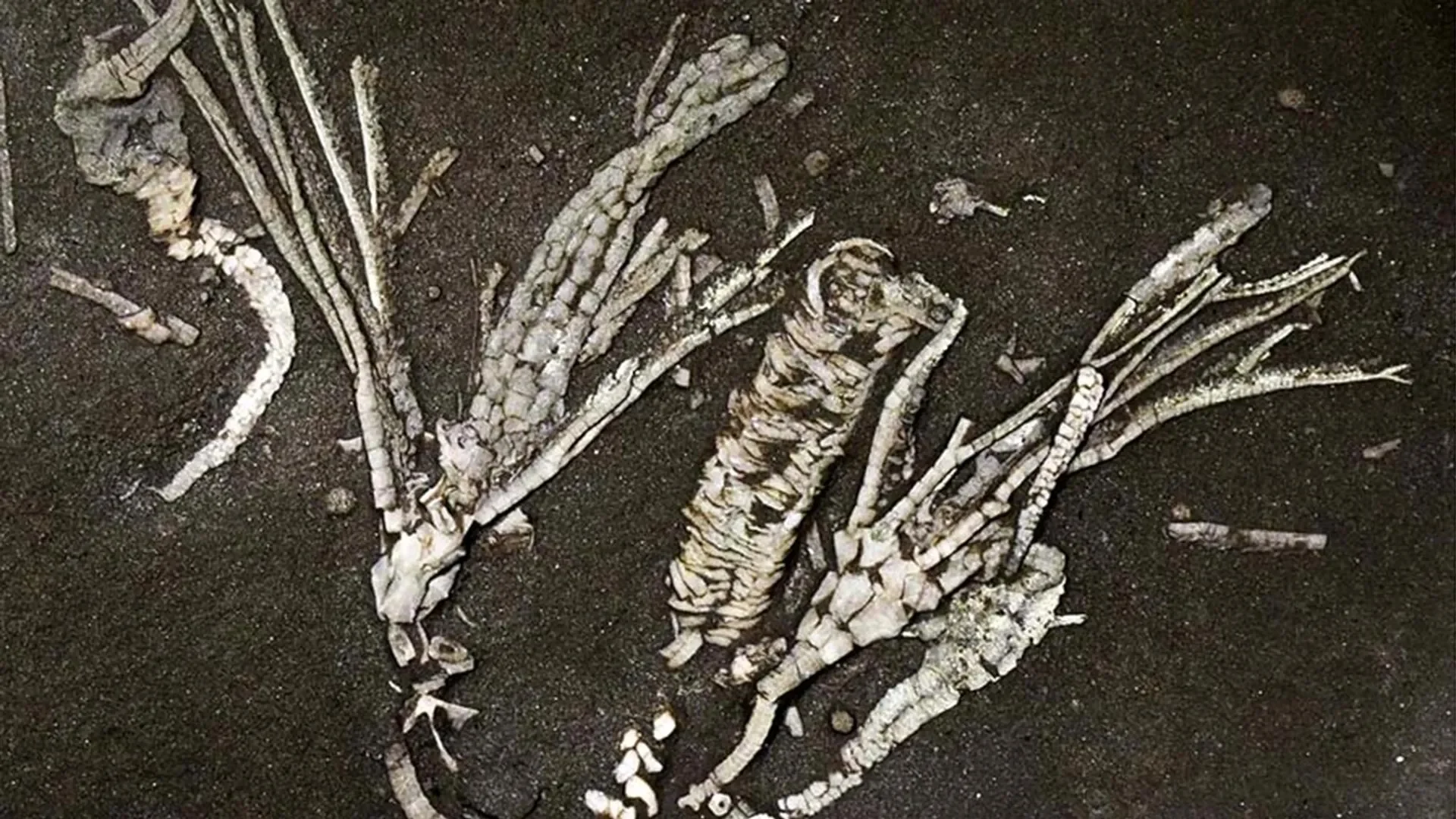
In an extraordinary leap for paleontological research, scientists have unearthed a stunning fossil dating back 450 million years, revealing the fragile soft tissues of a prehistoric crinoid, a distant kin of the modern starfish. This remarkable specimen, found in the storied depths of a museum collection, offers a rare glimpse into the enigmatic world of marine life that thrived long before the advent of dinosaurs, enriching our understanding of evolutionary processes that sculpted early marine ecosystems.
The fossil in question belongs to *Dendrocrinus simcoensis*, an extinct species of crinoid that exemplifies the intricate structures once prevalent in ancient coral reefs. These organisms—often appearing as ephemeral underwater blooms—seem to defy the passage of time, flourishing in environments long before terrestrial flora and fauna became dominant. The rarity of finding such fossils, particularly those retaining soft tissue, renders this discovery especially impactful, as it tangibly bridges the biological past and our present understanding of echinoderm evolution.
Soft tissues, including delicate anatomical features such as tube feet, are notoriously elusive in the fossil record. According to Dr. Lena Cole, a paleontologist and assistant curator at the Sam Noble Oklahoma Museum of Natural History, it is the decay of soft tissues after death combined with the accidents of fossilization that typically prevents their preservation. Generally, only hard skeletal remains survive through the millennia, limiting insights into the functional morphologies and ecological interactions of these ancient species.
The rarity of this crinoid fossil elevates it to a "one-in-a-million" status, as it represents only the second instance of preserved soft tissues in crinoids globally—an accolade that attests to both the exceptional preservation conditions and the unique geological history encapsulated in the specimen. Remarkably, the preserved tube feet, which play a vital role in feeding and diverse interactions with marine currents, grant researchers a previously unattainable opportunity to evaluate the anatomy and behavior of an organism living over 450 million years ago. To put this in perspective, these soft tissues are 200 million years older than the oldest known dinosaurs, creating a significant temporal overlay in understanding the trajectory of life on Earth.
The anatomical features of these tube feet are critical not only for deciphering how crinoids captured food but also for elucidating their interactions within the ecological frameworks of their time. Instead of relying on specialized jaws or teeth typical of many modern organisms, crinoids employ an array of tube feet, using them to filter particulates from seawater. The configuration of these structures—manifested through metrics such as size, shape, and spatial arrangement—serves as a biological index, reflecting adaptations to environmental conditions and dietary strategies.
Dr. David Wright, a co-author of the study, articulates that crinoid tube feet can be likened to teeth in mammals; both serve crucial roles in defining dietary and ecological preferences. The comparative analysis between ancient and extant crinoid species reveals noteworthy anatomical diversifications that underscore the vast evolutionary changes that have transpired across hundreds of millions of years. Such insights not only extend the narrative around crinoid evolution but also amplify our comprehension of marine biodiversity during the Paleozoic Era.
This extraordinary fossilization sheds light on the broader patterns of marine ecosystem development within the Early Paleozoic, a period characterized by remarkable biological innovation. Marine environments were increasingly populated by complex organisms, bridging ecological roles that would later definevertebrate and invertebrate interactions. As Wright notes, fossilized remains encapsulate features beyond the range of variation we might observe in extant species, enabling a deeper understanding of adaptive evolution and biotic responses to environmental changes.
The discovery reinforces the critical role that museum collections play in paleontological research. While many geologically rich expedition sites promise potential finds, countless discoveries remain dormant in institutional collections, often overlooked by past generations of researchers. The significance of this specimen illustrates how advancing research methodologies and collective expertise can breathe new life into previously unexamined archival materials housed in museums.
As new scientific inquiries and innovative imaging techniques emerge, this remarkable fossil can revolutionize our comprehension of crinoid biology, illuminate ancient feeding strategies, and affirm the dynamic ecological narratives of Earth’s formative years. The nuanced insights derived from such fossils enrich our understanding of the complexity underlying modern marine life and underscore the profound, often uncharted, interconnectedness of organisms through temporal and evolutionary scales. It is within these strands of antiquity that we begin to unravel the tapestry of life as we know it today.