Field: Technology
One of Earth’s most powerful supervolcanoes is refilling with fresh magma
Published | Technical Staff
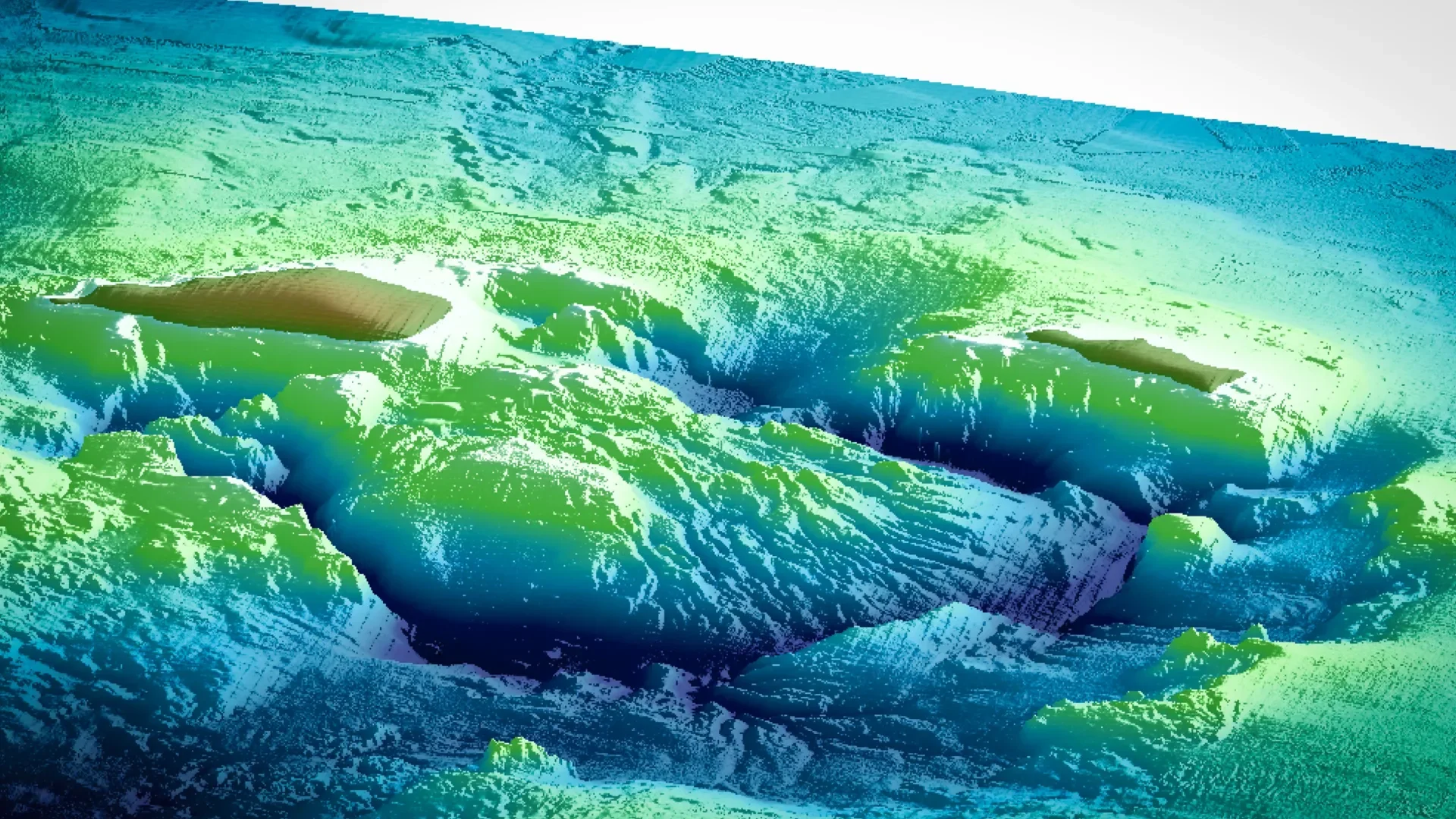
Visualization
Amidst the depths of the Pacific Ocean, beneath the often-misty shores of Japan, lies the Kikai caldera, a titan of geological history marked by one of the largest volcanic eruptions recorded in the last 11,700 years. Recent investigations by a team from Kobe University have unearthed compelling evidence that this storied supervolcano is once again on the path to rejuvenation, as fresh magma accumulates within its underground reservoir after a dormancy that began approximately 7,300 years ago.
This exciting discovery not only sheds light on the enigmatic processes governing magma supply replenishment but also holds significant implications for predicting potential eruptions in other massive calderas, including those at Yellowstone and Toba. In a world where supervolcanic activity remains poorly understood, Kikai offers a unique vantage point; its relatively submerged location permits scientists to conduct extensive seismic surveys, revealing subterranean secrets that remain hidden to surface observers.
The catastrophic eruption that occurred 7,300 years ago produced an astounding volume of material—enough to bury Central Park in New York City under a sheer thickness of 12 kilometers (7.5 miles) of volcanic deposits. Such monumental events reshape the landscape and leave calderas as their enduring signatures, a process well-characterized by the collapse of overlying rock into emptied magma chambers. The Kikai caldera, with its complex geology, offers a prime example of this phenomenon, having birthed a caldera that now presents as an underwater geological marvel.
Leveraging advanced methodologies, the researchers conducted underwater seismic surveys using arrays of airguns to generate seismic waves that traverse the intricate crust beneath the ocean floor. These seismic waves behave differently when passing through solid rock compared to molten magma, allowing scientists to discern the underlying geological structures.
Using state-of-the-art ocean bottom seismometers to capture the seismic data, the team observed the presence of a substantial zone filled with molten rock situated beneath the caldera. Their analysis indicated that this reservoir is consistent with the same magma storage system involved in the caldera's ancient eruption. This finding is not trivial; it presents a rare opportunity to understand the fundamental processes underlying volcanic behavior.
Nobukazu Seama, a prominent geophysicist at Kobe University, emphasizes the significance of these observations. “Due to its extent and location, it is clear that this is in fact the same magma reservoir as in the previous eruption,” he noted, establishing a direct connection between past and present magma dynamics.
What makes this research particularly groundbreaking is the revelation that the magma currently accumulating beneath Kikai is not merely residual from the caldera's last explosive episode. Geological assessments have uncovered an emerging lava dome that has been developing over approximately the last 3,900 years. Such domes are indicative of fresh volcanic activity where dense, viscous lava accumulates around a vent rather than flowing freely outward, hinting at new magma influx.
Chemical analyses of the material from this lava dome show marked differences from the deposits of the prehistoric eruption. This divergence suggests that the magma filling the reservoir today likely consists of fresh injections sourced from deeper within Earth's crust or even the upper mantle, rather than being mere leftovers from the ancient event.
“This means that the magma currently present in the magma reservoir under the lava dome is likely newly injected magma,” summarizes Seama, revealing a clearer understanding of how supervolcanoes can sustain themselves over millennia.
The implications of these discoveries extend far beyond the shores of Japan. The model proposed by the researchers supports the notion that similar mechanisms could be at play beneath the massive calderas of Yellowstone and Toba, which also harbor significant magma chambers situated relatively close to the surface. Such insights connect the dots between the processes of magma accumulation, volcanic activity, and the overarching cycles that could lead to future eruptions.
Moving forward, the research team is committed to enhancing their seismic techniques to delve deeper into the Kikai caldera’s subsurface dynamics. Seama articulates an ambitious goal: “We want to refine the methods that have proved to be so useful in this study to more deeply understand the re-injection processes,” he states, underscoring the necessity of improving predictive capabilities for potential eruptions.
With detailed understanding of how fresh magma gathers and revitalizes an ancient supervolcano, scientists are incrementally advancing towards a comprehensive grasp of the cyclical nature of supervolcanic systems, their long-term behavior, and the potential indicators for future cataclysmic events. As Earth’s geological complexities unfold, the Kikai caldera stands not just as a reminder of past catastrophes, but as a beacon illuminating the intricate threads that weave through the forces of our planet.