Field: Technology
New Species of Predatory Dinosaur Identified in Argentina
Published | Technical Staff
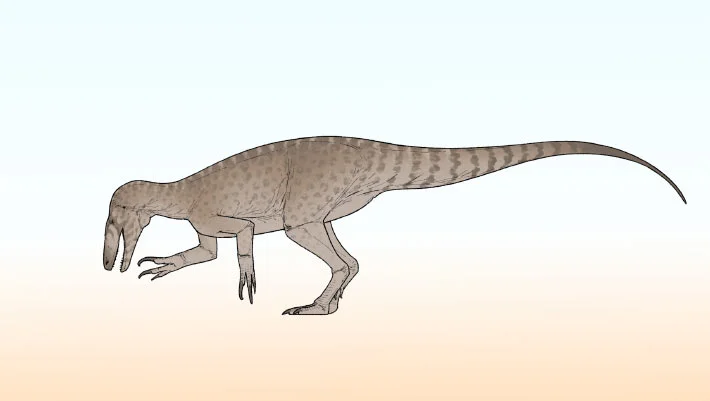
Visualization
In a remarkable excavation in the remote expanses of northern Patagonia, paleontologists have unveiled a new genus and species of megaraptorid dinosaur, bringing to light the ancient predation dynamics of the Late Cretaceous epoch, approximately 83 million years ago. The newly christened *Rinconraptor pipoae* emerges from an incomplete skeleton, indicative of the ongoing discovery of vertebrate fossils that illuminate previously obscured aspects of theropod evolution.
The classification of *Rinconraptor pipoae* situates it firmly within the Megaraptoridae, a clade characterized by their medium- to large-sized morphology, slender hind limbs, distinctive 8-shaped curved dentition, and formidable manual claws. As outlined by CONICET paleontologist Ariel Hernán Méndez and his team, these anatomical features position megaraptorids among the more specialized predatory dinosaurs of their time. The presence of these anatomical adaptations aligns with ecological demands, suggesting a highly developed predation strategy and an ability to exploit diverse niches.
Fossil remains were meticulously excavated from the Bajo de la Carpa Formation, part of the greater Río Colorado Subgroup within the Neuquén Group, an area historically rich in paleontological resources. The location of the finds, specifically at Cerro Overo, approximately 50 km southwest of Rincón de los Sauces, links this discovery to a significant geological milieu. The sedimentary context reveals a complex interplay between aeolian and fluvial depositional systems, hinting at a diverse array of paleoenvironments fostering rich ecosystems.
The principal fossil evidence comprises ten tail vertebrae alongside fragments of limb bones; notably, the lower extremity of a left upper-arm bone and the proximal end of a right tibia, with the latter still ensconced in rock. Surface recovery of additional bones within a 4 square meter area underscores the fossil's fragmentary state yet signals the presence of a notable theropod predator. Employing comparative osteology, researchers estimate that *Rinconraptor pipoae* reached approximately 7 meters (23 feet) in length, with a tail structure that may have consisted of 40 to 45 vertebral segments—similar in pattern to that found in *Tyrannosaurus rex*.
Further excavation has yielded several additional megaraptorid bones, albeit without specific taxonomic designation. These fragments suggest body lengths ranging from about 6 to 8.5 meters (20 to 28 feet), reinforcing the notion of a coexisting assemblage of large theropods in the region. Such diversity suggests an ecological paradigm where apex predation occurred concurrently, prompting potential interspecific competition alongside niche partitioning. This hypothesis aligns with the notion that both megaraptorids and their contemporaries, such as the abelisaurids, may have evolved mechanisms to minimize direct competition, thus allowing for a coexistence indicative of a biodiverse paleocommunity.
The Cerro Overo-La Invernada area serves as an ecological backdrop teeming with inhabitants, encompassing titanosaur sauropods and a variety of ornithopods, all indicative of a complex food web. Such findings deepen our understanding of the socio-ecological dynamics during the Cretaceous period, revealing the intricate interactions between diverse carnivorous taxa and their herbivorous counterparts.
The scholarly work delineating this fascinating discovery and its implications has been published online in *Palaeontologia Electronica*, augmenting the existing corpus of knowledge surrounding megaraptorids and their ecological roles. As the fossil record remains sparse and fragmented, ongoing investigations and future finds will likely continue to reshape the narrative of predatory dinosaurs within the ancient ecosystems of South America and beyond, reminding us of the rich tapestry of life that once roamed our planet millions of years ago.