Field: Technology
New Megapode Species Discovered through Ancient Remains Unearthed in Flores Cave
Published | Technical Staff
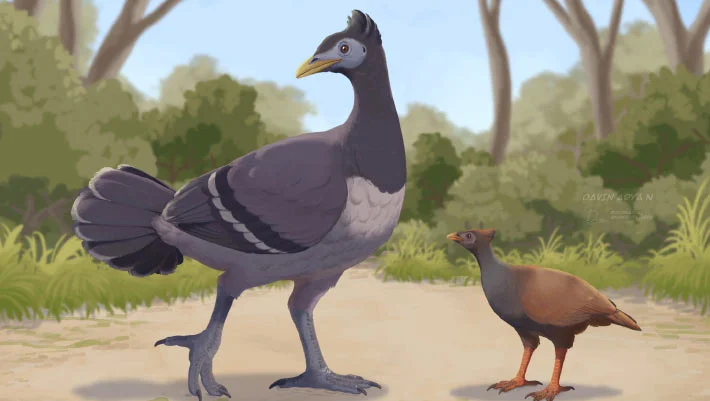
Visualization
A captivating revelation has emerged from the depths of Liang Bua Cave on the Indonesian island of Flores, where the fossilized remnants of a newfound species of megapode bird, scientifically designated as *Megapodius rokusi*, have been unearthed. This species, a ground-dwelling relative of modern chickens, is estimated to have weighed approximately 3.9 kg—significantly larger than its contemporary counterpart, the orange-footed megapode (*Megapodius reinwardt*), which weighs between 0.5 to 1.2 kg.
These remarkable findings, detailed in the journal *Alcheringa*, stem from an excavated lower tarsometatarsus bone, a crucial element of the avian leg structure. Dating of the surrounding sediments indicates that this fossil is approximately 190,000 to 120,000 years old, suggesting that *M. rokusi* thrived during the late Pleistocene epoch. The dimensions of this leg bone exceed those of any known living or extinct megapode, marking *M. rokusi* as the first fossil megapode described from Wallacea, the biogeographical realm situated between the Asian mainland and Australia.
Megapodes, a unique clade within the Galliformes, function through an alternative incubation strategy. Unlike most birds that provide warmth to their eggs through their body heat, these birds bury their eggs within mounds and rely on environmental heat sources, a remarkable adaptation that underscores their evolutionary divergence. “Megapodes are largely restricted to regions east of Wallace’s line, encapsulating the Philippines, eastern Indonesia, Melanesia, and Australia, yet are conspicuously absent from mainland Southeast Asia and the Greater Sunda Islands,” elucidated Hanneke Meijer, a paleontologist from the University Museum of Bergen, and her colleagues.
Various hypotheses have emerged attempting to dissect the distribution patterns of megapodes. Factors may include an ancient remnant distribution, human-mediated introductions of the genus to western islands, and ecological interactions with competing species such as phasianids. Additionally, the presence of mammalian carnivores, who preyed on these birds, might have hindered the establishment of megapodes in mainland areas.
Hanneke Meijer and her team identified *M. rokusi* amid the backdrop of the cave, which famously housed the remains of *Homo floresiensis* in 2003, an enigmatic small-bodied hominin. The name of the newly discovered bird honors Rokus Due Awe, an Indonesian zooarchaeologist whose pivotal contributions to the field included the first recognition of the hominid remains from Liang Bua.
Despite this groundbreaking discovery, several questions remain unanswered. Notably, the absence of wing and shoulder bones complicates interpretations of the bird's flying capabilities. It remains uncertain if *M. rokusi* coexisted with *M. reinwardt*, the extant orange-footed megapode, or if it became extinct prior to the latter's colonization of Flores.
Notably, the distinctive reproductive strategy of megapodes renders their eggs and hatchlings particularly vulnerable to predation. The yolks are substantial, comprising 50-60% of the total egg mass, which presents an abundant nutritional source. This accessibility may have posed a significant dietary opportunity for both *Homo floresiensis* and modern Homo sapiens, likely to have foraged these eggs in their quest for sustenance before and after 50,000 years ago.
As researchers delve deeper into the implications of this find, *Megapodius rokusi* stands not only as a testament to the evolutionary nuances of island biogeography but also as a beacon guiding further explorations into the mysterious legacies of prehistoric avian life in Indonesia.