Field: Technology
New 3D thermal invisibility cloak conceals objects from infrared cameras
Published | Technical Staff
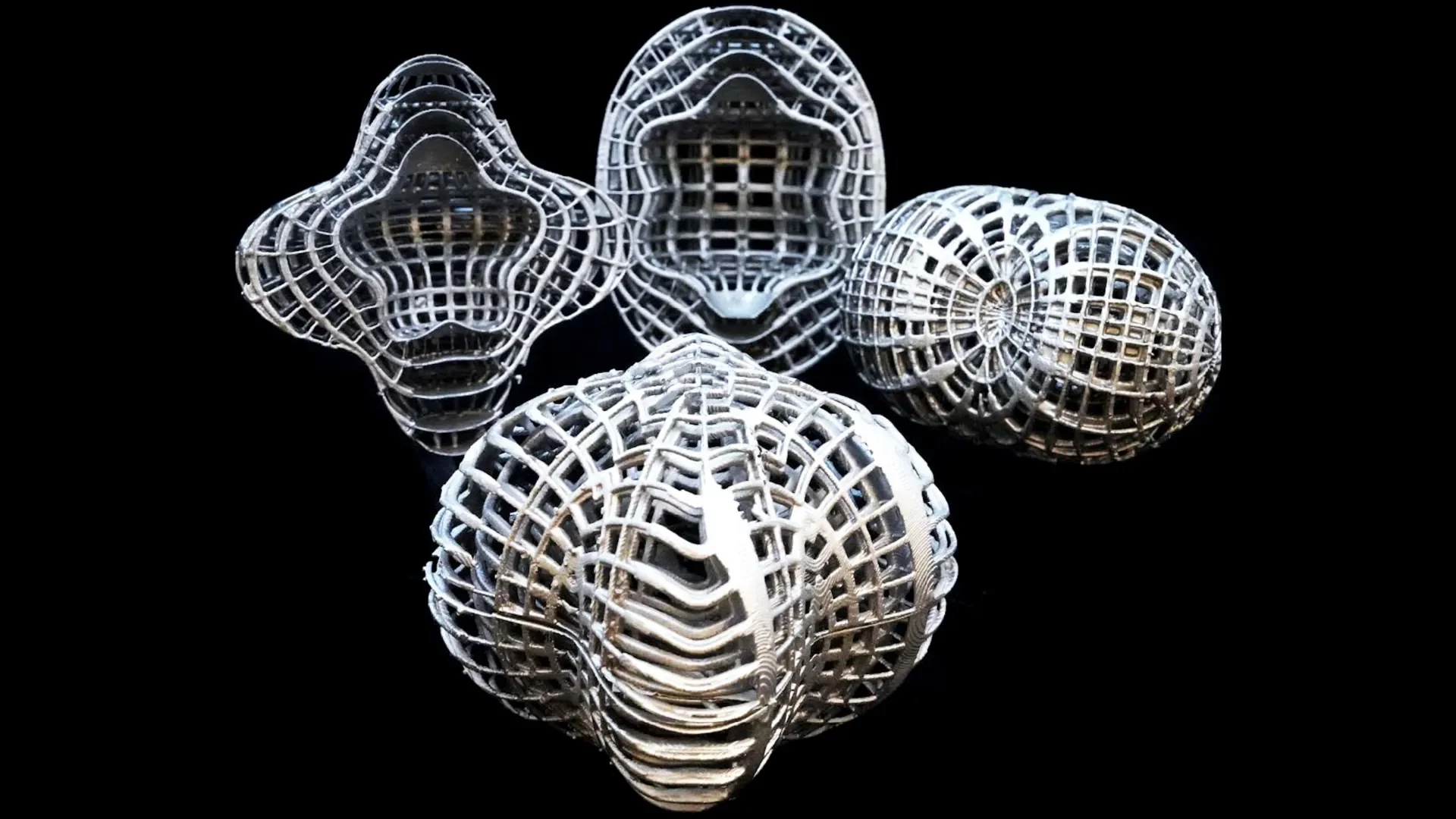
Visualization
In a groundbreaking development that converges the realms of material science and thermal engineering, researchers have unveiled a three-dimensional invisibility cloak capable of rendering objects invisible to infrared surveillance while providing protection against extreme thermal environments. This innovation fundamentally redefines the principles underlying thermal management and opens avenues for applications in electronics, stealth technology, and beyond.
Engineered at the University of Illinois at Urbana-Champaign, under the guidance of Professor Shelly Zhang and her team—including postdoctoral researcher Weichen Li and graduate student Yibo Wang, alongside collaborators from the Technical University of Denmark—the cloak marks a significant shift away from traditional two-dimensional cloaking devices. Most prior iterations were confined to controlling heat flow in predefined, often linear pathways. However, this new design triumphantly navigates the limitations imposed by dimensionality, allowing heat to be redirected seamlessly from any angle, effectively concealing complex three-dimensional geometries.
The theoretical underpinnings of the device draw upon the field of transformation thermotics, which explores how to manipulate thermal signatures with specially engineered materials. The central challenge was to distill a series of thermal properties into a cohesive framework that could support a truly omnidirectional cloak. The solution came in the form of a novel lattice-based material specifically designed to accommodate adjustable attributes across three spatial dimensions.
Employing advanced 3D metal printing techniques, the researchers constructed a meticulous aluminum lattice that serves as the conduit for thermal conduction. This lattice is interspersed with a rubber-like compound characterized by low thermal conductivity, creating a composite structure that allows heat to be guided around an object rather than simply blocked. This dual-material system enables adaptive heat management, closely approximating the intrinsic properties necessary for effective thermal invisibility.
The researchers substantiated their theoretical musings with empirical validation, positioning the cloak between areas of disparate thermal energy to generate a gradient. They meticulously tracked the transitional temperature profiles with an infrared camera, yielding revealing insights: the cloak succeeded in redirecting heat without disrupting the adjacent temperature fields. The results were striking; to an infrared camera, the cloaked area manifested as though devoid of matter, while internal temperatures remained stabilized against external extremes.
Even further testing confirmed the cloak's versatility, adeptly concealing elaborate forms—including intricately shaped geometrical constructs resembling human heads. Such capability starkly contrasts with previous thermal cloaks, which diminished in effectiveness when faced with complex architectures.
The implications for practical applications are vast. Within the realm of electrical engineering, the invisibility cloak holds promise for advanced microchip cooling systems and surrounding thermal management for sensitive electronics. The potential for integration into military and strategic contexts raises the stakes dramatically; envisioning a future where military assets or personnel could elude detection by thermal imaging systems underscores the military ramifications of this innovative technology.
However, the research team acknowledges that their current cloak, while noteworthy, functions primarily as a passive device—redirecting external heat rather than actively managing thermal energy within concealed objects themselves. The next horizon will require innovations that allow the cloak to mitigate heat generated from within. Such advancements could enable a new class of cloaks that not only shield and disguise but also dynamically respond to fluctuating thermal conditions.
"We've demonstrated the feasibility of a true 3D omnidirectional thermal cloak," stated Professor Zhang. "Our future efforts will strive towards material systems that manipulate heat proactively, broadening applicability across various sectors and providing a robust shield against thermal detection in increasingly complex scenarios."
Supported by the National Science Foundation, Villum Foundation, and the Air Force Office of Scientific Research, this research heralds a transformative era in thermal technology, offering profound insights into the intersection of material science, energy management, and tactical applications. As we look ahead, the question remains not just about concealment, but also about the innovative pathways through which we can manipulate heat itself for the benefit of society.