Field: Technology
NASA's Voyager 1 Battles the Depths of Interstellar Space with Strategic Instrument Shutdown
Published | Technical Staff
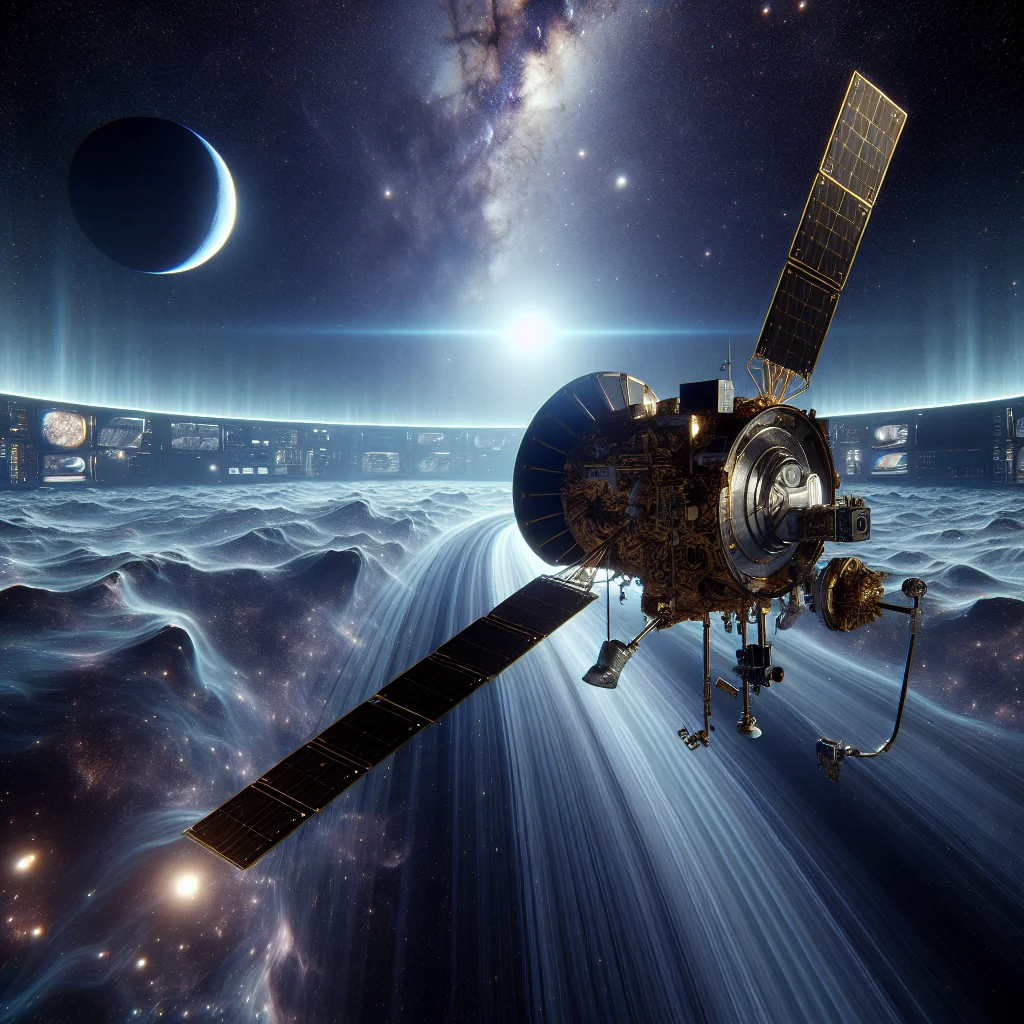
Visualization
In a bid to prolong the life of one of humanity's farthest-reaching spacecraft, NASA has made a critical operational decision on Voyager 1. This iconic spacecraft, which has now ventured tens of billions of kilometers beyond the heliosphere, recently saw its Low-energy Charged Particles (LECP) experiment switched off. The LECP had been continuously analyzing charged particles—ions, electrons, and cosmic rays—in interstellar space since the spacecraft's launch in 1977.
The motivation behind this strategic shutdown stems from the power constraints faced by Voyager 1. Propelled by a radioisotope thermoelectric generator (RTG), which leverages the heat released from the decay of plutonium-238 to generate electricity, the spacecraft's energy supply is naturally diminishing. The RTG’s yield decreases by approximately 4 watts annually, a significant amount considering the original maximum output was only a few hundred watts. Given that Voyager 1's operational timeline stretches nearly five decades, the cumulative loss has necessitated judicious power management to extend its operational lifespan.
Turning off the LECP is part of a broader tactic to optimize remaining power. The instrument, although vital for studying the interstellar medium, has been chosen for shutdown due to its energy consumption rates. The LECP's functional hibernation follows a carefully premeditated plan established years prior, which prioritizes which instruments are powered down to maximize the scientific return of the remaining sensors. Currently, Voyager 1 continues to operate two key instruments: one for analyzing plasma waves and another for magnetic field measurements. These instruments are critical for capturing data in an area of space where no other human-made object has ventured.
This decision was not circumstantial but a preemptive measure following an incident on February 27, where the spacecraft experienced an unexpected power decline during a roll maneuver. Recognizing that a continuing decrease could engage the undervoltage fault protection system—which would automatically shut down essential components thus risking a complex and potentially irreversible system recovery—the Voyager team at NASA's Jet Propulsion Laboratory opted to deactivate the LECP.
The LECP's intricate shutdown process in such a remote operational theater underscores the challenges of deep space communication. Command signals from Earth take approximately 23 hours to reach Voyager 1. Following command acceptance, the detailed process to turn off the instrument lasted over three hours. Preserving the motor of the LECP, which rotates the sensor and consumes just 0.5 watts, was strategically decided to allow for potential future reactivation of the instrument should circumstances permit.
As Voyager 1 continues on its grand voyage through interstellar space, the mission team remains vigilant, preparing innovative power-saving strategies termed "the Big Bang." These tactics, set for testing first on the relatively proximate and energetically favorable Voyager 2, aim to replace power-intensive components en masse with alternatives that require less energy. Success in these trials could not only extend the mission duration but possibly lead to the revival of the now-dormant LECP aboard Voyager 1.
The calculated risk of shutting down such an instrumental experiment on Voyager 1 epitomizes the perennial challenge of managing aging space technology in remote environments. It also highlights the meticulous strategies and collaborative efforts necessary to steward these venerable crafts in their twilight years, delivering invaluable scientific data from the frontiers of human knowledge.