Field: Technology
NASA’s Voyager 1 Approaches One-Light-Day Milestone
Published | Technical Staff
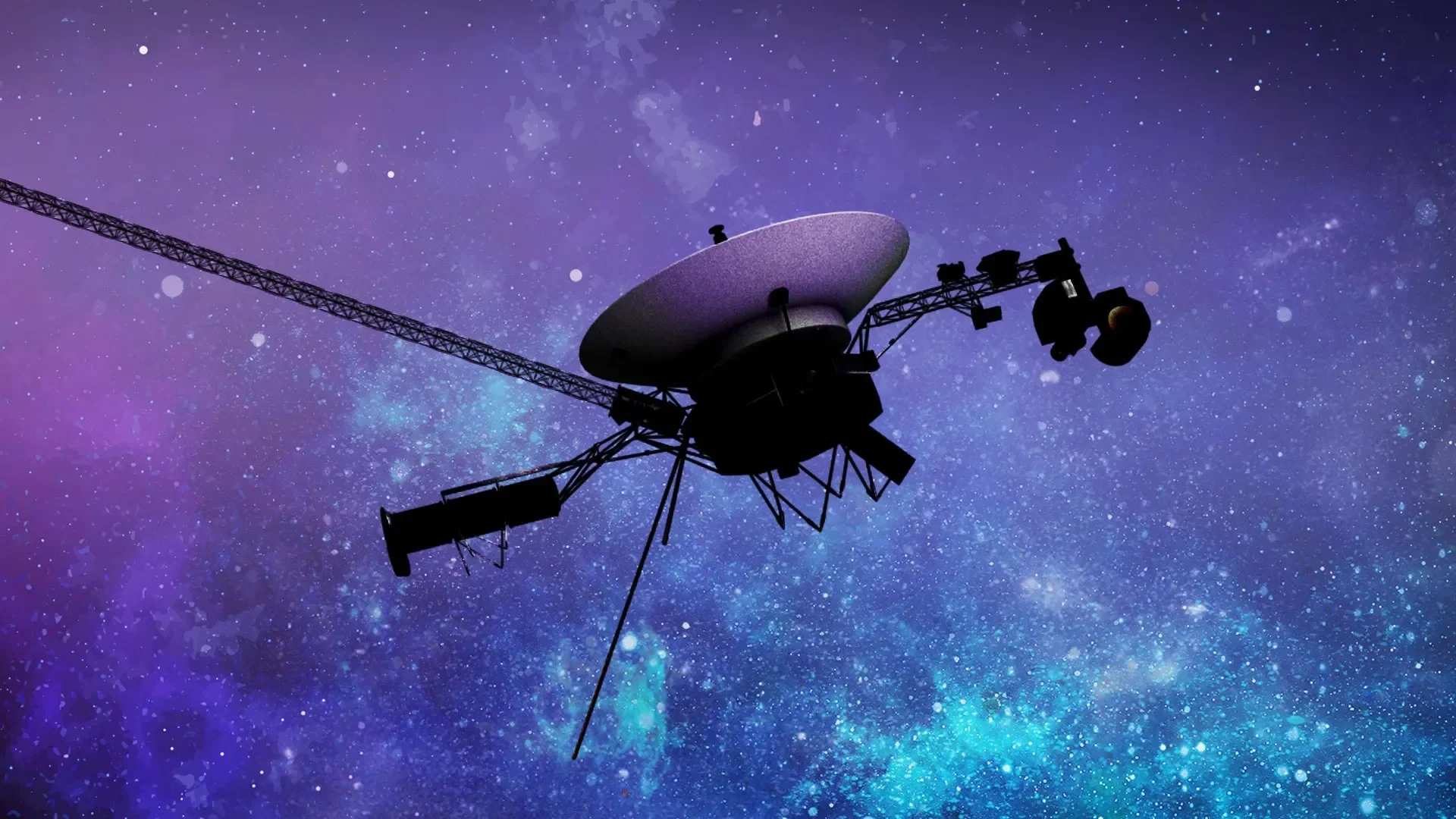
Visualization
Nearly 50 years after embarking on its monumental journey into the depths of space, NASA's Voyager 1 is on the cusp of reaching a one-light-day distance from Earth, an achievement that underscores both the vastness of our universe and the tenacity of human engineering. As of November 18, 2026, this historic milestone will be marked by the spacecraft lying an astounding 16.09 billion miles (25.89 billion kilometers) away, where light itself takes a full 24 hours to traverse the distance between the two points. This remarkable journey showcases the farthest extent of human ingenuity but concurrently highlights the challenges faced by the aging spacecraft as its energy supply wanes and the adverse effects of unanticipated malfunctions emerge.
The mission has not been without its tribulations. Recently, engineers grappled with critical power limitations as they worked to prolong the operational lifespan of Voyager 1’s scientific instrumentation, one of the last active functions of the spacecraft. With the aging radioisotope thermoelectric generator (RTG), which converts the thermal energy of decaying plutonium into electricity, the spacecraft loses approximately 4 watts of generating capacity annually. As this decline inevitably threatens the viability of remaining systems, NASA’s meticulous energy conservation maneuver, dubbed “Big Bang,” has proven integral to the mission’s continued success.
Executed in September, the Big Bang involved a coordinated replacement of three high-power-consuming devices with energy-efficient alternatives. This complex operation was not undertaken lightly; it required months of planning and was reminiscent of a successful procedure carried out previously on Voyager 2. The simultaneous upgrade was critical, as shutting down one device could have jeopardized temperature regulation within Voyager 1—essential in the frigid surroundings of interstellar space.
Originally equipped with ten scientific instruments, the operational roster of instruments onboard Voyager 1 has been trimmed in recent years: two were deactivated due to power limitations after earlier explorations of the outer solar system. This makes the preservation of remaining systems essential for continuing to gather invaluable data from a unique region beyond the heliosphere—the sphere of influence exerted by solar particles and magnetic fields. Together, both Voyager spacecraft hold the distinction of being the first and only units to collect information about the interstellar medium, a feat of profound scientific importance.
Bad news and good news often coexist in the stories of exploration. In the past few weeks, a 48-hour communication blackout raised alarms at NASA. The Deep Space Network, comprising vast radio antennas splayed across the globe, faced challenges in receiving signals from the distant spacecraft during critical attempts of inquiry. During this communication disruption, at a staggering distance of about 16 billion miles from home, the spacecraft's systems automatically engaged its backup thrusters—an example of the onboard fault protection mechanism designed to maintain its operational stability during anomalies. Fortunately, on October 20, contact was reestablished, enabling the team of engineers to send commands to further investigate the issue.
The reactivation and data receipt from Voyager 1 emphasizes a resilient design philosophy in deeply entrenched systems. As mission manager Kareem Badaruddin observed, “This is the first time we've seen the spacecraft do something like this, but we are also at a point in the mission where we have to expect the unexpected.” Each instance like this serves as vital learning data to refine the corpus of knowledge surrounding long-duration spaceflight.
As Voyager 1 traverses the cold, quiet voids of the cosmos at a velocity of approximately 38,000 mph (61,155 kph), the profundity of its journey highlights not only human achievement but also the inherent challenges posed by vast interstellar distances. The fact that commands dispatched from Earth require a total elapsed time of 48 hours for delivery and feedback must reshape our understanding of communication in a universal context. As Suzanne Dodd, the Voyager project manager succinctly stated, “If you want to say ‘hello’ to Voyager, you send your message and then you go home and you wait two days before you finally get a response.”
With the countdown approaching that transformative moment when Voyager 1 crosses the one-light-day threshold, it is an occasion steeped in a unique cosmic significance. Though the spacecraft remains blissfully unaware of the milestones that mark human endeavor, the symbolism of this achievement reverberates among scientists, engineers, and enthusiasts back on Earth—that as we continue to push the boundaries of our knowledge, the distance traveled by our creations reflects both curiosity and ambition in equal measure. Voyager 1 stands testament to a legacy of exploration, perseverance, and the relentless pursuit of understanding the universe and our place within it.