Field: Technology
NASA’s Swift telescope falls to Earth after nearly 22 years in space
Published | Technical Staff
Visualization
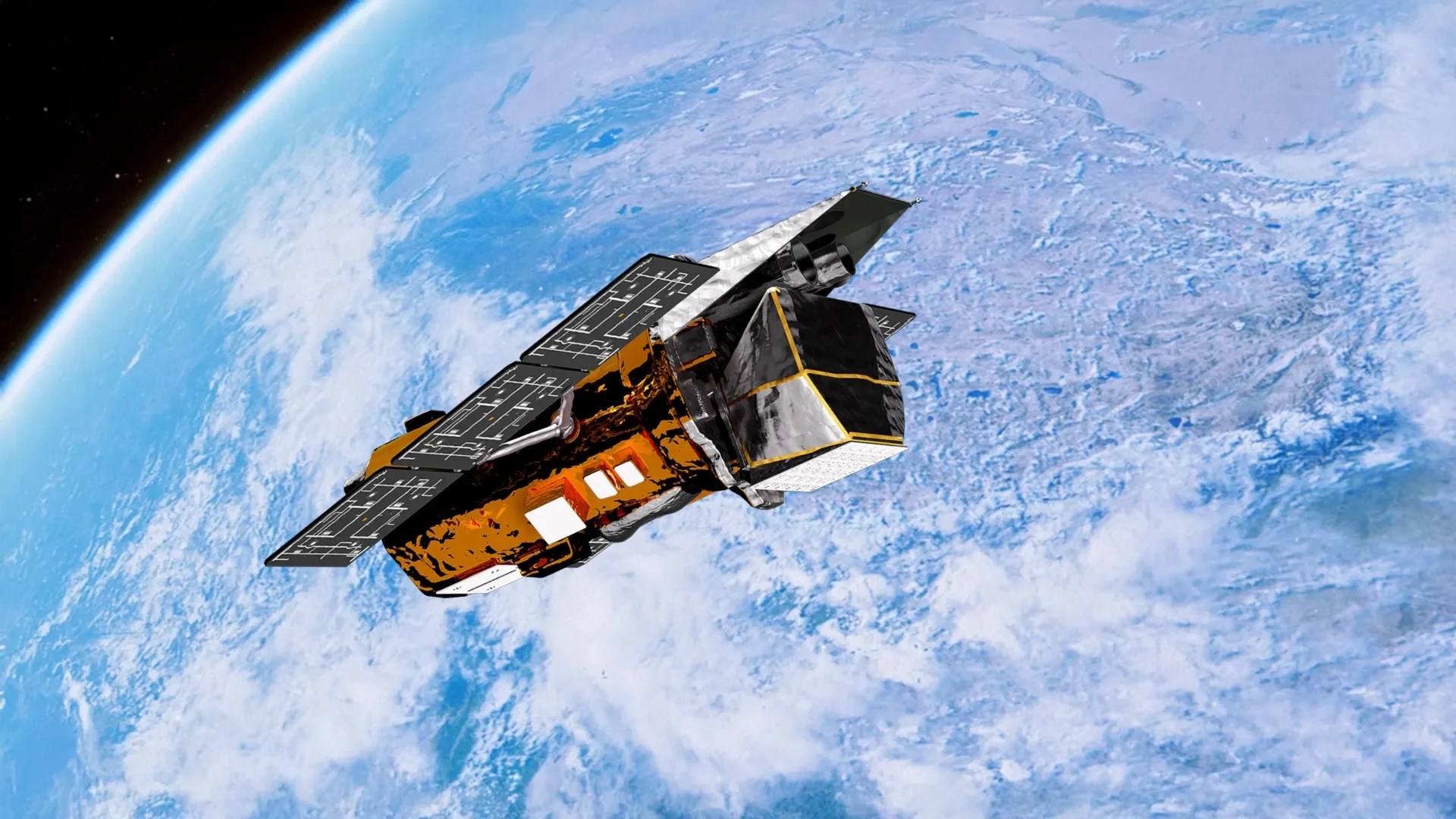
The final descent of NASA’s Neil Gehrels Swift Observatory signals the end of a monumental journey that has radically transformed our grasp of the cosmos over nearly 22 years. Launched in November 2004, this pioneering astronomical instrument embarked on an ambitious mission that far exceeded its initial two-year lifespan, making profound contributions to our understanding of high-energy cosmic events. On November 6, 2026, at precisely 7:39 a.m. EST, the Swift observatory plunged through Earth's atmosphere, re-entering above North Sumatra, Indonesia, at coordinates approximately 3.4 degrees north latitude and 98.6 degrees east longitude.
Swift was designed with a specialized trio of instruments: the Burst Alert Telescope (BAT), the X-Ray Telescope (XRT), and the Ultra-Violet/Optical Telescope (UVOT), each capable of detecting various electromagnetic signals. This triad enabled astronomers to tackle complex cosmic phenomena comprising gamma-ray bursts (GRBs), supernovae, and active galactic nuclei. These eruptions of energy are among the universe’s most violent and transformative processes. The ability of Swift to monitor them across multiple wavelengths fostered a clearer understanding of the underlying mechanics of these events, a task unmanageable with less sophisticated instruments constrained to a single type of light.
Originally intended to focus exclusively on gamma-ray bursts, dynamic events that occur during the cataclysmic deaths or mergers of massive stars, Swift ultimately expanded its repertoire. As it detected these bursts, the Observatory demonstrated an exceptional capacity for rapid response; it excelled in redirecting its gaze to new cosmic events within mere seconds, providing critical early observations that proved invaluable to the global astronomical community. This rapid targeting allowed scientists to track phenomena that might otherwise fade into oblivion before a more detailed study could be undertaken—transforming observations into a race against time.
Swift's contributions to astrophysics extended well beyond its initial parameters. The telescope's dual capability for swift redirection and wavelength diversity provided a multi-faceted view of star formation, supernova dynamics, and even stellar flares from nearby stars. Observational data revealed the intricate behavior of supermassive black holes housed within active galaxies, offering insights into their influence on galactic formation and evolution. For instance, the interplay between matter accreting onto a black hole and explosive outbursts of radiation served to illuminate the fundamental processes of energy dispersion during extreme cosmic events.
In addition to its cosmic survey, Swift also cast a keen eye closer to home, scrutinizing the behavior of asteroids and comets within our solar system. By utilizing its broad-spectrum instrumentation, the observers could glean information about these smaller bodies, their chemical compositions, and their potential impacts on Earth.
As the Swift observatory met its fiery fate during re-entry, NASA officials maintained a cautious optimism, conjecturing that while the vast majority of the spacecraft would disintegrate amid the searing temperatures exceeding 1,600 degrees Celsius, certain robust components of its metallic and polymer structures could conceivably have endured the turbulent journey.
This final act underscores not only the end of a mission that redefined astrophysical boundaries but also serves as a testament to the capability of well-designed science missions to yield continuous and expanding scientific insights. With Swift’s legacy etched in the annals of space exploration, researchers are now better equipped to unravel the ever-complex tapestry of the universe, whether through the footprints left by cataclysmic events or the lingering echoes of untold mysteries residing in its depths. The re-entry of Swift marks a poignant closing chapter, as the astronomical community shifts its gaze toward the future, contemplating the potential revelations yet to come.