Field: Technology
NASA's Perseverance Mars rover sets an unprecedented record, traversing 28.10 miles on the Martian surface.
Published | Technical Staff
Visualization
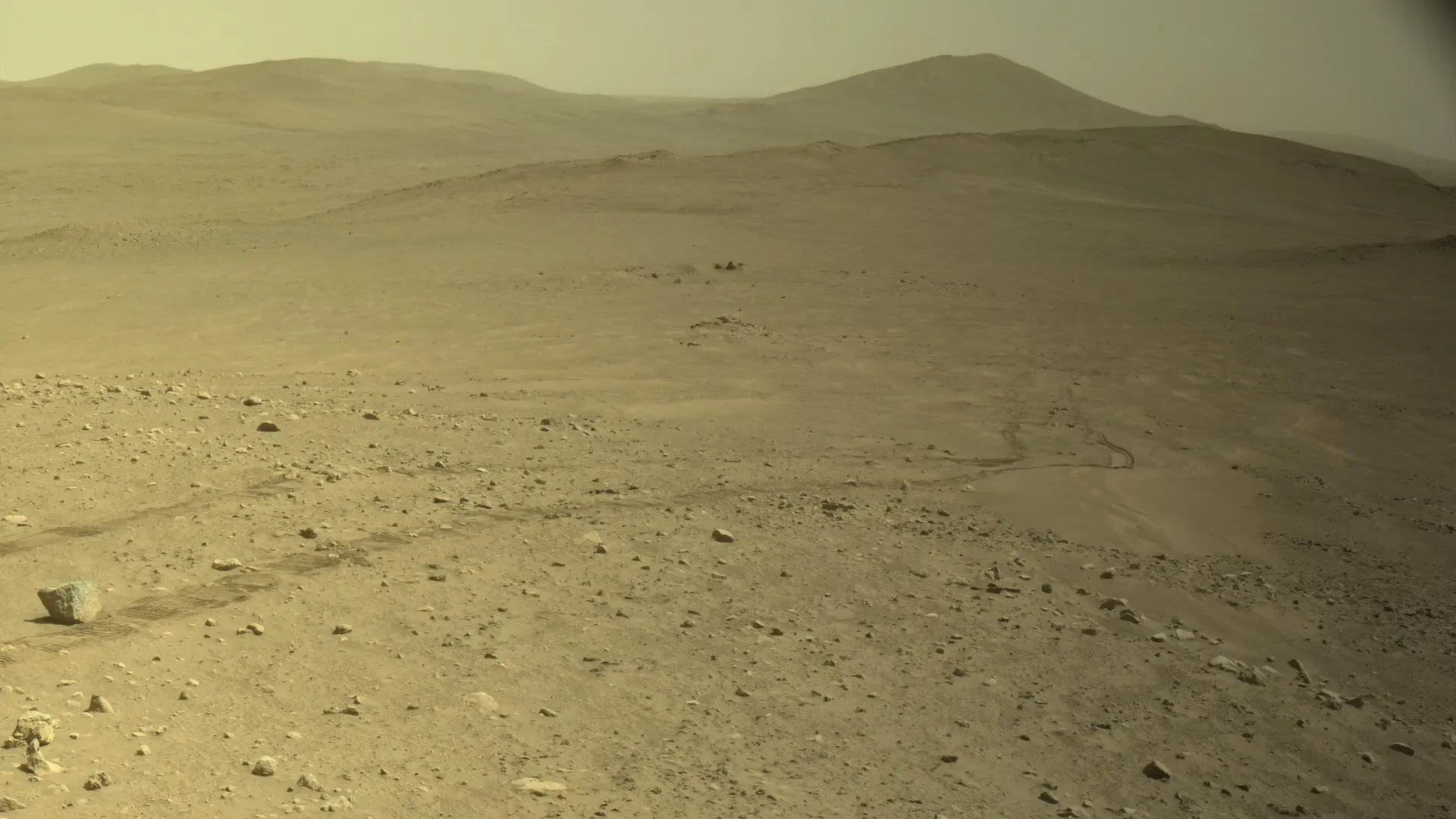
In a remarkable feat of engineering and exploration, NASA's Perseverance rover has officially eclipsed the record for the farthest distance driven by any vehicle on another celestial body, achieving a total odometer reading of 45.22 kilometers (28.10 miles) by Sol 2006, corresponding to October 11, 2026. This achievement, celebrated not only by NASA but also recognized by Guinness World Records with a commemorative plaque presented to Perseverance’s engineering twin on Earth, underscores the rover's advanced autonomous navigation capabilities and its relentless exploration of Mars.
The journey towards this milestone was not without its challenges. Just two months prior, on Sol 1947, the rover found itself tantalizingly close—merely 200 meters shy of breaking the record. However, the priority during that period shifted toward investigating scientifically rich ancient rock formations in the Martian landscape, necessitating numerous shorter excursions. Engineers and scientists opted to focus on meticulous examinations of lithological contexts and sedimentary structures, employing drill and analysis techniques that required repeated short trips rather than a straightforward drive to set a new distance mark.
The path to success demanded an intricate balance of scientific inquiry and impressive engineering prowess. Reflections on Perseverance’s development reveal significant advancements made to enhance its driving capabilities, tailored specifically to cope with the rough and treacherous terrain of Mars. Tightly packed boulder fields and steep slopes have posed formidable obstacles, pushing the boundaries of robotic mobility and control. To navigate these environments, NASA engineers conducted extensive simulations—thousands of them—coupled with physical trials that led to critical adjustments in the rover’s operational limits.
Perseverance can now endure steep inclines of up to 24 degrees, with a reconfigured belly pan clearance adjusted to approximately 20 centimeters (7.9 inches). Enhanced braking algorithms and updated electrical limits for the steering systems—nearly doubled—have empowered the rover to negotiate its surroundings with increased agility. Added to this repertoire are “dynamic slip tables” within the flight software, empowering the rover to anticipate wheel traction on diverse surfaces, a vital upgrade for navigating slippery or unstable terrain. Furthermore, driving strategies revised to ensure optimal wheel positioning on bedrock have collectively improved Perseverance's ability to traverse Mars.
One of the most groundbreaking advancements lies within its onboard Global Localization (GBLC) system, which equips Perseverance with the self-sufficiency to determine its position autonomously, bypassing reliance on Earth-based navigational cues. This sophisticated technology stems from a collaboration with the Ingenuity Helicopter Base Station's powerful commercial processor and operates by juxtaposing images captured on the Martian surface against established orbital perspectives. In doing so, Perseverance can pinpoint its location in global coordinates after each drive—akin to having a GPS system functioning on a planet devoid of such infrastructure.
This autonomous positioning has significant implications; it allows Perseverance to traverse greater expanses with reduced dependency on ground control, ultimately facilitating mission efficiency. However, engineers faced a formidable challenge: the processor was not originally meant to endure the rigors of Mars' intense radiation environment. With a tenuous atmosphere and a lack of a global magnetic field, the rover's electronics are vulnerable to radiation-induced "transient bit flips," which can alter data integrity in memory. To counteract these risks, robust software solutions were conceived to enhance the reliability of the processor even amidst harsh environmental stresses.
As NASA casts its vision toward the future, the potential role of generative AI in robotic navigation emerges as an exciting development. With exploration necessitating longer journeys across an increasingly complex Martian terrain, research is underway to refine computational methods for generating driving plans that would enhance Perseverance’s AutoNav system. This could drastically diminish the need for extensive routing from Earth, amplifying efficiency in expeditionary operations.
Having achieved a staggering 28 miles of Martian exploration, Perseverance stands not only as a record-holder but as a harbinger of future robotic exploration technologies. The experiences and data gleaned from its operations are informing advancements that will undoubtedly transform autonomous missions on Mars and beyond. As it continues to ascend the rim of a Martian crater, the rover is set to unearth new horizons in autonomous exploration, defining the next chapter in humanity's quest to understand the cosmos and seek out life beyond our planet.
The journey towards this milestone was not without its challenges. Just two months prior, on Sol 1947, the rover found itself tantalizingly close—merely 200 meters shy of breaking the record. However, the priority during that period shifted toward investigating scientifically rich ancient rock formations in the Martian landscape, necessitating numerous shorter excursions. Engineers and scientists opted to focus on meticulous examinations of lithological contexts and sedimentary structures, employing drill and analysis techniques that required repeated short trips rather than a straightforward drive to set a new distance mark.
The path to success demanded an intricate balance of scientific inquiry and impressive engineering prowess. Reflections on Perseverance’s development reveal significant advancements made to enhance its driving capabilities, tailored specifically to cope with the rough and treacherous terrain of Mars. Tightly packed boulder fields and steep slopes have posed formidable obstacles, pushing the boundaries of robotic mobility and control. To navigate these environments, NASA engineers conducted extensive simulations—thousands of them—coupled with physical trials that led to critical adjustments in the rover’s operational limits.
Perseverance can now endure steep inclines of up to 24 degrees, with a reconfigured belly pan clearance adjusted to approximately 20 centimeters (7.9 inches). Enhanced braking algorithms and updated electrical limits for the steering systems—nearly doubled—have empowered the rover to negotiate its surroundings with increased agility. Added to this repertoire are “dynamic slip tables” within the flight software, empowering the rover to anticipate wheel traction on diverse surfaces, a vital upgrade for navigating slippery or unstable terrain. Furthermore, driving strategies revised to ensure optimal wheel positioning on bedrock have collectively improved Perseverance's ability to traverse Mars.
One of the most groundbreaking advancements lies within its onboard Global Localization (GBLC) system, which equips Perseverance with the self-sufficiency to determine its position autonomously, bypassing reliance on Earth-based navigational cues. This sophisticated technology stems from a collaboration with the Ingenuity Helicopter Base Station's powerful commercial processor and operates by juxtaposing images captured on the Martian surface against established orbital perspectives. In doing so, Perseverance can pinpoint its location in global coordinates after each drive—akin to having a GPS system functioning on a planet devoid of such infrastructure.
This autonomous positioning has significant implications; it allows Perseverance to traverse greater expanses with reduced dependency on ground control, ultimately facilitating mission efficiency. However, engineers faced a formidable challenge: the processor was not originally meant to endure the rigors of Mars' intense radiation environment. With a tenuous atmosphere and a lack of a global magnetic field, the rover's electronics are vulnerable to radiation-induced "transient bit flips," which can alter data integrity in memory. To counteract these risks, robust software solutions were conceived to enhance the reliability of the processor even amidst harsh environmental stresses.
As NASA casts its vision toward the future, the potential role of generative AI in robotic navigation emerges as an exciting development. With exploration necessitating longer journeys across an increasingly complex Martian terrain, research is underway to refine computational methods for generating driving plans that would enhance Perseverance’s AutoNav system. This could drastically diminish the need for extensive routing from Earth, amplifying efficiency in expeditionary operations.
Having achieved a staggering 28 miles of Martian exploration, Perseverance stands not only as a record-holder but as a harbinger of future robotic exploration technologies. The experiences and data gleaned from its operations are informing advancements that will undoubtedly transform autonomous missions on Mars and beyond. As it continues to ascend the rim of a Martian crater, the rover is set to unearth new horizons in autonomous exploration, defining the next chapter in humanity's quest to understand the cosmos and seek out life beyond our planet.