Field: Technology
NASA's Perseverance confirms a key ingredient for life hidden in ancient Mars rocks
Published | Technical Staff
Visualization
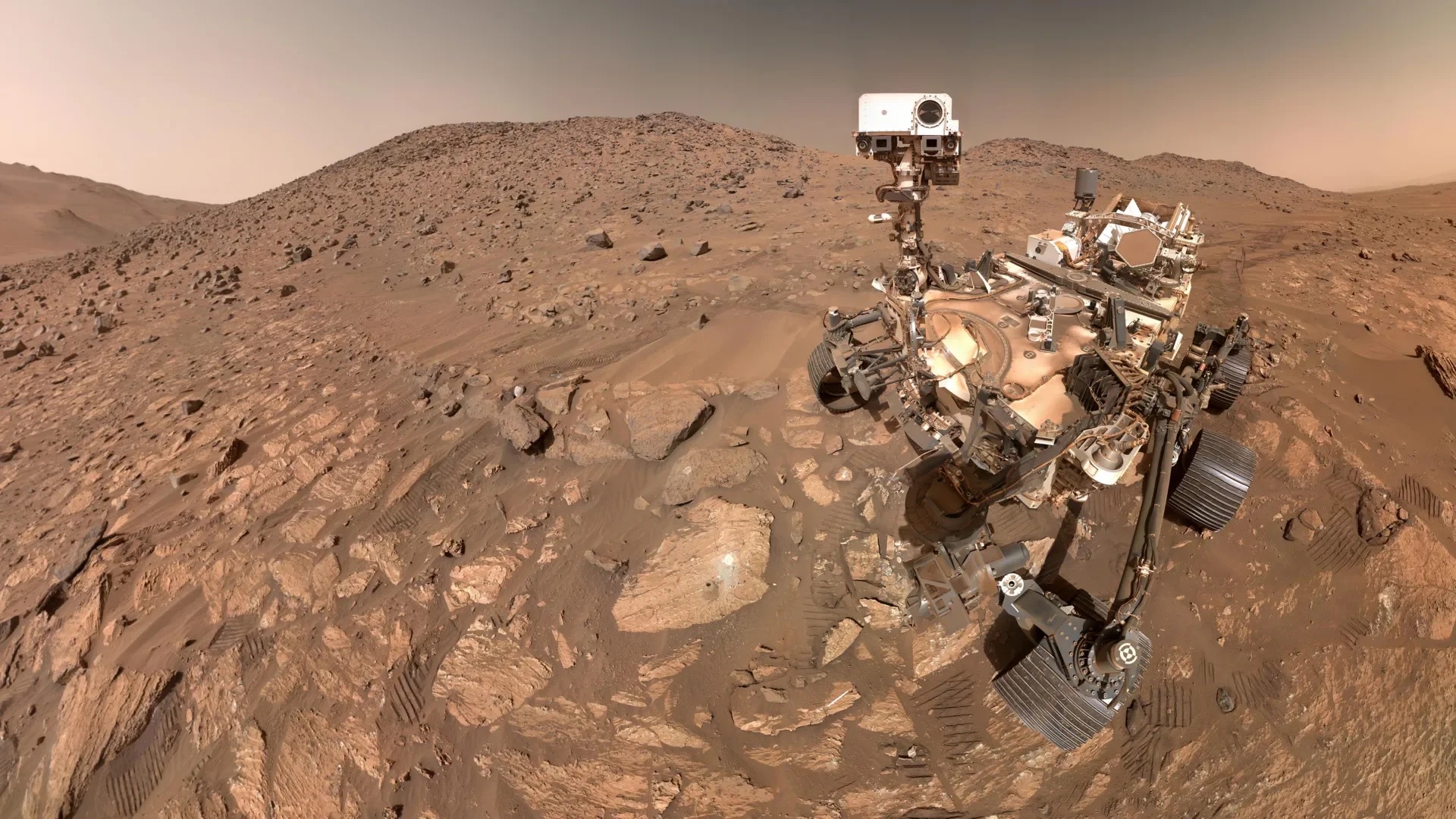
In what could be a paradigm-shifting discovery for astrobiology, NASA's Perseverance rover has provided substantial evidence of complex organic carbon embedded within the strata of ancient Martian rocks. This finding, reported in the prestigious journal Science Advances, tantalizingly strengthens the hypothesis that the essential building blocks of life may have once been abundant on Mars, challenging preconceived notions about life's potential in extraterrestrial environments.
The presence of organic carbon was confirmed in the geological formations of the Bright Angel region within Jezero crater, where Perseverance had previously identified a potential biosignature. A potential biosignature refers to any morphological feature or chemical residue that could be linked to past biological processes, though it remains an open question whether such features exclusively arise from living organisms or can also result from abiotic mechanisms. The identification of organic carbon among these ancient sediments necessitates a deeper exploration into Martian history, sedimentology, and geochemistry.
Employing the Scanning Habitable Environments with Raman and Luminescence for Organics and Chemicals (SHERLOC) instrument, which leverages Raman spectroscopy for non-invasive analysis, scientists probed the mineralogical characteristics of multiple rock samples, including one designated as "Cheyava Falls." Raman spectroscopy operates by illuminating a target with a laser, allowing for the vibrational energy levels of the constituent molecules to be mapped, thus enabling the identification of specific organic textures without altering the rock matrix.
The study outlined the discovery of macromolecular carbon (MMC), representing a constituent of organic material characterized by extensive, interconnected networks of carbon atoms. This type of carbon-based material, while ubiquitous in terrestrial geology and meteorite studies, presents a complex conundrum; it can be synthesized via both biological activities and various abiotic pathways. For data clarity, the detection of MMC alone does not definitively indicate ancient biogenesis on Mars, but it opens the discourse on the planet's viability as a former habitat.
The geological context further enriches the narrative surrounding these findings. Billions of years prior, liquid water flowed through a channel seamlessly into Jezero crater, a dynamic aquatic system that subsequently became a reservoir for sediment deposition. Over geological epochs, these sediments coalesced into the recognized mudstone formations currently being scrutinized by Perseverance. Such depositional processes may yield a rich archive for life’s precursors, inviting hypotheses related to the habitation of the Martian surface during warmer, wetter epochs.
Astutely, the location of the organic carbon discovery is striking; it resides only a few microns beneath the rock's surface, effectively the thinnest detectable layer to date on Mars. Given the harsh environmental conditions that characterize the Martian surface—ranging from intense radiation to chemically reactive agents capable of degrading organic molecules—the survival of MMC so close to the planet's exterior is counterintuitive. The expectations of organic degradation under such devastating conditions evoke a significant inquiry regarding the longevity of organic materials in extraterrestrial geology.
The survival of the organic matter could be attributed to its inherent chemical resistance or the protective stratification provided by adjacent minerals, including clays and various iron-rich formations, which may have provided a shield against the harsh exposure Martian surfaces typically entail. Future investigations could unearth methodologies to locate similar preserved organics in other Martian terrains, thus expanding the coordinates of potential life-hosting environments.
The broader implications of the findings extend beyond the confines of the Bright Angel formation. The fact that organic compounds have been detected at both Jezero crater and Gale crater—over 2,000 miles apart—supports a thesis of widespread distribution of life's precursors across the ancient Martian landscape. In the context of Mars's ancient hydrology, the existence of liquid water alongside organic carbon creates a compelling narrative for Mars's past habitability, potentially corresponding with aquatic environments rich in chemical synergies conducive to biological processes.
Nonetheless, it is paramount to delineate that the discovery of organic carbon does not intrinsically validate the existence of past life. Organic compounds can result from abiotic processes; hence, the precise mechanisms underlying the formation of this macromolecular carbon remain uncertain. While the current rover missions—including Perseverance—are adept at identifying potential biosignatures, they do not possess the comprehensive laboratory faculties capable of revealing definitively whether the organic carbon in the Bright Angel formation stemmed from biological activity.
Moving forward, the next step in Martian exploration entails the return of selected samples to Earth, where they can be examined using high-resolution instruments capable of resolving the intricate chemical details necessary to distinguish between biogenic origins and nonbiological formation pathways. Such analyses could illuminate how the macromolecular carbon came into existence, the mechanisms of its preservation, and what the correlated data reveal about the potential pervasiveness of organic materials on Mars.
Thus, as Murphy and her research associates continue their work with the SHERLOC team, the journey of uncovering Mars’s enigmatic past—a past that holds promise for unlocking the planetary secrets of life beyond Earth—continues to evolve, bringing us one step closer to understanding the complexities of life’s potential origins in the cosmos.