Field: Technology
NASA's Hubble and Webb uncover ancient worlds that remember their past
Published | Technical Staff
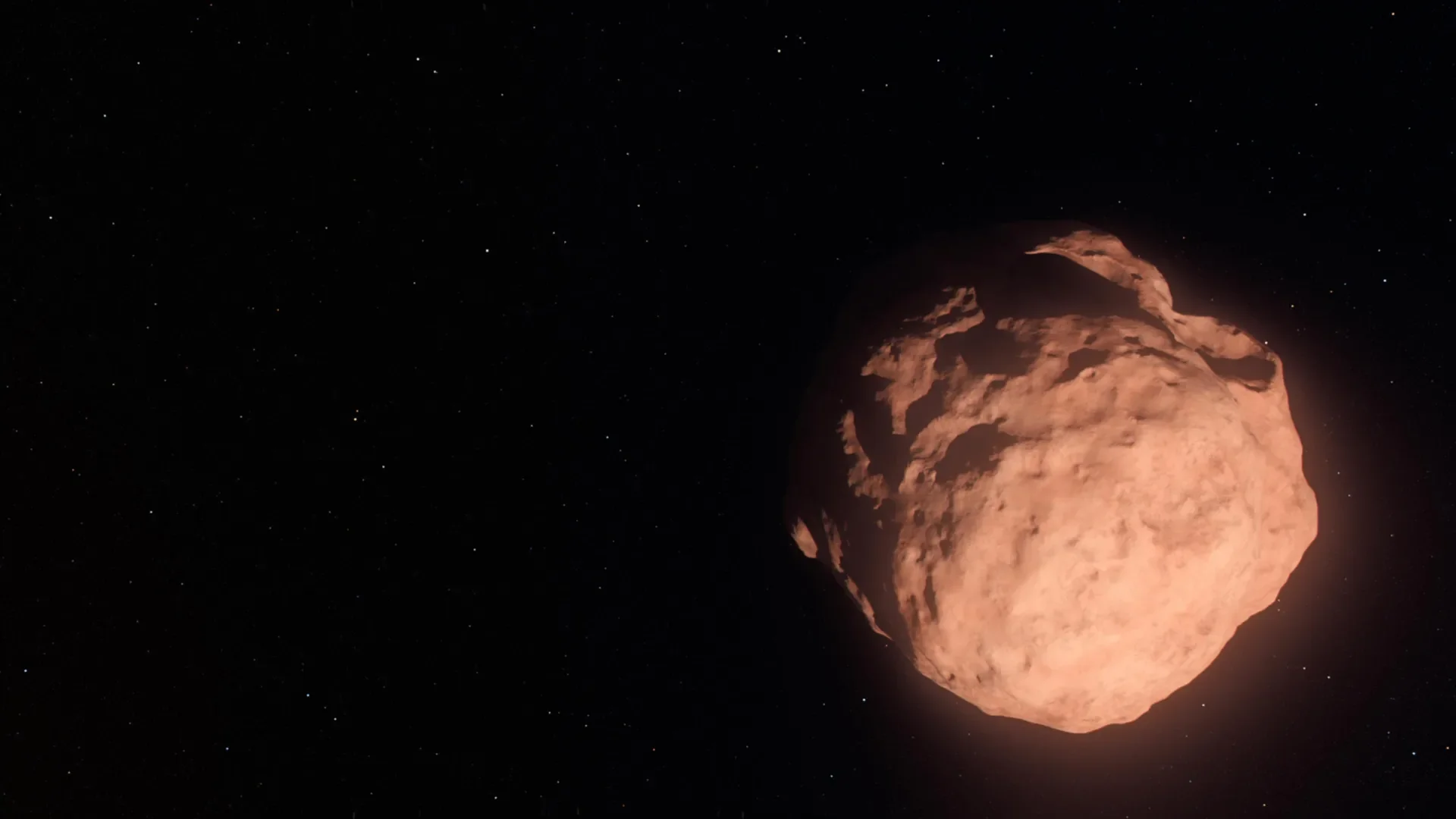
Visualization
In a groundbreaking exploration of the cosmic hinterland beyond Neptune, the Hubble and James Webb Space Telescopes have revealed remarkable insights into the origins of our solar system. By focusing on 27 tiny, obscured trans-Neptunian objects (TNOs), these observations have challenged entrenched theories of planetary formation, suggesting that the building blocks of planets have been preserved in a remarkably unchanged state for billions of years.
Trans-Neptunian objects, often more than 100 million times dimmer than those observable with the naked eye, represent some of the faintest and smallest celestial bodies known to science. Hubble's visible light observations, coupled with Webb's infrared capabilities, allowed astronomers to paint a more comprehensive picture of these ancient remnants. Particularly intriguing was the simultaneous data collection on the same patch of sky, which enabled researchers to analyze the colors and orbital characteristics of these distant worlds. The color signatures acted as a cosmic fingerprint, offering vital clues to their chemical compositions and histories.
The formation of planets is theorized to have originated from minuscule particles of dust and pebbles surrounding the nascent Sun, gradually agglomerating into larger bodies known as planetesimals. Through a protracted process over millions of years, these accumulations led to the planets recognized in our current solar system. However, beyond Neptune's domain, a substantial number of smaller bodies did not evolve into full-sized planets; instead, they remained as ancient witnesses of our solar system's formation phase.
Led by PhD candidates from the University of Victoria in Canada, in collaboration with the National Research Council of Canada and Northern Arizona University, the researchers conducted the most exhaustive survey of TNOs to date. Utilizing the complementing capabilities of both telescopes, astronomers captured invaluable data regarding the orbits, sizes, and surface characteristics of these objects. While examining both “cold” and “hot” population categorization, the differences derived from their orbital dynamics rather than thermal conditions. Cold TNOs followed relatively stable orbits with modest eccentricities and inclinations, maintaining proximity to the ecliptic plane, whereas the hot TNOs displayed erratic trajectories reflecting their turbulent origins, having been scattered outward by the gravitational influences of the giant planets.
In a captivating twist, the research revealed an astonishing degree of similarity between cold and hot TNOs—specifically in their color compositions, leading to vital questions about their collisional histories. Traditionally, scientists anticipated that smaller bodies would exhibit clear signs of surface modification due to the barrage of impacts accumulated over the eons. Instead, the findings indicate that the observed small TNOs retained their color relationships similar to those of their larger brethren, suggesting that the objects may have undergone fewer alterations than previously surmised.
This preservation of ancient characteristics, as described by Northern Arizona University PhD candidate Anastasia Morgan, implies an intriguing possibility: that the surfaces of these icy worlds may be mastering the art of retaining their original compositions despite being subjected to the rigors of collision events. Additionally, the observations suggest that TNOs, regardless of their dynamic classification, embody an enduring legacy of their formative environments.
The James Webb Space Telescope's heightened sensitivity unveiled another critical dimension: it became the arbiter in evaluating the size distribution of TNOs, which revealed an unexpected homogeneity between cold and hot populations. Despite being formed in areas with divergent primordial conditions, the TNOs exhibited the same range of sizes, raising pivotal questions regarding the underlying processes associated with planetesimal formation: it appears that these mechanisms operate uniformly irrespective of the disk conditions—be they cold or hot, dense or diffuse.
Another surprising revelation noted was the scarcity of very small TNOs relative to predictions from prevalent planet formation theories. This divergence appears to counter some established models and prompts a reconsideration of how we interpret the formation and evolution of the primordial materials that configured our solar system.
This reduced number of exceedingly faint TNOs, as detected through Webb’s extraordinary sensitivity, may inspire a renewed focus on the models that delineate the original building blocks of solar systems, promising to enrich our understanding of both the current and early-state dynamics of planetary formation. Notably, the dimmest object detected was so subtle that its observation can be likened to perceiving a swarm of fireflies from the Moon while standing on Earth.
As astronomers delve deeper into this remote region of the solar system, the ancient narratives held by these TNOs are being unearthed. Together, Hubble and Webb stand as monumental pillars, bridging the past and the cosmic present, contributing invaluable knowledge in a chapter of our solar system's evolution that remains profoundly intriguing yet sparingly charted. The data obtained not only enriches our comprehension of planetary genesis but also leaves us wondering what other secrets the solar system continues to hide in its frigid, distant corners.