Field: Technology
NASA’s Curiosity Rover Delves Into Mars' Mysterious Cliffs
Published | Technical Staff
Visualization
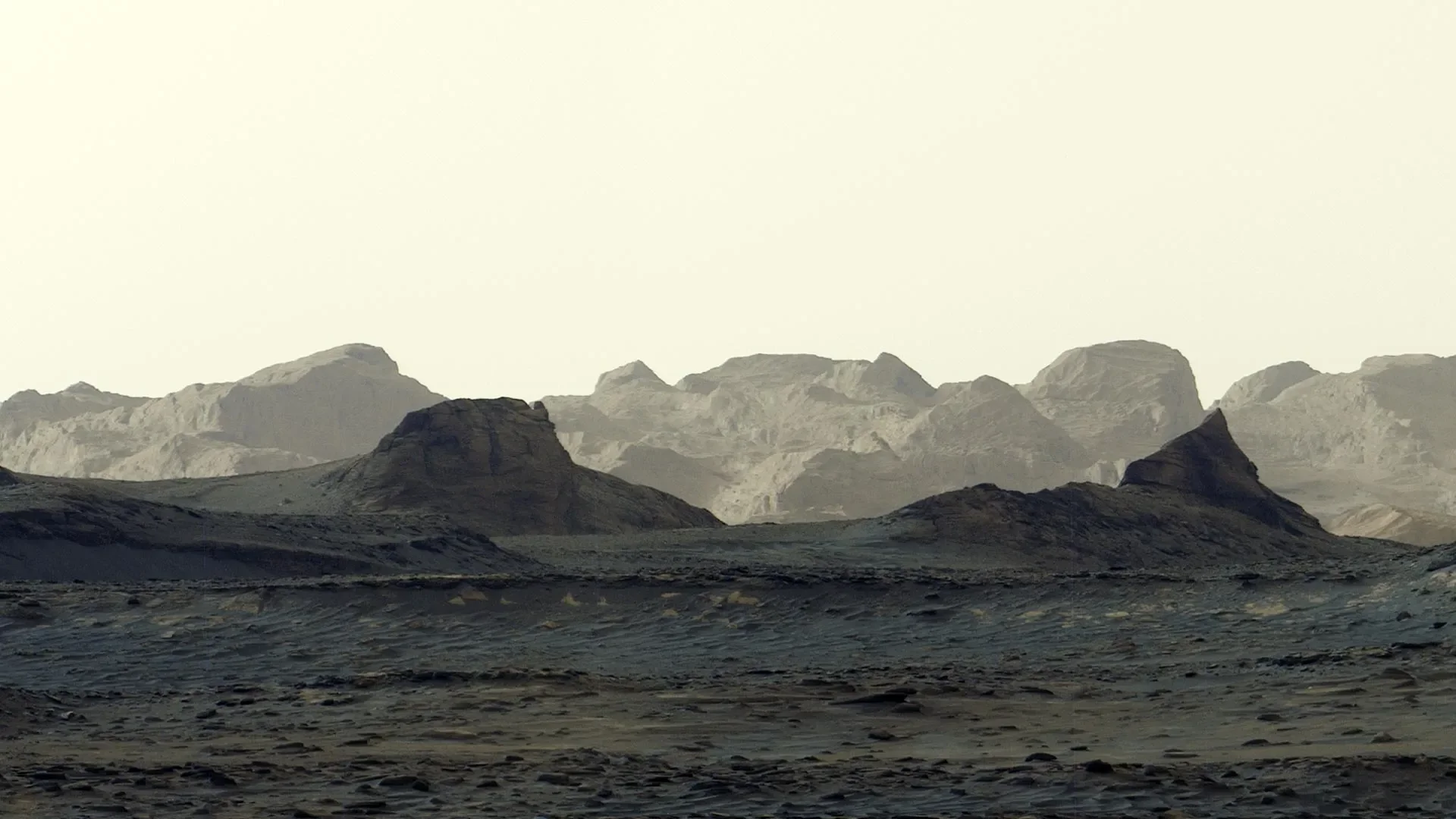
The Martian landscape has long captivated both scientists and enthusiasts, but a recent panorama captured by NASA’s Curiosity rover offers an especially tantalizing entry into the planet's ancient history. On August 11, 2026, during its 4,982nd sol on the Red Planet, Curiosity documented a striking series of wind-carved cliffs, known as yardangs, located in the northwestern sector of Mount Sharp. This geologic formation stretches approximately 16 kilometers across and is poised to reveal crucial details about Mars' climatic evolution and volcanic history.
The panorama, recorded with the rover's Mastcam in early morning light, highlights the rich blue hues of the Martian sky contrasting with the rugged yellowish cliffs illuminated by the dawn. For the scientific community, this imagery represents not merely an aesthetic achievement but a critical opportunity to investigate a formation that deviates from typical Martian geology. The images were processed without white balancing, preserving authentic Martian colors and providing a unfiltered look at the surface.
As Curiosity approaches these enigmatic cliffs, researchers are intrigued by their peculiar characteristics. This layer stands out not only due to its striking coloration but also because of its unexpected structural orientation—a tilt that defies the geological norms observed in surrounding formations. This has prompted speculation regarding the mechanisms behind their formation. Project scientist Ashwin Vasavada from NASA’s Jet Propulsion Laboratory posits that this layer may not result solely from aeolian processes but could also include deposits from past volcanic activity, potentially ash from ancient eruptions.
Mount Sharp is a venerable archive of Martian history, its sedimentary layers encapsulating evidence of a time when lakes and rivers thrived across its surface—a drastically different environment than the arid landscape observed today. Geological indicators, particularly evaporite minerals like sulfates and carbonates, suggest that when Martian water bodies receded, they left behind desiccated remnants. Subsequent erosive forces compounded by wind undoubtedly sculpted the existing rock, resulting in the yardang formations we see today.
Curiosity's movement towards these cliffs is not merely a journey across the Martian terrain; it symbolizes an astute quest to unlock the secrets of a planetary past shaped by complex interactions between volcanic and erosive processes. The rover's climb of 1 kilometer marks the highest elevation achieved by any rover on Mars, a significant milestone reflecting both the endurance of the vehicle and the determination of mission scientists to push the boundaries of exploration.
The intricate landscape of Mount Sharp provides a unique laboratory for understanding the preservation of organic material and the planet’s transition from a potentially habitable environment to the desolate expanse we currently observe. Researchers are hopeful that as Curiosity navigates closer to the yardang layer, its suite of scientific instruments, including the rover's robotic arm, will facilitate direct analysis of rock samples for compositional analysis. Such investigations could yield breakthrough insights into the diagenetic processes that shaped these enigmatic cliffs.
NASA's extended mission, now in its fifth year, continues to explore the intricate geological narrative unfolding in Mount Sharp, with plans to complete a thorough examination of the yardangs anticipated to commence in 2027. In this era of renewed interest in Martian exploration, Curiosity stands at the forefront, embodying the relentless human pursuit of knowledge about our solar system and the ancient and complex world of Mars. Each discovery adds an enriched layer to our understanding, guiding future explorations as we strive to comprehend not only the geology of Mars but also the broader implications for planetary evolution across the cosmos.