Field: Technology
NASA's CHAPEA Mars Crew Concludes Year-Long Isolation Experiment
Published | Technical Staff
Visualization
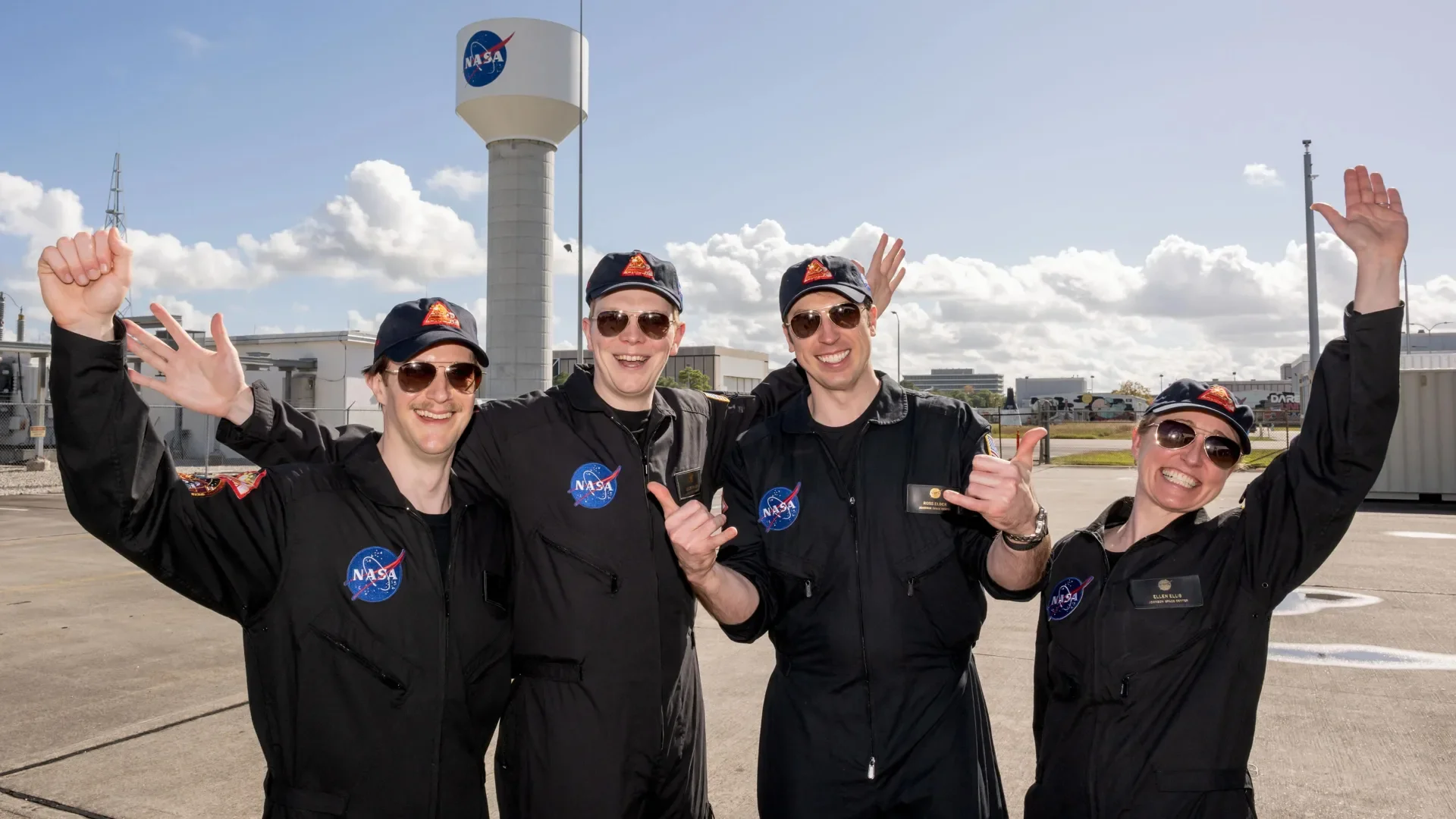
The culmination of over a year immersed in a simulated Martian environment has concluded, offering profound insights into the dynamics of human endurance in extraterrestrial scenarios. On October 31, 2026, four NASA volunteers, designated as the CHAPEA Mars crew, emerged from their confined quarters, marking a significant milestone in the agency's endeavor to prepare humanity for prospective colonization efforts on Mars and beyond. This extensive experiment, part of the Crew Health and Performance Exploration Analog (CHAPEA) program, sought to understand the physiological and psychological implications of prolonged isolation while mimicking the challenging conditions of interplanetary travel.
The crew, consisting of Matthew Montgomery, James Spicer, Ross Elder, and Ellen Ellis, undertook a series of meticulously designed tasks inherent to Martian survival and exploration. Throughout their mission, the participants grappled with systems that future Martian settlers would likely have to operate, including life support mechanisms, nutrient production, and the management of finite resources. Given that Mars has a thinner atmosphere, regolith laden with toxic perchlorates, and extreme temperatures, effective agricultural practices on this hostile surface are paramount. The crew cultivated crops in a greenhouse simulation, focusing on nutrient cycling and hydroponics—essential for sustaining life far from Earth.
Additionally, the experiment required participants to conduct extravehicular activities, akin to spacewalks, which enabled researchers to simulate the complexities of outside operations in a Martian habitat. Such endeavors are critical to prepare for scenarios where astronauts must implement repairs or scientific protocols beyond the safe confines of their living quarters. The observational data collected during these activities will provide crucial inputs into the training regimens and operational guidelines for future missions.
Communication latency presented another layer of complexity for the CHAPEA crew. Unlike astronauts aboard the International Space Station, who enjoy relatively instantaneous communications with mission control, the Martian communication gap necessitates a delay of up to 22 minutes one way. This delay effectively reconfigures the operational protocols, transforming the crew into self-reliant decision-makers facing unforeseen challenges—essentially forcing them to adopt problem-solving approaches under pressure with limited external guidance.
A major focus of the CHAPEA program is the health and safety of astronauts on long-duration missions. The confined living environment simulates the psychological stresses and physical demands anticipated during an extended sojourn on Mars. As such, NASA utilizes analog missions like CHAPEA to explore critical facets of human health, including the management of fatigue, interpersonal dynamics, and cognitive performance under stress. They aim to glean insights into group cohesion and behavioral economics when resources are scarce, establishing best practices for resource allocation that can be carried forward into actual missions.
The comprehensive lessons learned from Montgomery, Spicer, Elder, and Ellis are poised to significantly influence NASA's future exploration frameworks. These findings will inform the strategic development of a Moon Base—critical as a waystation for interplanetary travel—and guide preparations for crewed missions aimed at Mars. Thus, while the crew’s experiences unfolded entirely within Earth's atmosphere, the knowledge accrued stands to address the myriad challenges that await humanity’s eventual leap to the Red Planet.
As NASA embarks on its next chapter of exploration, the pivotal insights from this rigorous exploration analog will underpin the evolution of technologies, team dynamics, and survival strategies necessary for a sustainable human presence on Mars—a goal that, just years ago, seemed confined to the realm of science fiction.