Field: Technology
NASA’s Assertion of Ozone Hole Expansion: A Dramatic Reflection of Atmospheric Dynamics
Published | Technical Staff
Visualization
In 2026, the Antarctic ozone hole expanded to its seventh-largest recorded size, a development unprecedented in the last decade. This expansion was primarily driven by anomalous meteorological patterns that conspired to bring the hole perilously close to its historical maximum dimensions. Notably, scientists have credited international accords aimed at controlling ozone-depleting substances for staving off an even greater environmental catastrophe, affirming that Earth’s stratospheric ozone layer continues its slow yet promising trajectory towards recovery.
Between September 7 and October 13, when ozone depletion peaked seasonally, the ozone hole encompassed an average area of roughly 9.6 million square miles (25 million square kilometers), effectively more than double the expanse of the contiguous United States. The maximum size occurred on September 18, reaching approximately 10.5 million square miles (27.1 million square kilometers), which approximated 90% of the magnitude of the largest hole ever recorded—9 September 2000. These spatial measurements are critical, not merely as atmospheric statistics but as vital indicators of the health of the layer that performs the essential function of shielding living organisms from deleterious solar radiation.
The remarkable expansion of the ozone hole can be chiefly attributed to an exceptionally robust polar vortex, a phenomenon characterized by strong wind patterns that dictate atmospheric conditions surrounding the continent of Antarctica. Sounds of alarm were muted by the understanding that significant strides have been made in global environmental policy, as Paul Newman, a senior scientist at the University of Maryland and the seasoned leader of NASA’s ozone research team at Goddard Space Flight Center, articulated. The polar vortex's unique strength allowed ozone depletion to manifest on a broader geographical scale, effectively extending the duration of high-ozone-loss conditions.
Ozone depletion is intricately linked to anthropogenic emissions, particularly halocarbons like chlorofluorocarbons and brominated compounds. These substances, upon reaching the stratosphere, undergo photolytic decomposition under ultraviolet radiation, releasing chlorine and bromine atoms that catalyze ozone decay through complex reactions with ozone molecules. In normal years, the polar vortex weakens under certain atmospheric disturbances, but in 2026, these corrective mechanisms were surprisingly anemic. Amy Butler of NOAA’s Chemical Sciences Laboratory explained that prevailing planetary-scale weather systems failed to disrupt the polar vortex effectively, which allowed the area of pronounced ozone depletion to expand substantially.
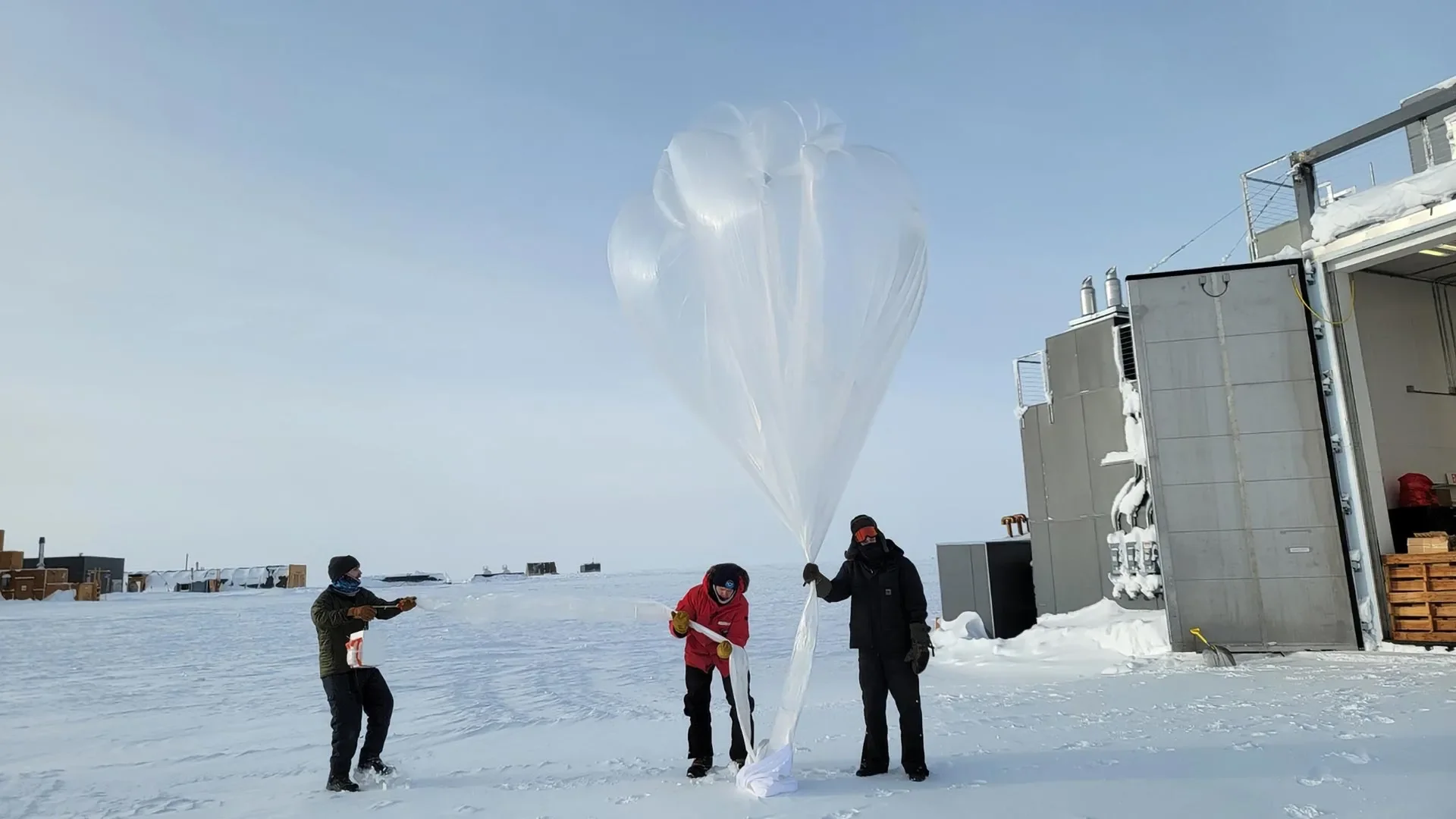
In a broader context, the monitoring initiatives undertaken by NASA and NOAA amidst this extensive ice cap area invoked the use of advanced instrumentation, including the Dobson Ozone Spectrophotometer and ozonesondes launched via weather balloons. Reports revealed that on October 17, ozone concentrations above the South Pole plummeted to their nadir for the year, registering only 105 Dobson units. For reference, a layer of ozone measuring 100 Dobson units corresponds to merely 1 millimeter in thickness when compressed to standard atmospheric pressure. This data underscores the ongoing fluctuations within the stratospheric ozone concentrations—a phenomenon traditionally linked to both meteorological conditions and human activities.
Although 2026 saw the ozone hole attain dimensions reminiscent of historical extremes, it is crucial to note that the intensity of ozone loss did not reach the dramatic nadirs witnessed in years past, such as 2006 or 2010. Consistent with observations, scientists stress that the trajectory points towards gradual recovery, a hopeful message underscored by the successes of international efforts such as the Montreal Protocol enacted in 1987.
The Protocol represents a milestone in astute policy-making, aiming at the reduction of halogenated compounds historically prevalent in consumer products ranging from refrigeration systems to aerosol propellants. Following the enforcement of this treaty, geochemical monitoring indicates a remarkable one-third decline in chlorine levels in the Antarctic stratosphere since the peak of ozone-depleting substances in the 1980s. Given the longevity of these molecules in the atmosphere, the full recovery of the ozone layer is anticipated to unfold over decades, yet contemporary data continue to signify a slow but unwavering path toward recuperation.
The ozone hole expansion in 2026 is more than a fleeting environmental anomaly; it is a stark reminder of the delicate balance Earth maintains in its atmosphere and the profound impact that human decisions can have on its health. As ongoing monitoring efforts persist, the scientific community remains vigilant, equipped with updated tools and a historical underpinning of global cooperative actions. The intricate interplay of atmospheric dynamics and policy highlights both the vulnerabilities of our planet’s protective layers and the tangible benefits of concerted international action in safeguarding Earth’s biosphere for generations to come.