Field: Technology
NASA's Artemis I mission uncovers unexpected radiation levels near the Moon
Published | Technical Staff
Visualization
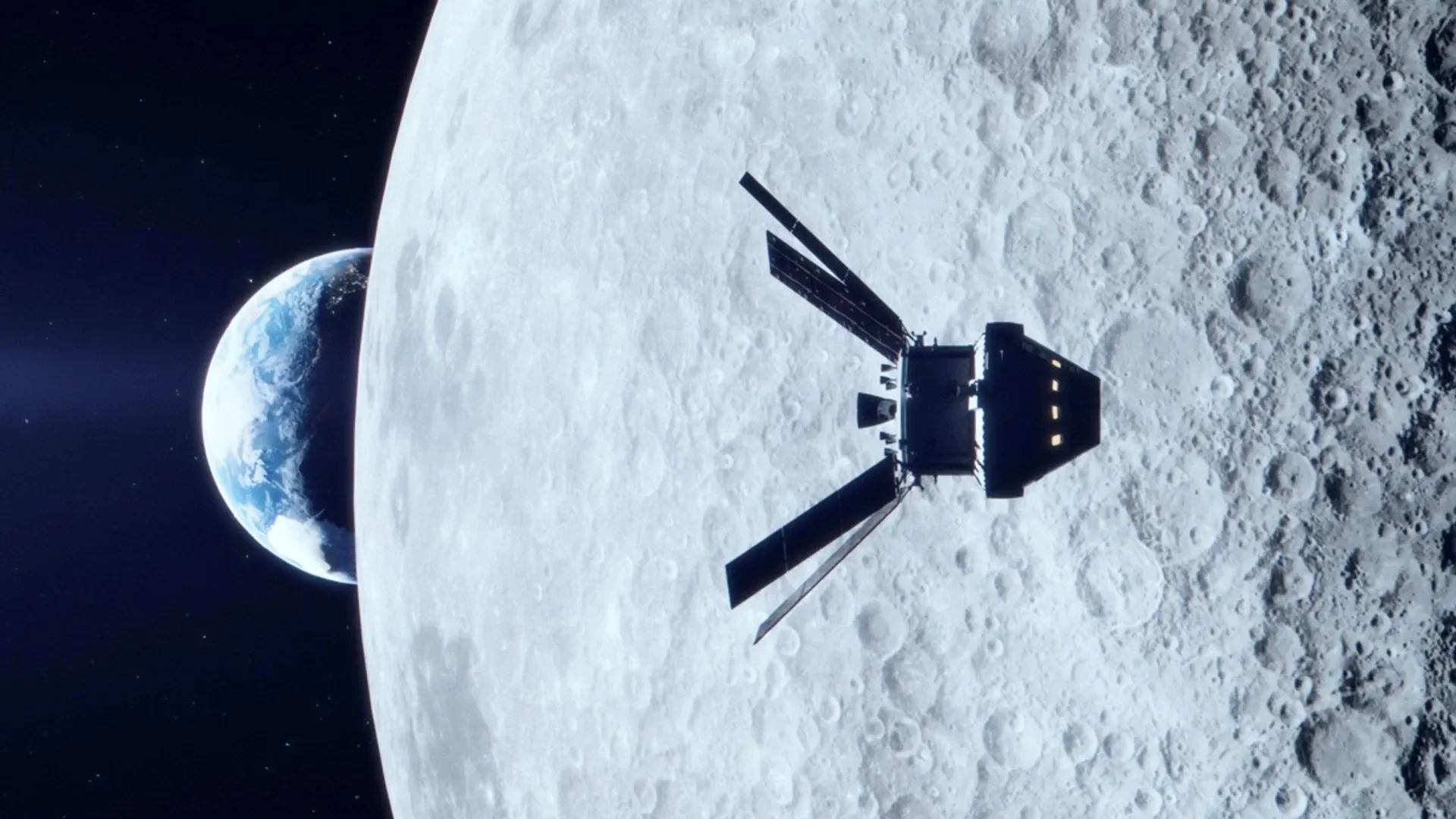
NASA’s Artemis I mission has emerged as a pivotal milestone in our understanding of cosmic radiation in space exploration, particularly as it relates to the ever-looming question of astronaut safety beyond Earth’s protective halo. As Orion, the spacecraft at the heart of this uncrewed mission, orbited the Moon, it bore more than a technological payload; it carried an array of experimental detectors, including over 10,000 tiny lithium fluoride crystals embedded in human-shaped mannequins, meticulously designed to capture radiation data in uncharted lunar territory.
Cosmic radiation is a formidable foe for space travelers, comprising highly energetic particles that originate not only from solar flares but also from deep-space phenomena. The Artemis I initiative employed instruments developed by the Institute of Nuclear Physics of the Polish Academy of Sciences (IFJ PAN), specifically focusing on a novel methodology to analyze the radiation exposure via the inherent properties of lithium fluoride crystals. These passive detectors operate similarly to photographic film—a stark contrast to dynamic detectors that actively measure incoming radiation. Upon exposure to cosmic radiation, these lithium fluoride crystals undergo structural transformations, generating color centers—defects within the crystalline lattice that become key indicators of the radiation dose received.
Upon returning to Earth, the examination of these crystals revealed the extent of radiation exposure experienced during the mission. With the ability to analyze the altered states of the lithium fluoride using blue light excitation, researchers could reconstruct the paths of cosmic particles as they traversed this medium, illuminating their interactions at a microscopic level.
The MARE (Matroshka AstroRad Radiation Experiment) study significantly advanced our understanding of radiation distribution patterns in deep space. By comparing the readings from Artemis I with past experiments conducted in low Earth orbit—most notably the MATROSHKA project aboard the International Space Station (ISS)—scientists were astounded to find that while the radiation levels near the Moon were indeed elevated compared to those in geostationary orbit, the disparity was not as significant as anticipated.
The cosmic backdrop of the Moon presents a markedly different environment. Unlike the trapped low-energy protons of the Van Allen radiation belts that dominate radiation exposure in low Earth orbit, the Moon’s geographical expanse offers a more homogenous blend of high-energy particles. These galactic cosmic rays can pass through human tissue with less energy deposition per interaction, resulting in a more uniform radiation dose within the mannequins compared to the uneven profiles observed aboard the ISS, where radiation penetrated unevenly, depositing energy at varying depths across the body.
The tasks of interpreting these readings, however, were not without their complexities. Cosmic radiation manifests as a mixed population of particles with a vast range of energies and impact angles, complicating the deciphering of micrograph tracks left in the crystals. Traditional methods of passive radiation detection often required intricate chemical etching of materials, thereby hampering efficient analysis. The innovation brought forth by the lithium fluoride detectors simplified this process significantly, reducing the preparatory requirements and allowing for more direct observation of the radiation tracks, with microscopic examination yielding data correlating closely to results derived from conventional detectors.
The analytical rigor applied by the team in correcting for background signals was critical. They developed algorithms capable of refining the signal-to-noise ratio, ensuring that their measurements were accurately aligned with established standards while real-time data collection revealed incidents that past technologies might have overlooked. Prof. Pawel Bilski and his colleagues illustrated that their refined methodologies yielded results that deviated by a margin of no more than 15% from those obtained through conventional means, enhancing confidence in the Artemis mission's findings.
These contributions from Artemis I are vital as humanity stands on the threshold of returning to the Moon and ultimately venturing to Mars. Data culled from the lunar environment can inform more effective shielding strategies and medical countermeasures necessary for protecting astronauts from the complexities of space radiation. While the United States looks to establish a sustained presence on the Moon, the Artemis I mission serves as an indispensable harbinger of the readiness needed to navigate the perils of deep space exploration, paving the way for future endeavors that may one day take humans to Mars and beyond.
Ultimately, the Artemis I mission has not only illuminated the radiation environment of lunar orbit but has also redefined our expectations for astronaut safety in the context of cosmic radiation exposure, challenging scientific assumptions and laying the groundwork for the next chapter of human space exploration.