Field: Technology
NASA unveils the cryptic thermal dynamics of asteroid Bennu, shedding light on its complex rock structures
Published | Technical Staff
Visualization
In a remarkable merge of cosmic exploration and advanced materials science, NASA's OSIRIS-REx mission has resolved a seemingly paradoxical phenomenon associated with asteroid Bennu. Upon the spacecraft’s arrival in 2018, expectations of a smooth, accessible landscape dissipated, replaced by an overwhelming display of gigantic boulders, which initially confounded the mission scientists. Traditionally, larger rock formations are anticipated to exhibit high thermal inertia, gradually absorbing and releasing heat, yet Bennu flaunted a significantly lower thermal inertia—a characteristic more akin to loose particulate matter than solid stone.
Andrew Ryan, a prominent scientist from the University of Arizona's Lunar and Planetary Laboratory, expressed the initial surprise among the OSIRIS-REx team. Their pre-mission data hinted at a heterogeneously textured surface, yet nothing could have prepared them for the rugged, boulder-laden topography that awaited their arrival—a stark contrast to earlier predictions derived from Spitzer Space Telescope observations. The conundrum was pronounced: how could a celestial body cloaked in solid rock cool more expediently than anticipated?
The key to this enigma was unearthed upon the return of sample fragments to Earth from Bennu's surface. Employing an array of laboratory techniques, the research team scrutinized these rock fragments and discerned that they were markedly porous, albeit, this alone lacked sufficient explanatory power regarding the high cooling rates observed. The insight that unraveled the remaining mystery lay in the rocks' extensive internal crack networks.
To appreciate the influence of these fissures on thermal transfer, researchers from Nagoya University deployed a technique known as lock-in thermography. This method entails the application of laser-induced heating to localized regions of a sample, allowing for a subsequent analysis of heat dissemination akin to ripples across a water surface. The subsequent measurements revealed a puzzlement; the thermal inertia recorded in controlled lab environments exceeded those acquired via spacecraft instruments, indicative of significant disparities likely tied to the scale and structural coherence of the rocks.
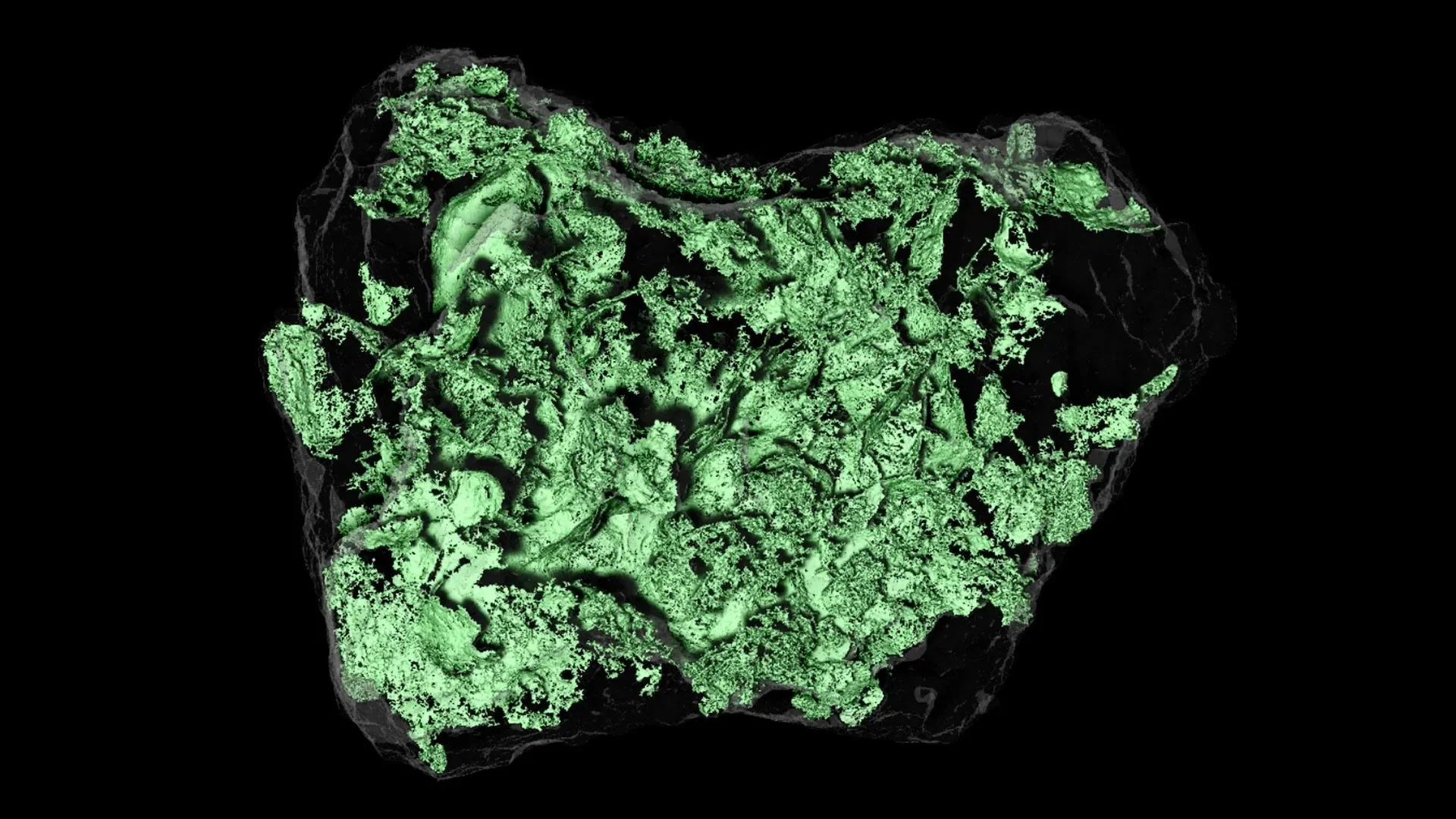
In an intricate process ensuring preservation from terrestrial contaminants, NASA's teams prepared the meteorite samples for X-ray computed tomography (XCT) analyses within a glove box filled with inert nitrogen gas. Each fragment was housed in its own protective ‘spacesuit’—airtight containers designed to withstand contamination—while a forensic examination via XCT enabled visualization of internal structures without any material alteration. Scott Eckley, a leading X-ray scientist at NASA Johnson Space Center, articulated the pivotal nature of XCT, allowing a non-destructive, three-dimensional insight into the rocks' architectures.
The three-dimensional snapshots were not merely for visual pleasure; they produced enduring digital records of these structures, subsequently incorporated into simulations portraying how heat propagates through material on a comprehensive scale. The results effectively bridged qualitative and quantitative data—yielding an explanation that aligned closely with the low thermal inertia detected remotely by OSIRIS-REx. The discovery that the internal complexity of Bennu's rocks, characterized by both significant pore space and intricate networks of fractures, was pivotal to their thermal behavior underscored the importance of understanding asteroid compositions beyond their superficial appearance.
The implications of these findings extend well beyond Bennu. The methodology harnessed in this study offers a refined framework for interpreting remote observations of other asteroids, enabling scientists to correlate thermal emissions with internal structures without relying heavily on direct sample analysis. According to Ron Ballouz, a scientist at Johns Hopkins University, such advancements refine the connection between astronomical instrumentation and the physical reality of asteroid materials, bringing clarity to the thermal properties presumed in celestial bodies without the benefit of direct, physical examination.
As further exploration initiatives are planned—featuring an increasing reliance on sample return missions—the revelations gleaned from Bennu present a foundational paradigm. Through a marriage of astrophysics and geochemistry, the OSIRIS-REx mission continues to set standards, providing insights that catalyze not just a deeper understanding of our solar system's remnants but also the methodologies with which we engage them. The story of Bennu is endlessly unfolding, encapsulating the complexities of heat retention and release, illuminated by the intricate web of cracks hidden within its stony embrace, a true testament to the beauty and enigma of planetary science.