Field: Technology
NASA smashed into an asteroid. Now Hera is closing in to see what happened.
Published | Technical Staff
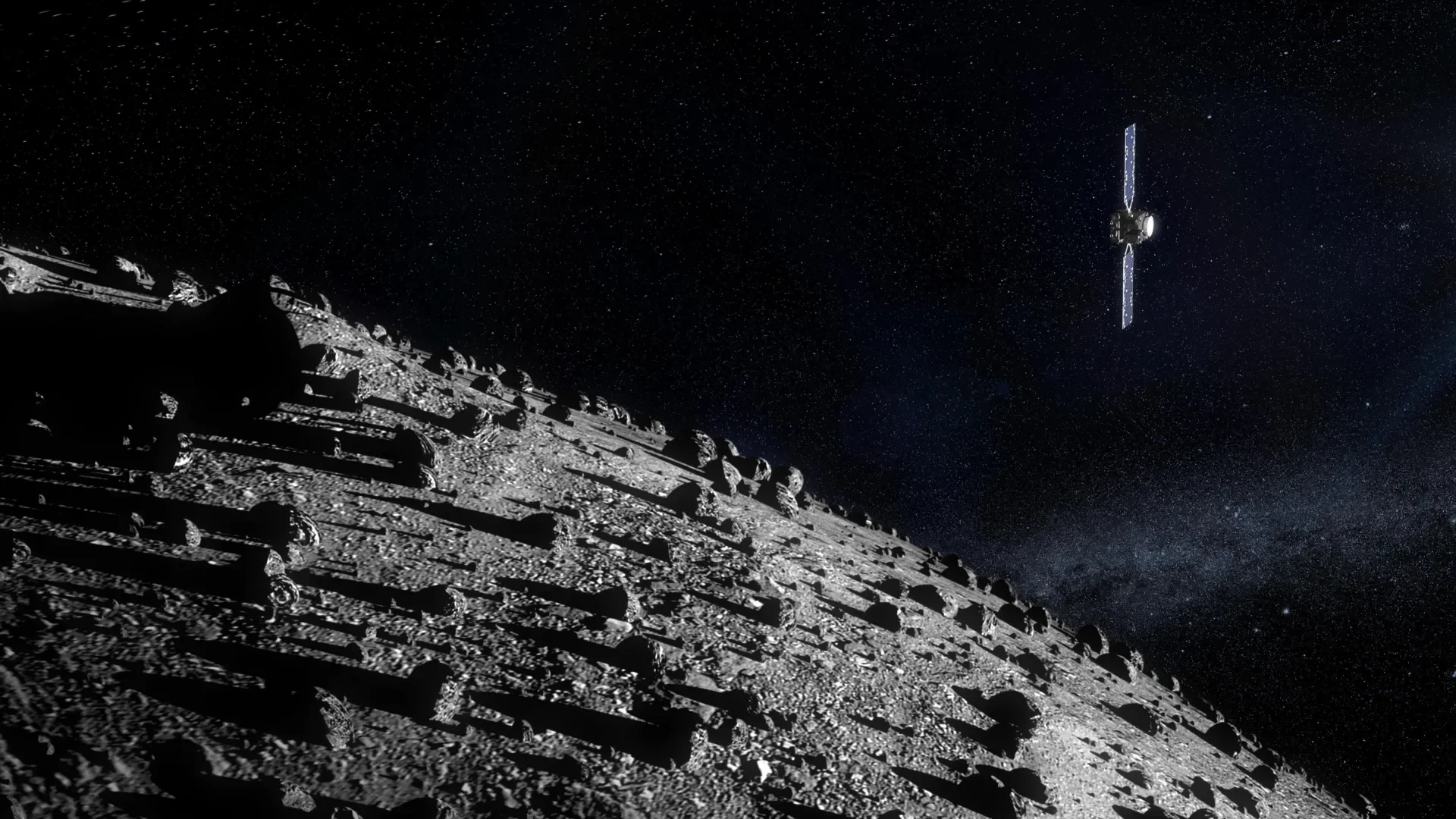
Visualization
In an unprecedented act of planetary defense, the European Space Agency's Hera mission has recently attained a critical milestone, bringing it closer to one of the most significant events in modern space exploration—the successful impact of NASA’s Double Asteroid Redirection Test (DART) spacecraft against the asteroid Dimorphos on September 26, 2022. This momentous collision, which occurred at a stunning velocity of 6.1 kilometers per second, has opened a new frontier in our understanding of asteroids and how we might protect Earth from future threats.
As of November 3, 2026, Hera has captured its first definitive imagery of the Didymos-Dimorphos system, located approximately 197 million kilometers from our planet. Through its black-and-white Asteroid Framing Camera, Hera, while positioned about 1,280 kilometers from the double asteroid system, resolved Dimorphos into a distinct object. Mission scientist Michael Kueppers noted that this marked the first clear observation of Dimorphos, previously only perceived as an ethereal single dot amidst the vast canvas of the cosmos. This is a pivotal advance; Dimorphos, with a diameter of around 151 meters—comparable to the Great Pyramid of Giza—couples with its larger sibling Didymos, which spans approximately 780 meters.
The interplay between the two asteroids is ingenious; Dimorphos orbits Didymos at an average separation of merely 1.15 kilometers, traveling at a slow pace of 18 centimeters per second. This close configuration provides a rich backdrop for Hera to carry out its investigative protocols. The spacecraft underwent meticulously planned maneuvers in October, utilizing its thrusters to decelerate to a mere 20 meters per second relative to its targets, a methodical approach that ensures precision as it navigates this dynamic system.
The impetus behind Hera's exploration lies not merely in witnessing the remnants of a human-induced impact but rather in deciphering its implications. NASA's DART mission, which succeeded in altering Dimorphos’s orbital period around Didymos by approximately 33 minutes, raised a plethora of inquiries regarding the unexpected magnitude of this shift. Preliminary analyses suggested debris extending 10,000 kilometers from the impact site, indicating a complex response from the asteroid that remains cloaked in mystery.
To substantiate theories posited during the pre-impact simulations, Hera embarks on a comprehensive post-collision examination. The discrepancies between predicted and observed outcomes have necessitated investigating the intrinsic characteristics of Dimorphos. Such inquiries demand elucidation on whether DART's collision produced a discernible crater and if it remodelled the asteroid's structure on a grand scale or left its overall morphology intact. Moreover, rigorous measurements of Dimorphos's composition, internal architecture, and mass are imperative for understanding the mechanisms that contributed to the efficacy of this kinetic impact event.
Hera's methodological approach involves an exhaustive suite of scientific instruments designed to scrutinize Dimorphos and its immediate environment. With plans to deploy two CubeSats—satellite companions the size of shoeboxes—the mission aims to enhance observation from varied proximities. These assets will facilitate data collection that is crucial for understanding the physical response of asteroids to high-energy impacts, a vital component for refining future strategies in asteroid deflection.
As the Hera mission progresses, it illuminates the path towards transforming theoretical frameworks into actionable planetary defense strategies. The data gathered in the following months will furnish scientists with insights to better predict how asteroids respond to human-directed interventions, consequently strengthening Earth's protective measures against potentially catastrophic celestial bodies.
The excitement surrounding Hera's discoveries reverberates beyond the scientific community, fostering public engagement through the Hera Space Companion, an innovative platform designed to demystify the complexities of this pioneering mission. As we await the first detailed images of Dimorphos, expected on November 25, the unfolding narrative may well redefine humanity’s relationship with the cosmos, underscoring both our vulnerabilities and resolute capacity to rise to the challenges presented by it.