Field: Technology
NASA reveals a haunting skull hidden in Antarctica’s ice
Published | Technical Staff
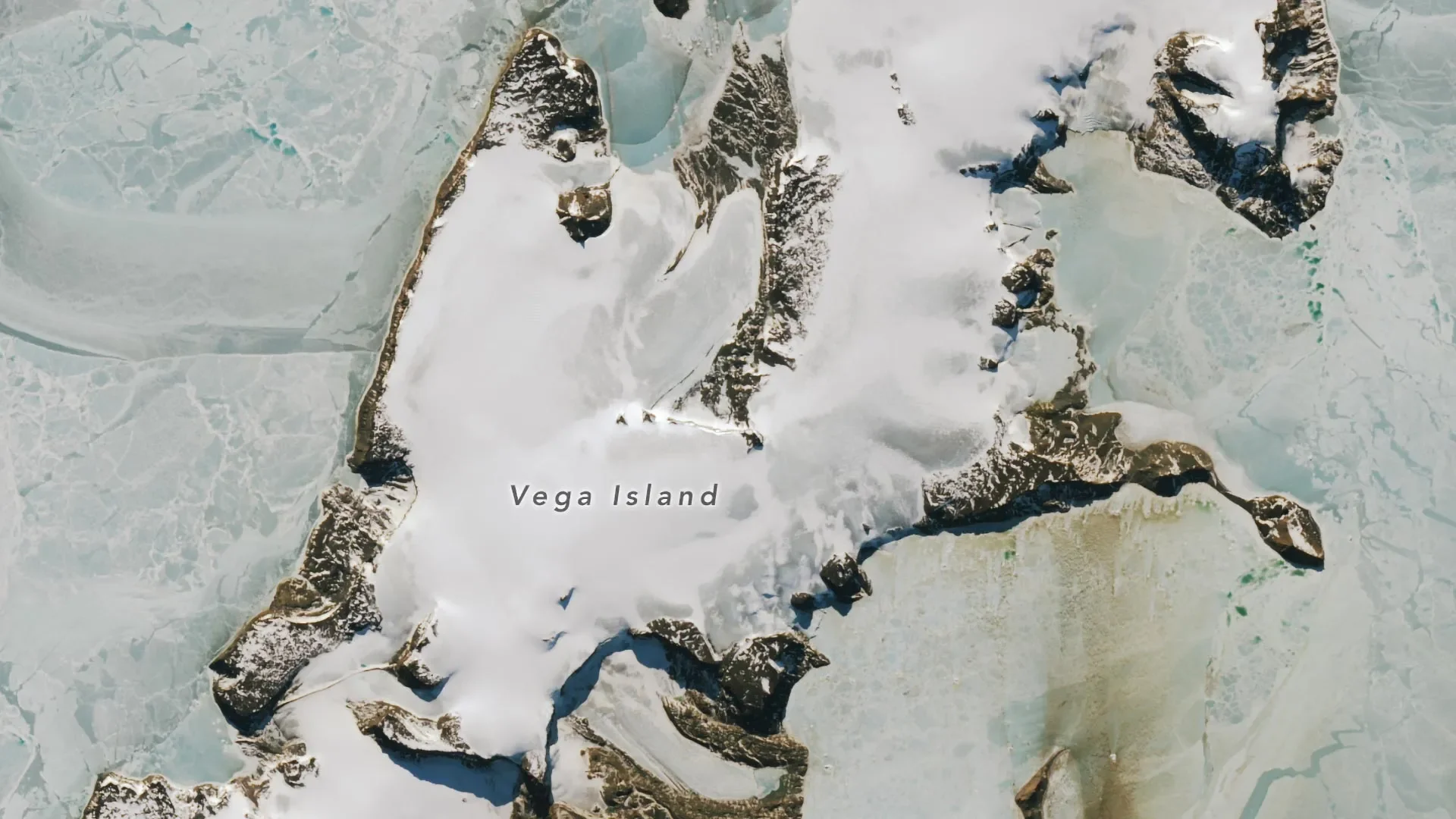
Visualization
In a chilling revelation illuminated by NASA's advanced satellite technology, the unique geological formations of Vega Island present a striking resemblance to a human skull. This spectral visage, however, carries a foreboding message about the accelerated melting of Antarctic glaciers. The skull's formation—where natural landmarks are orchestrated in an uncanny semblance of human anatomy—depicts the harsh realities of climate change as warmer winter temperatures peel away the icy mantles of the region.
Situated within the icy embrace of the Weddell Sea, east of the Antarctic Peninsula, Vega Island evokes an eeriness when viewed from above. The rocky contours, akin to the empty cavities of an eye socket, are formed by a nunatak— a peak that protrudes above the glaciated landscape— while the glacial structure below outlines what resembles a gaping mouth. Meanwhile, the Devil’s Bay Glacier delineates the skull's lower jaw, accentuating this extraordinary natural formation.
To document this geological phenomenon, NASA's Landsat 9 satellite, equipped with the Operational Land Imager (OLI), captured images during the Antarctic autumn in March 2025 and again in October 2026. In these contrasting snapshots, significant alterations in snow coverage became glaringly evident. While the March 2025 photographs reveal a snow-cloaked terrain typical of the wet Antarctic season, the October 2026 images portray a starkly different landscape, punctuated by vast swathes of dark, ice exposed—indicative of a dramatic loss in winter snow accumulation.
The implications of these changes are profound, as elucidated by glaciologist Mauri Pelto from Nichols College. He noted that the unseasonably warm temperatures during the winter of 2026, particularly in June, have revealed alarming levels of exposed ice, suggesting that minimal new snow had adorned the surface. Further losses occurred via sublimation—a process where solid ice transforms directly into vapor, coupled with the erosive effects of relentless winds. "The winter season was no treat for these glaciers," he remarked, underscoring the challenging conditions which have prevailed across the Antarctic.
The implications of an ice-surface transition from pristine snow to exposed glacial ice are significant, particularly as the region enters its season of increased solar exposure. Fresh snow acts as a reflective barrier against incoming sunlight, while the dark ice absorbs greater quantities of solar energy. This propensity for enhanced absorption accelerates warming and, subsequently, glacier melting. "Even a modest amount of new snowfall could temporarily slow that process," Pelto stated, pointing out that a thin blanket of snow from spring storms could help shield the ice beneath.
As these glaciers retreat and the landscape evolves, so too does the skull-like facade of Vega Island begin to change. As Pelto warns, the erosion of the ice and rock formations—once preserved under layers of snow—will lead to a gradual alteration, reshaping what was once a ghostly visage into a different geological sculpture. "When entombed in snow and ice, the skull is preserved. But as it is revealed through melt, it will weather away, causing shifts in the jawline and expansion of the eye sockets," he elaborated.
The glaciers of Vega Island are not only a contemporary concern but have also been subject to decades of scientific scrutiny. Early satellite observations, including a pioneering 1982 survey, have employed aerial photographs and topographic maps to assess the island’s ice cover. Documenting 29 glaciers across this terrain, the research identified distinctive features such as rocky cliffs and sprawling ice caps. One glacier, Devil's Bay, has been monitored since the Antarctic summer of 1998-1999, revealing a steady progression of mass loss over the years.
Beyond their scientific significance, Vega Island and its glaciers are steeped in exploratory history. The harrowing tale of the Swedish Antarctic Expedition from 1901-1903 reveals how the island became a site of survival amid calamity when explorers became stranded due to pack ice destroying their ship. As they faced the omnipresent Antarctic winter, the eventual reunion of the separated parties at what is now known as Cape Well-met stirs echoes of triumph against the odds.
Today, Vega Island stands at the intersection of natural wonder, historical intrigue, and the ominous narrative of climate change. While its haunting skull silhouette attracts attention, the poignant story of its changing glaciers carries a distinct and sobering message about the pressing realities of global warming. Through the lens of contemporary science, the island narrates an urgent tale of transformation—signifying that what appears as a stark symbol of nature may ultimately yield to the relentless forces of a warming planet.