Field: Technology
NASA Launches AMPERE Challenge: A $500,000 Initiative to Revolutionize Electric Rocket Propulsion
Published | Technical Staff
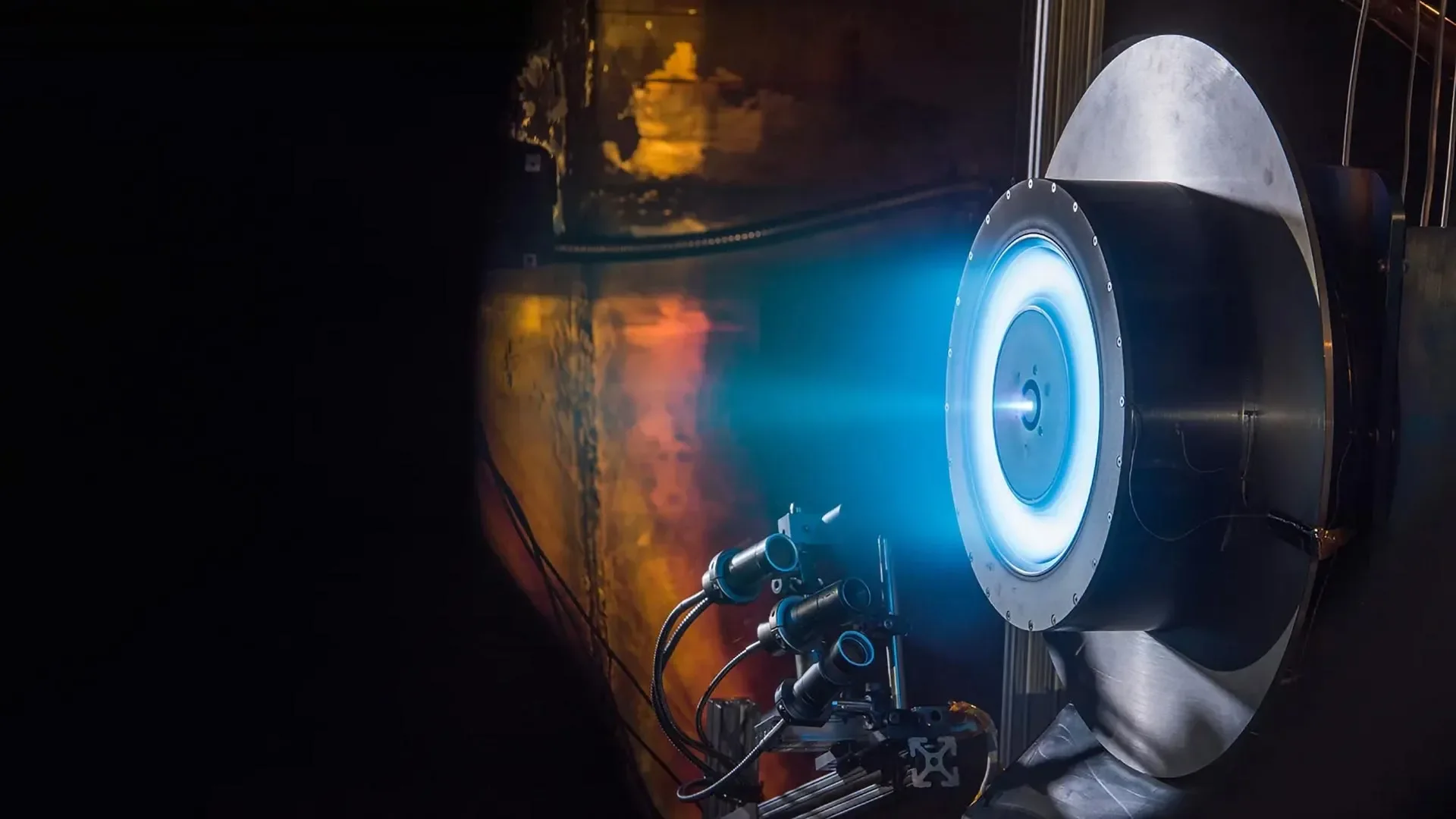
Visualization
In an ambitious pursuit to enhance the capabilities of modern space exploration, NASA has announced the AMPERE Challenge, a competitive venture with a financial incentive of $500,000 aimed at catalyzing innovation in electric rocket engine technology. This forward-thinking initiative not only offers monetary rewards but also grants companies access to NASA’s sophisticated testing facilities, effectively bridging the gap between theoretical development and practical application in the aerospace sector.
At the heart of this challenge lies a techno-innovation known as Hall effect thrusters, which embody a cutting-edge approach to spacecraft propulsion. These devices operate on principles derived from electromagnetic physics, utilizing electric and magnetic fields to accelerate ionized gases—notably inert propellants such as xenon—resulting in the expulsion of ions at remarkable velocities that produce thrust in accordance with Newton's third law of motion. The thrusters typically operate in a voltage range that translates into a power consumption of approximately 3 to 7 kilowatts, making them particularly suited for prolonged operations where efficiency and energy conservation are paramount.
Unlike traditional chemical rockets that generate thrust through rapid combustion, the elegance of electric propulsion systems is marked by their ability to sustain thrust over extended durations. This is invaluable for missions demanding precise orbit adjustments or deep-space maneuvers wherein the gradual acceleration can lead to significant gains in efficiency over time. The operational efficacy of Hall effect thrusters can be characterized by the thrust-to-power ratio (T/P), which, in tandem with specific impulse (Isp), establishes the performance benchmarks for prospective designs.
NASA's AMPERE Challenge is strategically positioned to expedite the advancement of propulsion systems that fall within the mid-power classification of 3-7 kW, pinpointing technology crucial not only for commercial satellite operations but also for national defense and exploratory missions beyond low Earth orbit. Current applications of electric propulsion include inter-satellite communications and long-duration missions where traditional propulsion methods would be infeasible due to fuel constraints. Enhancements in Hall effect thruster performance could broaden the horizon for launching more sophisticated missions, including robotic explorations of distant celestial bodies.
The structure of the AMPERE Challenge unfolds over three phases, where teams from U.S.-incorporated businesses will engage in the development and demonstration of operational Hall effect thruster prototypes. This competitive environment is designed to culminate in performance evaluations conducted at NASA facilities, where prototypes will undergo rigorous testing to ascertain their operational viability and reliability under various simulated conditions.
Winning teams will not only compete for a cash prize of up to $250,000 but will also receive critical support from NASA’s state-of-the-art propulsion testing resources. This synergistic collaboration is poised to foster advancements that could markedly enhance propulsion technologies for countless future missions—whether executed by governmental entities or private sector endeavors.
The intrinsic value of such a challenge extends beyond the immediate financial incentive; it underscores NASA’s commitment to fostering a vibrant ecosystem of technological development within the American aerospace industry. By proliferating innovations in electric propulsion technology, NASA aspires to establish a robust framework for upcoming endeavors in space, thereby empowering both governmental and commercial missions as humanity continues its quest to explore and understand the universe.
As registration for the AMPERE Challenge commenced on November 9, 2026, with a cutoff date set for January 27, 2027, an enthusiasm for potential breakthroughs in electric propulsion technology ignites interest across the domain. Companies that seize this opportunity could fundamentally alter the trajectory of future space exploration, commensurate to earlier revolutions sparked by advancements in rocketry. The interplay of innovation, capability, and ambition encapsulated in the AMPERE Challenge thus serves not only as a passing exercise in engineering but as a significant leap towards enhancing humanity’s foothold in the cosmos.