Field: Technology
NASA is racing against time to save the Hubble Space Telescope
Published | Technical Staff
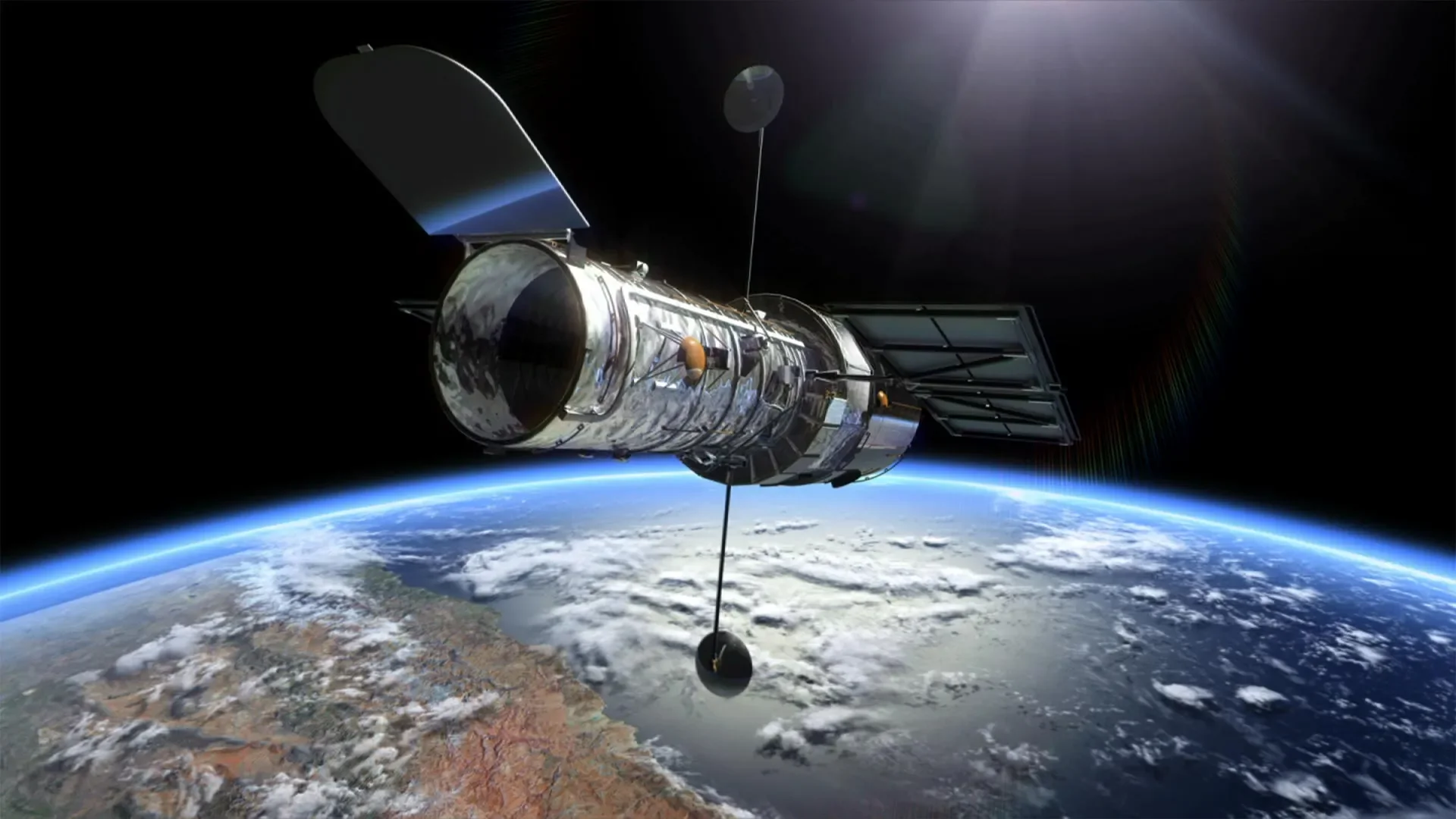
Visualization
In the boundless tapestry of the cosmos, the Hubble Space Telescope stands as a beacon of human inquiry, illuminating the dark corners of the universe since its inception more than 35 years ago. Yet, as with all things celestial, Hubble’s journey is tethered to the inevitabilities of physics, specifically gravitational forces and atmospheric dynamics that currenly threaten a catastrophic descent into Earth's atmosphere as early as the year 2034. NASA has mobilized to engage private space enterprises in a strategic initiative aimed at prolonging Hubble’s operational life—a mission to breathe additional years into its legacy of revolutionary astronomical discoveries.
At the heart of NASA’s current endeavor lies its October 29 Request for Information, which invites commercial firms to propose innovative solutions capable of servicing and potentially upgrading the aging instrument while in orbit. Faced with the prospect of Hubble’s altitude, currently in low Earth orbit (LEO), gradually diminishing due to atmospheric drag, NASA is keenly aware that the absence of an onboard propulsion system leaves the telescope at the mercy of a natural decline towards denser layers of the atmosphere. Without intervention, projections indicate that by 2033 or 2034, Hubble could fall irretrievably, its storied scientific apparatus disassembled upon fiery reentry.
NASA Administrator Jared Isaacman articulated the urgency of the situation, stating, “Hubble still has important science ahead of it... Extending Hubble's life would mean more discoveries, more science, and more opportunities to expand our understanding of the universe.” To this end, the agency is evaluating various potential measures: from robust orbital elevation techniques to enhancing Hubble’s contemporary service suite or dignified retirement strategies.
A key proposition under consideration is a mission that would facilitate the lifting of Hubble into a higher orbit. The current operating altitude of Hubble—approximately 547 kilometers—can be threatened by residual atmospheric particles, even at such heights, causing an inevitable loss of altitude due to drag characterized by the second law of thermodynamics. The drag force F_d, can be expressed as:
F_d = 0.5 * ρ * v^2 * C_d * A
where ρ represents the atmospheric density, v the orbital velocity, C_d the drag coefficient, and A the cross-sectional area of Hubble. Given the engineering complexities involved in maneuvering a spacecraft to execute this orbital push, NASA hopes that emerging commercial launch capabilities may provide effective, innovative modalities to counteract this inevitable decline.
Furthermore, beyond orbital adjustments, there exists the tantalizing prospect of upgrading Hubble's scientific instruments to ensure its continued relevance in an era of advanced astronomy. The advent of technologies such as in-space satellite repair and servicing—now burgeoning within the commercial sector—could offer life-extending capabilities previously unimagined when Hubble first ventured into space.
The cooperative nexus between NASA and private industry is essential for discerning practical solutions. Nicky Fox, associate administrator for NASA's Science Mission Directorate, remarked on this collaboration, emphasizing the evolving landscape of commercial space technology. Fox conveyed optimism that, given the looming reentry timeline, a concerted effort could yield a comprehensive plan to sustain Hubble’s momentum and scientific prowess while concurrently fostering the development of successor missions.
With the operational phasing of Hubble encapsulated in a delicate window, NASA anticipates that any viable mission concepts would require execution by 2032. This constraint implores both urgency and rigor in assessing the feasibility of prospective solutions that could effectively extend the illustrious telescope's venerable quest for knowledge.
Since the deployment of Hubble, the observatory has bequeathed to humanity a treasure trove of discoveries—reshaping paradigms in cosmology, galaxy formation, and our comprehension of the universe's expansion. Each image captured through its lenses possesses not just scientific significance but an intrinsic narrative that speaks to the insatiable human quest for understanding. That legacy now rests upon harnessing collective ingenuity, coordinating the visionary minds of our space-faring future, and crafting strategies to ensure that the magnificent Hubble continues to chart the stars long past its expected expiry. As the clock ticks down to Hubble's potential demise, the race towards a viable solution intensifies, underscoring the intersection where human curiosity meets the infinite universe.