Field: Technology
NASA accelerates plans to land astronauts on the Moon by 2028
Published | Technical Staff
Visualization
NASA's commitment to returning astronauts to the lunar surface by 2028 marks a pivotal evolution within its Artemis program, a renaissance of human exploration beyond Earth. The agency’s strategy has been recalibrated under the stringent timelines dictated by both technological advancements and international competition. With alliances forged with private aerospace giants SpaceX and Blue Origin, NASA is on a dual-track mission that leverages competitive lunar landers, expedited rocket preparations, and advanced spacesuit designs to propel humanity closer to its aspiration of a sustained lunar presence.
At the core of NASA’s ambitious initiative lies the upcoming Artemis III mission, scheduled for 2027. This mission serves as a critical rehearsal in Earth orbit for subsequent crewed missions, featuring the Orion spacecraft and developmental lunar landers from the two commercial partners. The crew of four will embark aboard Orion, utilizing the Space Launch System (SLS)—a rocket notable for its advanced capabilities, including a staggeringly high thrust-to-weight ratio that is essential for the resource-intensive task of leaving Earth’s gravitational pull.
During the 14-day Artemis III mission, the crew will conduct intricate rendezvous and docking exercises with Blue Origin's Blue Moon lander and SpaceX’s Starship lunar lander model—each representing distinct engineering philosophies geared toward the lunar endeavor. The rendezvous maneuvers are designed to validate key spacecraft operations: precision navigation protocols and the mechanical integrity required to achieve successful docking. Such missions are critical to mitigate uncertainties prior to an actual lunar landing, empowering astronauts with the operational expertise necessary for subsequent missions.
Amidst the frenzy of technological advancement, NASA is not overlooking cost efficiency. Recent reports indicate that the agency has halved its rocket preparation timelines as a result of internal engineering initiatives. A noteworthy accomplishment includes the rapid development of a critical fuel-line component, which was fabricated in-house, bypassing reliance on external suppliers and dramatically reducing costs to one-tenth of preliminary vendor estimates. This strategic pivot towards internal capabilities demonstrates NASA's renewed focus on retaining indispensable competencies within its engineering teams—a crucial step towards delivering timely and cost-effective lunar missions.
As NASA gears up for Artemis IV in 2028, two distinct approaches for lunar landing systems emerge. SpaceX's Starship will adopt an innovative strategy of orbital refueling, allowing it to rendezvous with Orion in low Earth orbit before embarking on its transit to the Moon. Conversely, Blue Origin’s Blue Moon Mark 2 will implement a multi-stage propulsion system that enables it to meet Orion shortly before descending to the lunar surface. This bifurcated strategy increases NASA's operational flexibility, ensuring that regardless of which system ultimately proves most effective, the agency will be poised to trend towards its lunar re-exploration goals.
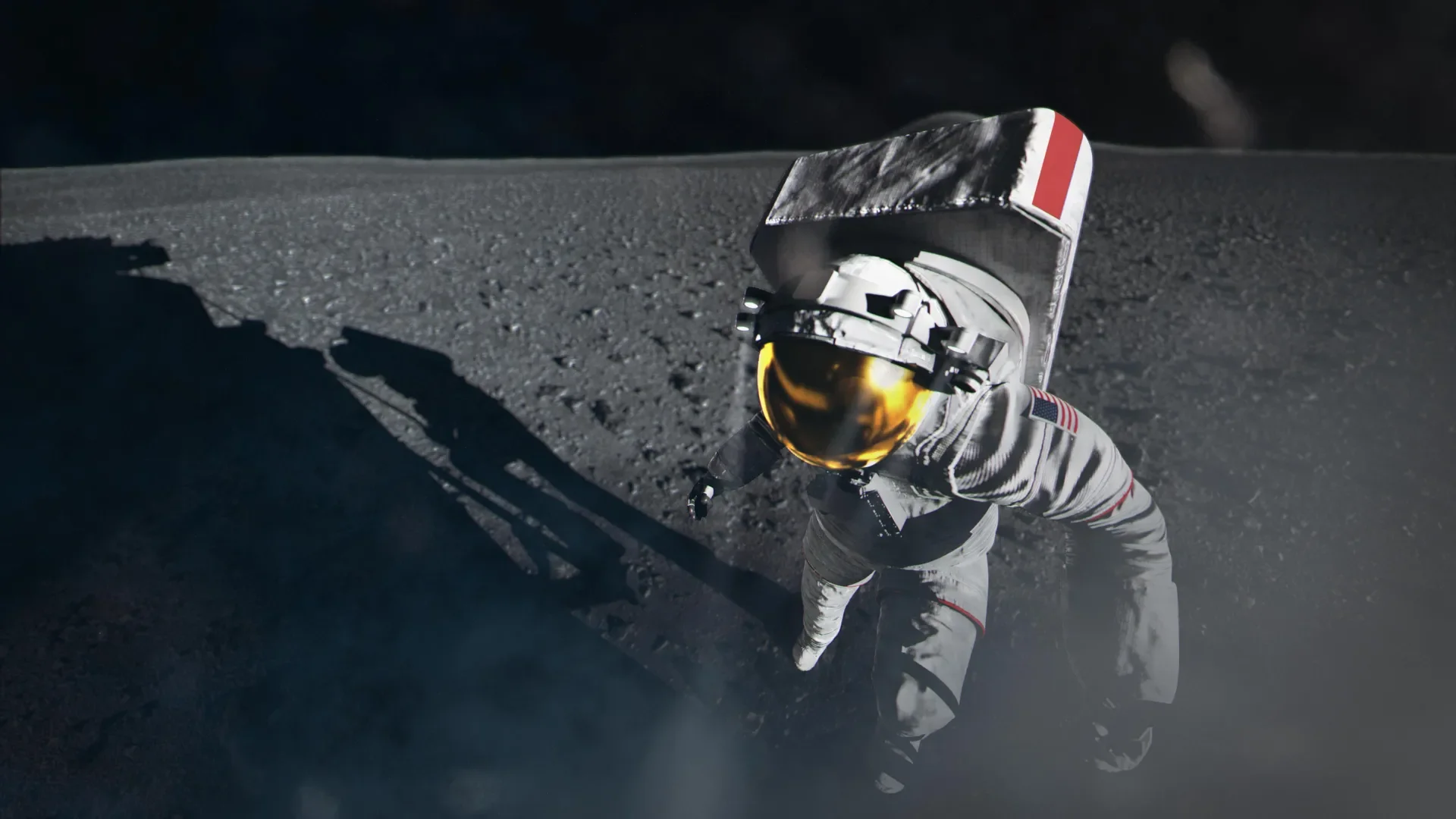
In tandem with these advancements, NASA is also pioneering a new category of spacesuit, aimed at optimizing lunar ground operations. The "Sortie suit," in partnership with Axiom Space, represents a significant reduction in weight compared to its predecessor, facilitating more efficient functionalities for surface excursions. Weighing approximately half as much as previous designs, the new suits are engineered specifically for the early surface operations anticipated for Artemis missions, thus allowing astronauts to begin their explorations almost immediately upon landing. While the Sortie suit caters to the immediate needs of initial missions, Axiom's more sophisticated primary design remains integral for future expeditions requiring extended extravehicular activities.
With this confluence of technological innovation, strategic partnerships, and cost-cutting measures, NASA is positioning itself not merely as a governmental agency but as a catalyst for extraterrestrial exploration. As it strives to establish a sustained human presence on the Moon, the agency is mindful of the ultimate horizon—human missions to Mars. The ardor with which NASA approaches the next chapter of lunar exploration is underscored by a profound recognition of the shared urgency that compels this next leap—a leap meant to reaffirm humanity’s innate quest for discovery and innovation.