Field: Technology
Mysterious Seahorse Lookalikes Found in the Depths of the Southern Australian Reefs
Published | Technical Staff
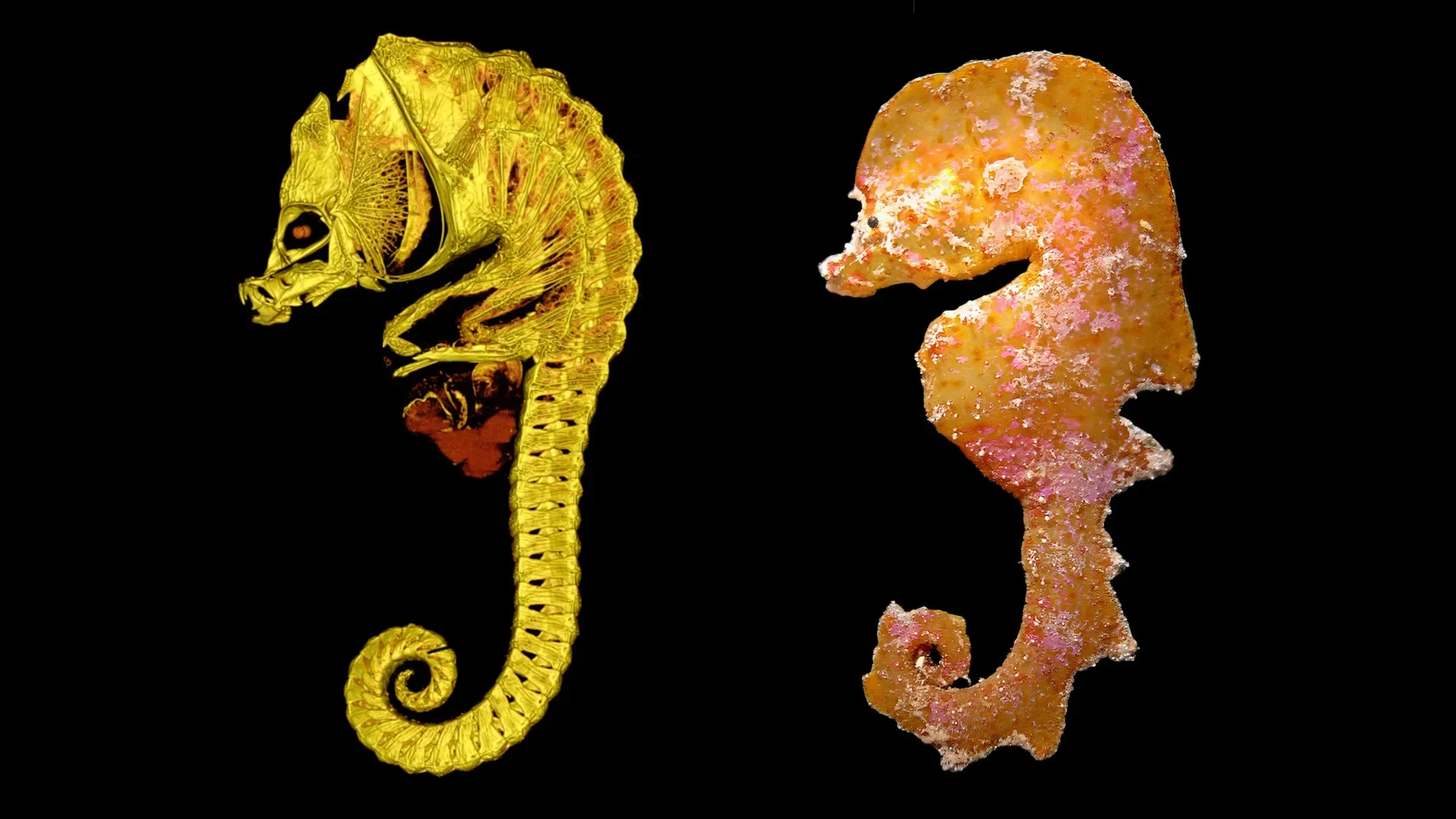
Visualization
In an extraordinary unveiling within the depths of marine biodiversity, researchers have delineated a trio of enigmatic fish, strikingly reminiscent of seahorses, yet resting apart from this emblematic genus. Entwined in the lush complexity of the Great Southern Reef, these creatures have defied traditional classification, prompting the adoption of their endearing moniker, “sea muppets.” With only seven known specimens encompassing the species Australyichthys aegis, its kindred bullneck (A. minotaur) and paradoxical sea muppets (A. paradoxus), these fish embody a stunning case of convergent evolution—the phenomenon whereby unrelated organisms evolve similar traits due to analogous environmental pressures.
The striking morphology of the helmethead sea muppet, characterized by its distinctly horse-shaped cranial structure, elegantly curled tail, and a fully enclosed pouch for brooding young in mature males, initially led to its classification within the seahorse family—Hippocampus. However, this classification, arising from external phenotypic similarities, has now been significantly challenged through rigorous taxonomic evaluations and advanced imaging techniques. The journey toward a deeper understanding of these peculiar fish began with the rediscovery of misclassified specimens long enshrined within museum archives, relics of years bygone when they were inadvertently caught in trawl nets during expeditions directed at invertebrate sampling.
The solitary A. aegis specimen was unearthed in 2006 near the Gambier Islands, South Australia, coiled within a dredge that was primarily intended to procure brachiopods—a class of marine invertebrates. Unbeknownst to the expedition team, this little fish would generate a cascade of inquiries into its evolutionary lineage. Being the only specimen preserved in ethanol, a medium that preserves nucleic acids better than formalin, allowed for subsequent genomic analysis of the specimen, ultimately revealing its genetic divergence from Hippocampus.
For morphological exploration, micro-computed tomography (micro-CT) served as an indispensable tool, capable of resolving intricate skeletal structures down to the minutest osseous detail. Utilizing this non-invasive imaging technology, researchers constructed three-dimensional models of the skeletal frameworks of each of the three species, starkly contrasting their anatomical architecture against the standard seahorse morphology. Notably absent was the characteristic bony coronet and the rigid lattice supporting the abdominal structure synonymous with the Hippocampus genus, as evidenced by the comparative analysis which illuminated a novel arrangement of bones indicative of a unique evolutionary pathway.
The phylogenetic analysis confirmed that the sea muppets not only dwell distantly on the family tree of marine organisms but also mark a rare evolutionary event wherein similar body forms emerged independently—a clear testament to the relentless creativity embodied within evolutionary processes. The nomenclature, Australyichthys, directly hails from terms meaning “southern fish,” alluding to both geographical and taxonomic significance, while also underscoring a broader narrative concerning these fascinating yet elusive creatures.
As specters of the deep, these fish symbolize a broader narrative fraught with ecological intrigue. Their known habitats, largely unexplored and overlooked, call into question the inadvertent persistence of species tucked away in the profound marine tapestry. The nine-hundred-kilometer stretch of southern Australia's coastline has yielded only three specimens within more than half a century. Still, advances in marine biology signal that targeted explorations could be critical in unearthing the abundance of life that still thrives in the dark, cold waters, away from the prying eyes of typical marine research endeavors.
The legacy of these “lost species” should not be misconstrued as an omen of imminent extinction. Rather, it paves the way for responsible management, research prioritization, and a clarion call to survey these depths with renewed vigor. The hope remains clear: that one day, perhaps guided by pioneering underwater techniques, researchers will witness the enchanting sea muppets in their natural habitat, confirming not just their existence but the resilience of evolutionary ingenuity nestled in the unseen ecosystems beneath the waves.